Vintage Descriptions
2024
This Year in History: So far..............
Fun Fact: It was the ancient Egyptians who first figured out that the solar year and the calendar year didn't always match up.
How come? Because it actually takes the Earth a little longer than a year to travel around the Sun — 365 days, 5 hours, 48 minutes, and 46 seconds, to be exact.Therefore, as hours accumulated over the centures, an extra day was occasionally added to the calendar, and over time the practice became more or less official.The Romans first designated February 29 as leap day, but a more precise formula (still in use today) was adopted in the 16th century when the Gregorian calendar fine-tuned the calculations to include a leap day in years only divisible by four - 2012, 2016, 2020, 2024, etc.Thankfully, all this intricate plotting will continue to keep us in tune with the seasons over the next several thousand years.
Eurovision Winner: watch this space, to be held in Malmo on the 11th May!
Top Grossing Movie: so far.......... Mean Girls!
Click here to see our range of 2024 Wine
Back to top

2023
This Year in History: Fun Fact: A visit by Thor the Walrus to Scarborough harbour, North Yorkshire overnight on New Year's Eve results in the town's New Year fireworks celebrations being cancelled to let the walrus rest for his journey to the Arctic.
Eurovision Winner: Won by Sweden with the song "Tattoo" by Loreen.
Top Grossing Movie: Barbie!
Click here to see our range of 2023 Wine
Back to top
2022
This Year in History: Fun Fact: Wild bison are reintroduced in the UK for the first time in thousands of years. Three of the animals are allowed to roam in the Kent countryside, where it is hoped they could improve the local ecology.
Eurovision Winner: Ukraine with the song "Stefania" by Kalush Orchestra...... we came in a close second with our entry from Sam Ryder.
Top Grossing Movie: Avatar: The Way of the Water
Click here to see our range of 2022 Wine
Back to top
2021
This Year in History: Fun Fact: Scientists Revealed That Cheese Isn’t Bad for You (Really!) Speaking out against unfounded rumors that cheese is an evil, murderous entity, one scientist commanded: “There’s almost no evidence that cheese causes weight gain—and in fact, there’s evidence that it’s neutral at worst.” This stigma-shattering analysis helped cheese to rebuild its reputation globally—and that’s grate!
Eurovision Winner: Italy with the song "Zitti e buoni", Maneskin.
Born this Year: Princess Lilibet of Sussex, American-born member of the British royal family. She is the daughter of Harry and Meghan. She is a granddaughter of King Charles III and is seventh in the line of succession to the British throne.She was born during the reign of her great-grandmother Queen Elizabeth II, whose childhood nickname was Lilibet.
Top Grossing Movie: Spider-Man: No Way Home.
Portugal: Vintage Port: The 2021 vintage was defined by a dry and hot summer which brought the harvest forward. However, the rains in early September, combined with mild temperatures, slowed down the pace of grape maturation to create wines of “great elegance” rewarding those producers who waited for drier conditions. The grapes picked before the period of more intense rain resulted in musts with higher concentrations of both colour and aromas, a contrast to the remaining harvest, which produced wines with more freshness and elegance.
Carlos Alves, head winemaker at Sogevinous said ““The 2021 campaign was defined by the irregular pace of grape maturation, which resulted in low levels of sugar, inducing our winemaking and viticulture teams to work closely with the aim to determine the exact optimum picking dates – an increasingly critical factor in the final quality of the wines. Although this harvest was a difficult one, we are pleased with the wines it's produced and so far I think the wines will stand out for their elegance rather than structure, and they will certainly age beautifully given their natural acidity – both traits that qualify for excellent wines,”
The grapes picked before the period of more intense rain resulted in musts with higher concentrations of both colour and aromas, a contrast to the remaining harvest, which produced wines with more freshness and elegance – and these, according to Carlos Alves, are the traits that define the 2021 harvest.
“Although this harvest was a difficult one, we are pleased with the wines it's produced and so far I think the wines will stand out for their elegance rather than structure, and they will certainly age beautifully given their natural acidity – both traits that qualify for excellent wines,” he added.
Click here to see our range of 2021 Wine
Back to top
2020
This Year in History: Fun Fact: May 2020 was reported as the sunniest on recent record with 266 hours of sunshine.
Eurovision Winner: CANCELLED!!
Highest Grossing Film: Demon Slayer: Kimetsu no Yaiba – The Movie: Mugen Train
Portugal: A hot summer and a pandemic led to a small production of very good concentrated wines.
The Douro experienced above average temperatures for most of the year with a record July, a worrying sign of global warming. This resulted in harvesting at the end of August - a couple of weeks earlier than usual. Yields are low at the best of times but 2020 produced only a tiny crop of super concentrated grapes. Factor in labour shortages, social distancing logistics issues caused by the pandemic and the production was tiny. Vesuvio and a few others that traditional trod their grapes in lagares did not produce a vintage!
Those producers who did produce a vintage Port generally made a stunningly dark, concentrated wine similar to the 2009 vintage. Symington Family released a small quantity of Graham and Warre's Old Vines. Noval declared as did Quevedo and a few others. Notable exceptions were Taylor-Fladgate who produced single quintas that will be released in future years and Sogrape who did not produce a vintage port for Offley, Ferreira or Sandeman.
Click here to see our range of 2020 Wine
Back to top
2019
This Year in History: Fun Fact: – FIFA Women's World Cup: The most-watched British television broadcast of the year, 11.7 million viewers watch the England football team's 1–2 defeat to USA in the semi-final in Parc Olympique Lyonnais (Stade de Lyon) in Lyon, France.
Eurovision Winner: The Netherlands with the song "Arcade" by Duncan Laurence.
Born this Year: Prince Archie of Sussex, Prince Archie of Sussex (Archie Harrison; born 6 May 2019) is a member of the British royal family. He is the son of Harry and Meghan. The grandson of King Charles III, he is sixth in the line of succession to the British throne. He was born during the reign of his great-grandmother Queen Elizabeth II.
Top Grossing Movie: Avengers: Endgame
Portugal: 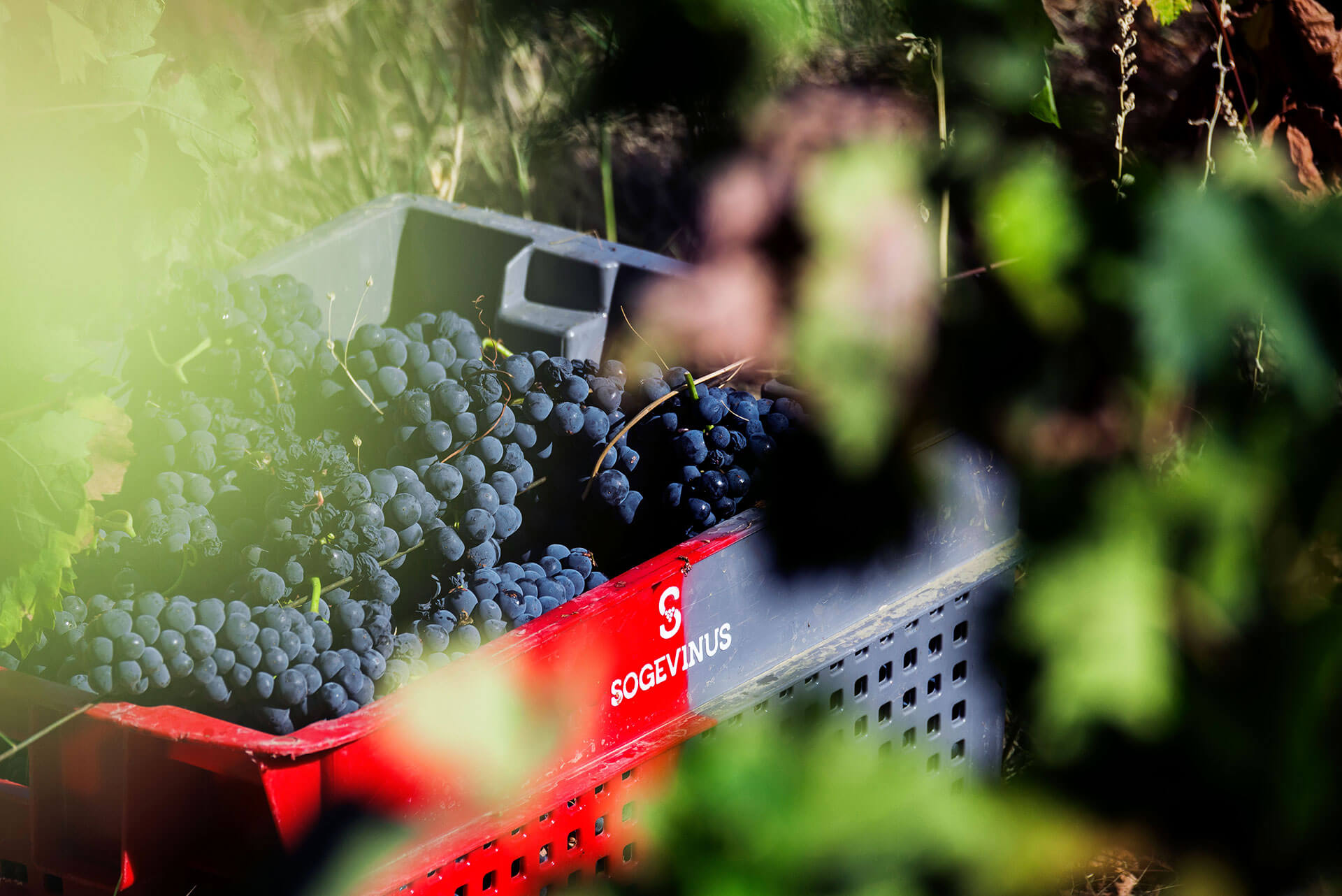
The 2019 Quinta Vintage Ports are the result of an erratic growing season, with a little over 50% of the average winter rainfall in the Douro and almost none in the summer. Fortunately, showers at the end of August helped the grapes achieve more balanced maturations.
Spring also saw warmer than usual temperatures. Little rain was seen during the early growing season with mild temperatures and no weather extremes that allowed the flowering to take place, in favourable weather, undisturbed. Low rainfall and dry Spring also meant disease pressure was low allowing for less intervention in the vineyard and subsequently a healthier grape composition.
The onset of Summer saw a continuation of the dry weather. Luckily, cooler temperature throughout the summer- in sharp contrast to the one experienced by the rest of Europe- prevented the vines from shutting down. These cooler conditions lasted through to August where a much-needed rain pushed the maturation forward and benefited the quality and health of the grapes.
Harvesting begun in Autumn, in September where a brief sprinkle of rain also fell at just the right time to prevent drought and keep the grapes fresh and juicy. Warm temperatures in daytime followed by cooler nights, assisted in the slow accumulation of sugars and phenolic ripeness whilst retaining high acidity levels, thus contributing to healthy and balanced grapes.
Grape production was a little higher compared to the 2017 and 2018 vintages, and, perhaps, this was the indicative factor 2019 was not going to be a classic vintage as a small production is synonymous with a classic vintage port declaration.
Due to the mild conditions, grape health was guaranteed across all varietals. Touriga Nacional was exemplary, and the fruit was deep and complex offering good structure. Touriga Franca benefited from the late autumnal rain which offered some hydration and assisted in the retention of its plentiful aromatic intensity. In general, the resulting wines are likely to be extraordinarily successful with freshness and liveliness being the hallmarks of the 2019 ports.
Click here to see our range of 2019 Wine
Back to top
2018
This Year in History: Fun Fact: In 2018, the treadmill celebrated its 200-year anniversary. Originally, it was designed as a torture device. Some may argue it still is!!!
Eurovision Winner: Israel won with the song "Toy" by Netta.
Born this Year: Prince Louis of Wales, a member of the British royal family. He is the third and youngest child of William, Prince of Wales, and Catherine, Princess of Wales. A grandson of King Charles III, he is fourth in the line of succession to the British throne.
Top Grossing Movie: Avengers: Infinity War.
Portugal: The 2018 Vintage is aptly described by wine makers as a "rollercoaster of a vintage". A drought throughout winter gave way to exceptionally high rainfall and hail in spring. This was followed by sporadic heatwaves throughout summer. Fortunately the spring rains had replenished the water table and the grapes were healthy when it came to selection. In an unusual year such as 2018, the winemakers skills and experience are critical in producing a good wine. Those winemakers who carefully selected grapes prospered. As a result, there is no defining characteristic of the vintage as a whole, such as would be found in a long hot summer. Instead there are some very interesting ports that are more representative of the terroir.
After a run of declared vintages 2016/17 it was highly unlikely that 2018 would be universally declared. Sandeman who did not declare their outstanding 2017 were the fist to declare a classic vintage. This was followed by Sogevinous (Calem, Kopke, Burmester, Barros), Quevedo and regular declarations from Vesuvio and Noval. Surprisingly Taylors declared their 2018 (following 16/17) but will not sell it until 2021. QUANTITIES ARE TINY. Whether it's due to careful selection, Corona virus or just a desire not to overload the market, producers have only produced a fraction of normal volumes (roughly 1/3 of normal production). Read more in our 2018 Vintage Port blog
Click here to see our range of 2018 Wine
Back to top
2017
This Year in History: Fun Fact: The world’s largest dinosaur footprint was discovered. The 5.5 foot (1.7 meter) gigantic dinosaur footprint was discovered in Kimberley, Western Australia. Paleontologists also found 21 different types of dinosaur prints on this day, making it the most diverse collection.
Eurovision Winner: Portugal with the song "Amar Pelos Dois" by Salvador Sobrai.
Top Grossing Movie: Star Wars Ep. VIII: The Last Jedi
Portugal: 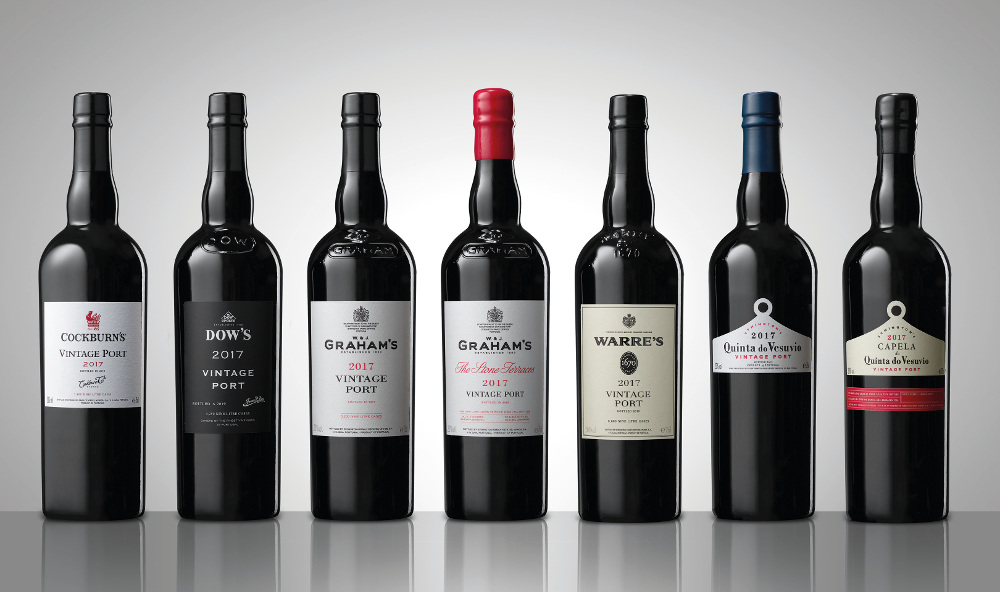
We are pleased to announce that the major port houses have declared the 2017 Port Vintage. Extremely rare, this is the Symington family's first ever consecutive declaration and follows the acclaimed 2016 Vintage. This is a milestone moment in port history and is the result of two very different but extremely high-quality years for port in the Douro.
Warmer, drier conditions than usual resulted in an early harvest of small, compact bunches of grapes in excellent condition, with yields amongst the lowest of the century so far, 20% below the 10-year average. The resulting wines are characterised by extraordinary intensity, concentration and structure, combined with stunning aromas and freshness. Their quality and fantastic potential mean that we believe 2017 will long be remembered as a year of incredible wines.
Given the very low-yielding year, the 2017 Vintage Port is the smallest declaration of the 21st century, with en primeur volumes approximately a third less than in 2016! So far, we have secured en primeur ports from Taylors, Fonseca, Croft, Grahams, Grahams’s Stone Terraces, Smith Woodhouse, Cockburns. Dow, Vesuvio, Quevedo, Palmer, Pocas, Vesuvio Capella, Noval, Noval Nacional, Niepoort and Warres. We are working to build the most comprehensive list ever offered!
Click here to see our range of 2017 Wine
Back to top
2016
This Year in History: Fun Fact: Andrew Lawrence became the fastest runner to complete a marathon dressed as a fruit.During the London Marathon, the 30-year-old dad wore a bright yellow banana skin outfit and finished the race in two hours, 47 minutes, and 41 seconds.
Eurovision Winner: won by Ukraine with the song "1944" by Jamala
Top Grossing Movie: Captain America Civil War
Portugal: 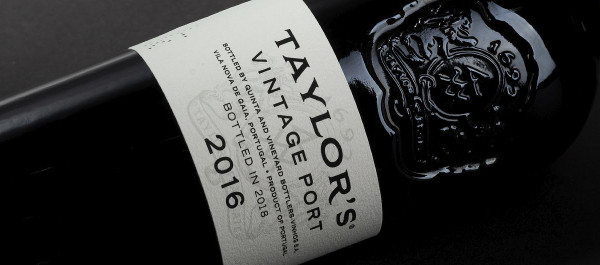 The 2016 vintage port declaration came as no surprise given that the excellent 2015 vintage was passed over in favour of this vintage. The 2016 declaration is the first since the outstanding 2011 vintage and will inevitably draw comparisons. I have now had two tastings of the 2016, one in May and one in September. My overall impression is that the declaration is justified. The wines are lighter in body and at this stage in their evolution. Compared to the 2011 they are more nuanced and perhaps reflective of the winemaker’s skill and house style.
All of the major shippers declared the 2016. The yield is tiny as a cold and wet spring made for a tough start to the year. The very hot weather that followed hampered the ripening process as the vines shut down. The picking season was dry which meant that winemakers could pick the grapes at the optimum ripeness. Production release volumes are very small, for instance only 72 cases were released of the Nacional!
The reception for the 2016 vintage amongst critics has been very positive. James Suckling awarded the 2016 Taylor’s vintage port top marks (100 points). With most shippers such as Cockburn and Grahams scoring well into outstanding category. The ports although approachable in their youth, will be at their optimum between 2025 and 2060+. Prices are quite high for the premium brands due to small yields. However, there are some highly rated, lower cost wines from Skeffington, Burmester and Messias that represent an outstanding quality to price ratio.
In summary, this is a solid vintage declaration. Small production and high ratings make premium brands a solid investment that can be laid down for decades. Great value can be obtained searching out the lesser known producers. (TC – VWP)
Click here to see our range of 2016 Wine
Back to top
2015
This Year in History: Fun Fact: The first-generation Apple Watch was released.
Eurovision Winner: Sweden with the song "Heroes" by Mans Zelmerlow.
Born this Year: Princess Charlotte, a member of the British royal family. She is the second child and only daughter of William, Prince of Wales, and Catherine, Princess of Wales. A granddaughter of King Charles III, she is third in the line of succession to the British throne.
Top Grossing Movie: Star Wars Ep. VII: The Force Awakens
Italian: In Piemonte an exceptional vintage was produced,with great promise thanks to healthy grapes and exceptionally regular bunches.
In Tuscany, a cold and rainy winter preceded an irregular spring followed by exceptionally hot, dry summer weather, creating small bunches of Sangiovese, so yields were down across the region however concentration levels concentration levels are very good.
Portugal: 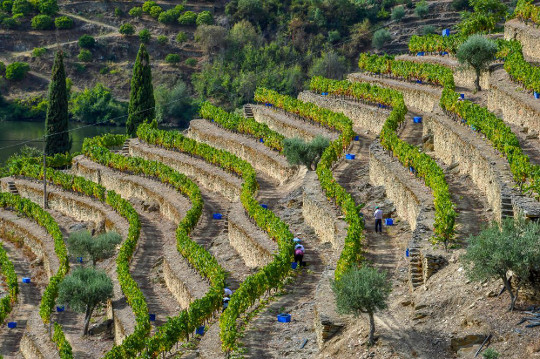
The 2015 Vintage Port Harvest
Abundant rainfall marked the start of the viticultural year, replenishing depleted soil water reserves. This was to prove crucial due to the very dry winter, spring and summer that followed which was the hottest and driest of the last 36 years. It was the hottest June of the last half-century resulting in exceptionally low yields at harvest time. The conditions leading up to the harvest were excellent and a little late rain followed by sunshine just before picking offset some of the heat stress to produce some of the best grapes in memory (particularly Touriga Franca)
To declare or not to declare?
The ports produced in the 2015 vintage are, without doubt, outstanding and many producers such as Niepoort, Noval Ramos Pinto have declared the vintage. With small productions and an eye to what will probably be a spectacular 2016 vintage, Taylor Fladgate and Symington’s have not declared all of their range producing instead some amazing value single quintas. These companies never make back-to-back declarations. Symingtons have produces a very small quantity of the ultra-rare Graham's Stone Terraces and declared Cockburn to celebrate the 200th anniversary of the shipper.
Our assessment.
Having tasted all of the 2015 ports below, our port expert, Dr Tony Carter, has scored all of them above 90 points (outstanding) and rated the Stone Terrace, Dows and Vesuvio in the exceptional category (95+ points). This is in line with other critical reviews. In general, the exceptional showing for the Touriga Franca adds amazing floral qualities across the board. This is supported by a good showing for the Touriga Nacional which adds structure and backbone great ageing potential for these wines. We look forward to revisiting them in 40 years time!
2015 is definitely a vintage for port drinkers. Apart from the rare and limited releases, investors should look towards the 2016 vintage. Port drinkers can find amazing value amongst the single quintas (Fonseca, Taylor's, Croft, Dow's) or pick up some excellent quality vintage ports.
Click here to see our range of 2015 Wine
Back to top
2014
This Year in History: Fun Fact: Prince Harry launches the Invictus Games, a Paralympic-style sporting championship for wounded soldiers.
Eurovision Winner: Austria with "Rise Like a Phoenix" Conchita Wurst
Top Grossing Movie: Transformers, Age of Extinction.
Bordeaux: Exceptionally cool, damp July and August but the vintage was saved by an unusually dry, warm September and October that (just about) ripened the grapes though autumn concentration has resulted in relatively high-acid wines. Reds have fragrance, medium body and supple tannins but are not for long term cellaring. "jancisrobinson.com"
Burgundy: Overall, the vintage was good; after a mild winter, the spring was warm and dry which advanced the development of the vines by about two weeks. Flowering occurred early but high temperatures caused some millerandage (a combination of normal berries with some small, seedless ones). September was warm which ripened the grapes rapidly bringing the grapes to the desired level of maturity in time for harvest.
In Chablis, the extended ripening period from the early flowering and warm September resulted in grapes which were so healthy that on the whole, sorting was only carried out to remove the leaves and has created juice which is very well balanced.
Champagne: Initial reports suggest that a warm, dry September saved the crop from a damper, cooler August. The resulting fruit has good levels of potential alcohol, indicating ample ripeness.
Italian: In Piedmont the quality of the grapes was high due to a mild winter, early spring and warm summer but production is down by approximately 10% as some areas of Barolo were hit by hail which damaged the Dolcetto grapes. A warm and dry September was especially beneficial for late-ripening grapes such as Nebbiolo and Barbera.
In Tuscany a mild winter and spring led to early flowering, a cool summer impacted the development of the vines but the warm and dry September led to an increase of production by about 10% and good quality wines.
Portugal:
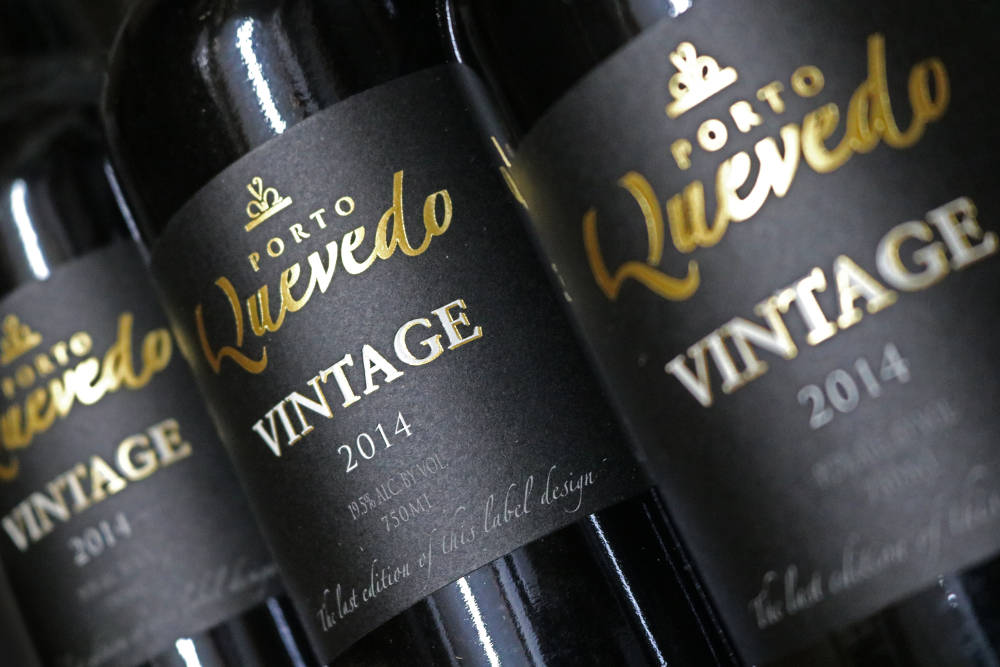
Rain caused significant damage in the first half of the year, then a cool August didn’t help matters. Yields will be low, quality is not remarkable, and vintage declarations unlikely for most producers apart from Quinta Do Noval and Churchill's who declared a small batch of their 2014 ports.
Rhone: Although overall the temperatures were cooler than usual, 2014 has been a much more even vintage than in previous years.
The president of InterRhône said that as the year had been cooler on the whole, “the subtleties of each appellation are more obvious, the taste differences that show the diversity in the soils and the appellations have been accentuated.” The further east into the Rhône you go, the higher the quality, the whites in particular are set to be very good and this year the yields of Grenache are much improved following a very poor year for it in 2013.
Sauternes: A triumph for Sauternes in this vintage, with some botrytis in September and plenty in late October. Some observers are even calling it the best vintage since the turn of the century."jancisrobinson.com"
Spain: The official report from Rioja describes the 2014 harvest as improved in quality and quantity compared to 2013, though they acknowledge some grey rot affected the final week of harvest. Overall a good quality vintage with the best producers obtaining best results.
Click here to see our range of 2014 Wine
Back to top
2013
This Year in History: Fun Fact: – Andy Murray wins the US Open Tennis Championship, the first British man to win a Grand Slam tournament since 1936.
Eurovision Winner: Denmark with the song "Only Teardrops" by Emmelie de Forest.
Born in this Year: Prince George of Wales a member of the British royal family. He is the eldest child of William, Prince of Wales and Catherine, Princess of Wales. George is the eldest grandchild of King Charles III and is second in the line of succession to the British throne behind his father.
Top Grossing Move: Frozen
Bordeaux: The 2013 Wine vintage offered no respite for the growers after two difficult vintages. There were plenty of challenges right from the start in this vintage – uneven and late flowering following a wet spring, often-violent hailstorms at the end of July and early August, a wet and warm September than meant an attack of rot just before harvest… you name it, the vineyards suffered it during the 2013 vintage. When harvest came around, exhausted winemakers then had to deal with warm but wet weather that in many instances meant they had to harvest early. All in all, a challenging year that rewarded those who were extremely vigilant, and didn’t try to push things too hard once the grapes were finally in the winery.The real success story in 2013 is with the winemaking – there were plenty of producers who worked exceptionally well with the vintage, taking their foot off the pedal and allowing the vibrancy of the fruit to shine through wherever possible. Anyone who tried to cover up unripe fruit with too much oak, or over-extraction, suffered. The best wines have a refreshing drinkability, relatively low alcohol levels, soft fruits and plenty of interest, but by and large this is a vintage to enjoy in the early to mid term.**Sourced from Decanter.com**
Italian: Piedmont: The 2013 wine vintage in Piedmont is of excellent quality. The year did not start well with Incessant rain during winter and spring delayed budbreak. From mid July temperatures shot up and remained high during August, albeit with cooler nights. September was very sunny and dry, but the growing cycle was still two weeks late, necessitating a delayed harvest. The prognosis is for a vintage similar in quality to the already legendary 2010s.
Tuscany:Considered a ‘classic vintage’ due to harvest taking place at the beginning of October. (This used to be the norm but the previous two, much warmer, years brought harvests forward to the beginning of September.) A very cool wet spring delayed budbreak by an average of two weeks. A very wet May that encouraged widespread and continued spraying was followed by a cool June. A picture-perfect July, August and September saved the year, one that resulted in elegant, fresh wines. A promising vintage on the whole, with the wines of Montalcino expected to be exceptional. **Sourced by JancisRobinson.com**
Portugal:
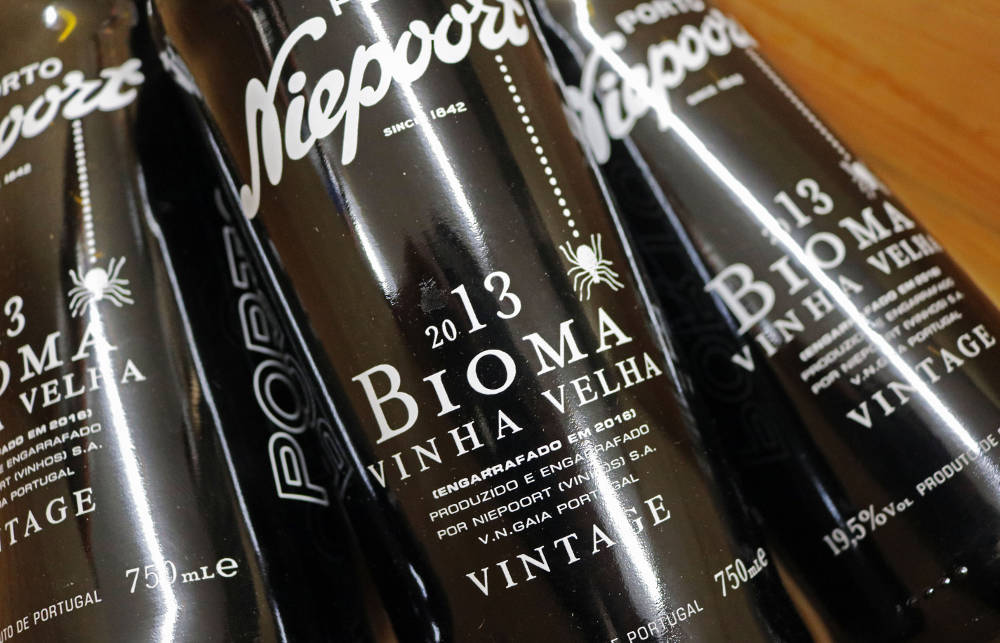
Click here to see our range of 2013 Wine
Back to top
2012
This Year in History: Fun Fact: Apple Inc became the largest company in the world, its value reached over $600 billion in 2012.
Eurovision Winner: Sweden with the song "Euphoria" by Loreen
Born in this Year: Isla Phillips, daughter of Peter and Autumn Phillips, sister of Savannah and second great grandchild of Queen Elizabeth II
Top Grossing Movie: The Avengers
Bordeaux: The 2012 wine vintage was a difficult one for Bordeaux, rewarding those winemakers who were attentive.Top estates made excellent wines, and overall better than 2011. The Medoc and Graves had a tough growing season, and a very late harvest. 2012 made a difficult growing season for the right bank, but Merlot generally fared better than the Cabernets; fine wines were produced in both Pomerol and St-Emilion.
Burgundy: An account of the 2012 growing season would suggest the vintage was catastrophic but, as so often happens in Burgundy, a fine September saved the day and ripened the grapes. Quantities produced are tiny, while quality is maddeningly inconsistent. There are tough, unappealing wines, and some magnificent ones. This makes it a difficult year to navigate as even within a single domaine there can be varying quality. The best wines, however, have good tannic structure and will age well.
Italian: Intense heat in Piedmont this year meant that the cooler vineyard sites may turn out to have produced the best wines, with some sunburn affecting the most exposed sites. The weather was also generally hot in Tuscany, with yields up to 30% below average thanks to uneven flowering caused by rain. A heatwave in August caused some vines to shut down, but nevertheless Chianti and Montalcino produced good quality.
Portugal:
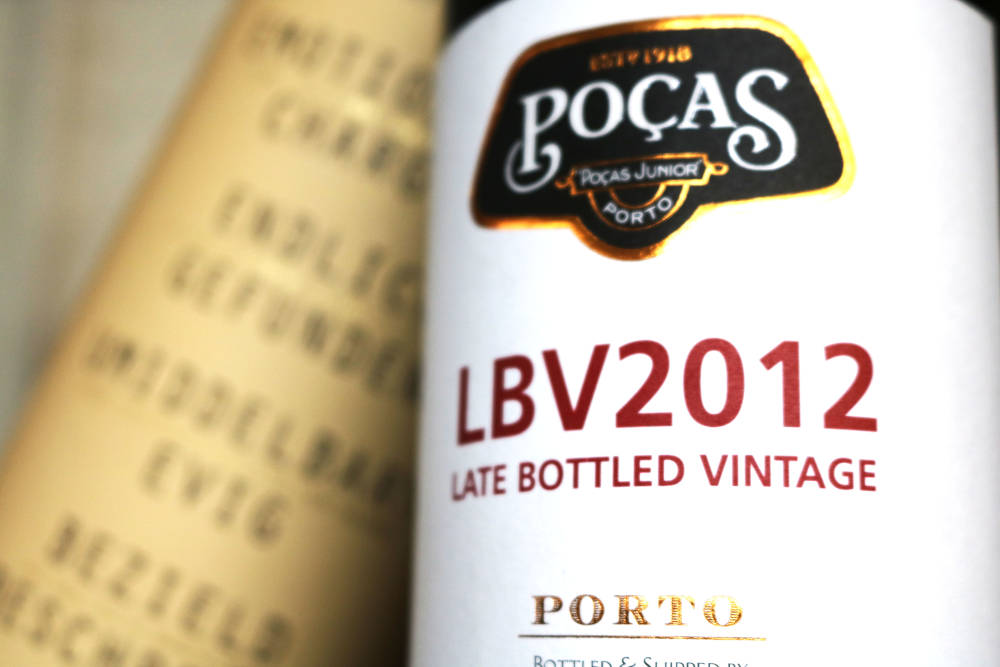
The 2012 port vintage was always going to be in the shadow of the outstanding 2011 vintage. An early drought led to a very small crop, but some excellent ports were produced. Quinta do Noval and Quinta do Vesuvio declared the vintage, whilst the bigger port shippers opted to make Single Quintas. Head Winemaker at Taylor Fladgate, David Guimaraens, noted: “A dry winter followed by a cool spring led to low yields but plenty of aromatic intensity. The cool ripening season was balanced by healthy growth, giving the resulting Ports crisp acidity and a remarkable purity of fruit.” These ports, whether Vintage or Single Quinta, would make a brilliant 11 year old wine gift for an anniversary this year.
Spain: This was a weird year of weather in Spain. It was the fifth consecutive small vintage, thanks in large part to very dry conditions; the resultant small berries harvested in Rioja made wines of great concentration and high tannin.
Click here to see our range of 2012 Wine
Back to top
2011
This Year in History: Fun Fact: our planet reached a population of 7 billion people in 2011.
Eurovision Winner: Azerbaijan with the song "Running Scared" by Ell/Nikki
Top Grossing Movie: Harry Potter and the Deathly Hallows Part II
Bordeaux: Poor summer weather in 2011 led to mildew and rot. A warm September saved the vintage, but with uneven ripening and a difficult harvest. There was less rot on the Right Bank than on the Left; sorting was essential, but Pomerol produced some excellent wines.
Burgundy: As so often in recent years, 2011 proved to be a tricky and challenging vintage for growers in Burgundy, yet the wines mostly turned out well. The reds are aromatic and fresh, with considerable purity of fruit. What they lack is some depth, weight, and complexity. The best wines have balance rather than power, and should be enjoyed in the medium term.
Italian: Piedmont, particularly the Langhe and Roero, experienced an earlier harvest than usual in 2011; warm spells in April, June and July accelerated the development of the vines. Though conditions were dry, nights were cool, distinguishing 2011 from the hot 2003 vintage. What's more, water reserves from winter rains prevented the vines from suffering too much. Tuscany, on the other hand, was under a heatwave from Africa throughout August. This resulted in a harvest roughly three weeks earlier than usual, challenging vintners to retain freshness and elegance in early ripening grape varieties.
Portugal:
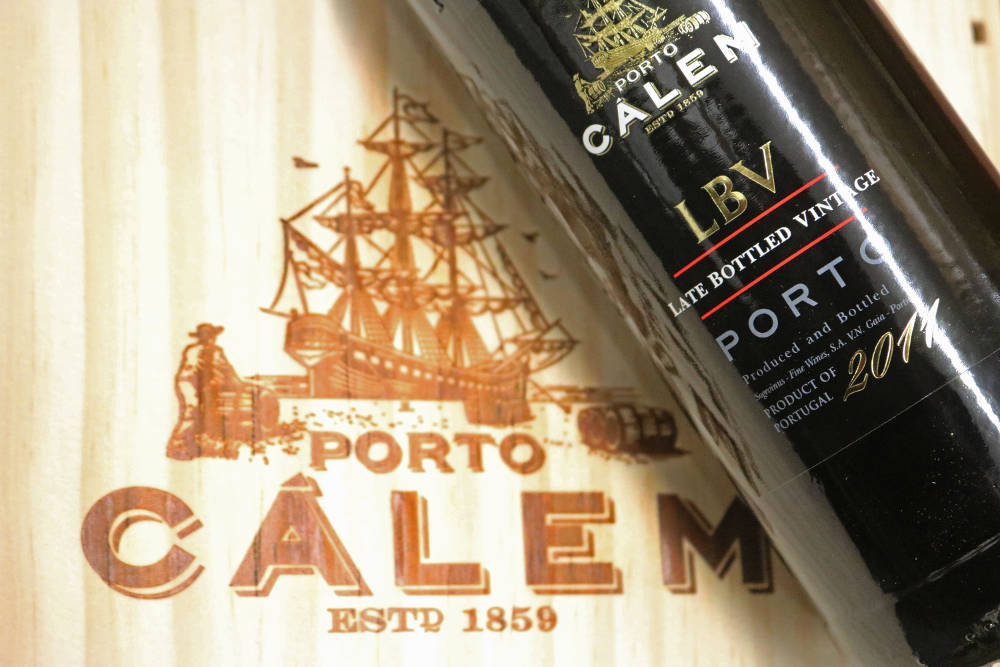
The 2011 Port vintage is hailed as a legendary vintage one of the best in decades. All of the major port houses declared the 2011 Port vintage as being of exceptional quality. The avalanche of declarations started with Sogrape, owners of Sandeman and Ferreira, followed by Symington, the company that owns Dows, Graham, Warre, Smith Woodhouse and Cockburn and then Taylor Fladgate, owners of the Fonseca, Croft and Taylor's brands. According to Charles Symington, "The 2011 Vintage Ports are characterised by an unusual combination of elegance with power and structure. Whereas “elegant” usually implies lighter-bodied, the 2011s have fantastic aromas and great elegance but are big wines - not an easy balance to achieve." These ports would be an excellent 11 year old wine gift for an anniversary this year, reaching their peak between 2020 and 2050, perhaps even onwards.
Sauternes: The sweet wines of Sauternes and Barsac had an exceptional vintage in 2011, approaching that of the 2001 for quality; the cool harvest maintained their acidity levels, and windy days allowed the botrytis to dry out.
Click here to see our range of 2011 Wine
Back to top
2010
This Year in History: Fun Fact: the tallest building in the world, the Burj Khalifa in Dubai, was officially opened to the public in 2010.
Eurovision Winner: Germany with the song "Satellite" by Lena.
Top Grossing Movie: Toy Story 3
Bordeaux: The 2010 for Bordeaux is widely hailed as a great vintage. The grapes were so laden with all the ingredients needed to make fine wine that there was no need for excessive intervention on the part of the winemaker; the best producers maintained a very light touch on the tiller and produced some outstanding wines. These would make a great 13 year old wine gift for an anniversary this year.
Burgundy: 2010 is a very classic vintage for Burgundy, with much more red fruit than black, notably cherries and raspberries, and very few green notes. The wines range from lighter to medium-full bodied, depending on the extraction choices made by the producer. The major villages of the Côte de Beaune have fared as well as the Côte de Nuits - there is huge pleasure in store for the Burgundy lover.
Champagne: A taxing year with dry conditions slowed grape development early in the season. However when the rain arrived in August it was torrential, causing widespread disease pressure. The return of dry conditions in September helped some producers over the line, but sorting in the vineyard and winery was crucial.
Italian: This vintage in Italy will be remembered as a good quality vintage, but with tiny production quantities. Early rain and late ripening sun just before harvest contributed to a good quality crop, especially for the late-ripening Nebbiolo grape used for Barolo wines.
Portugal: After three very dry years, the winter of 2009-2010 saw an extraordinary change, with heavy rains for six months in a row. The viticultural year progressed well until July and August, when there was not one drop of rain. Temperatures in excess of 35ºC throughout most of August slowed the maturation cycle, as the vines cannot photosynthesise and mature the grapes properly in conditions of continued extreme heat. As a result the harvest began 5 days later than usual, but was conducted under mostly perfect conditions with a few welcome light showers in early September and only one overnight rainfall in early October.
Sauternes: Botrytis arrived late and quickly. Wines are ripe and juicy, with tropical fruit character.
Spain: This vintage was exceptional for Ribera del Duero with no excessive weather patterns, uniform ripeness of grapes and a quality to them as promising as during the 2004 vintage. Rioja also produced good quality wines, considered better than the year before.
Click here to see our range of 2010 Wine
Back to top
2009
This Year in History: Fun Fact: US Airways Flight 1549 landed on the Hudson River, NYC.After colliding with a pack of Canada geese, the aircraft lost all engine power. Pilots Chesley Sullenberger and Jeffrey Skiles decided to make an emergency crash landing in the Hudson River. Everyone on board survived.
Eurovision Winner: Norway with the song " Fairytale" by Alexander Rybak
Top Grossing Movie: Avatar
Bordeaux: This was a very good year for wines from all Bordeaux appellations. Tannic, powerful, structured and rich, the best wines need 15-20 or more years to develop. Margaux, Pauillac, Pessac Leognan and St. Emilion are the best regions, however Sauternes was also successful.
Champagne: After early complications a superb summer produced a clean crop of high quality, with particularly good Pinot Noir from the Montagne de Reims. Wines from this vintage are plump and approachable.
Italian: Hot conditions have created ripe reds with fairly high alcohol and good quality, which are relatively fast-maturing.
Portugal:
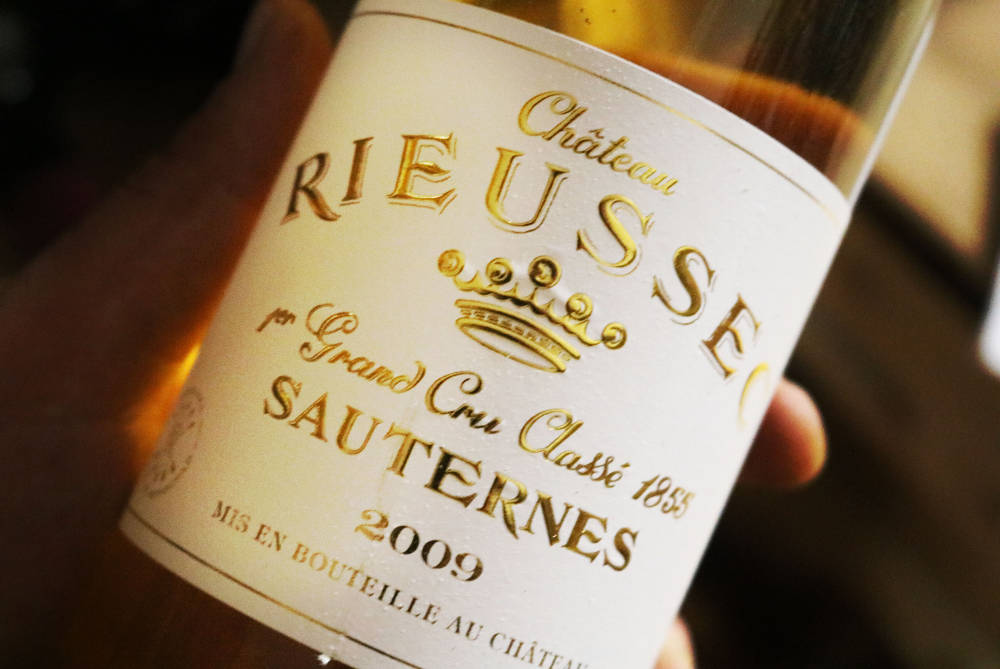
Ports from 2009 make an excellent 14 year old wine gift for a birthday or anniversary. The 2009 Port was declared as a vintage by the Taylor Fladgate Partnership covering Taylor, Fonseca and Croft - it will be remembered as a year of low yields, which produced wines of massive density and scale. This was partly the result of a small amount of fruit produced across all grape varieties, as well as the very dry summer during which there was no rainfall from July through to harvest time in September.
Spain: Very hot conditions gave average temperatures above the infamous 2003 vintage. However, timely rains in Rioja and Ribera del Duero relieved the vines and rescued the vintage, to create one of very good quality.
Click here to see our range of 2009 Wine
Back to top
2008
This Year in History: Fun Facts: Airbedandbreakfast.com was launched by its three founders, which is now known as Airbnb.
Eurovision Winner: Russia with the song "Believe" by Dima Bilan
Top Grossing Movie: The Dark Knight
Bordeaux: This year produced wines which have good balance with ripe, fine grained tannins, refreshing acidity and a real sense of 'terroir'. The yields were generally low overall, but quality is good to excellent, making these a great 15 year old wine gift for an anniversary this year.
Burgundy: The 2008 was an accursed vintage in Burgundy, with mildew and hail conspiring to damage yields and quality. Late September sunshine went some way to rescue the crop, however, although high acidity remains the hallmark of this vintage.
Champagne: Initially a difficult, damp year with widespread mildew; drier conditions in August and a fine, warm September proved many producers’ saving grace. The vintage produced classically-styled wines with fresh acidity balanced by sound ripeness achieved late in the season.
Italian: This year was a good one for Nebbiolo thanks to long, late summer sunshine, however the earlier-ripening Dolcetto and Barbera did not fare so well.
Portugal:
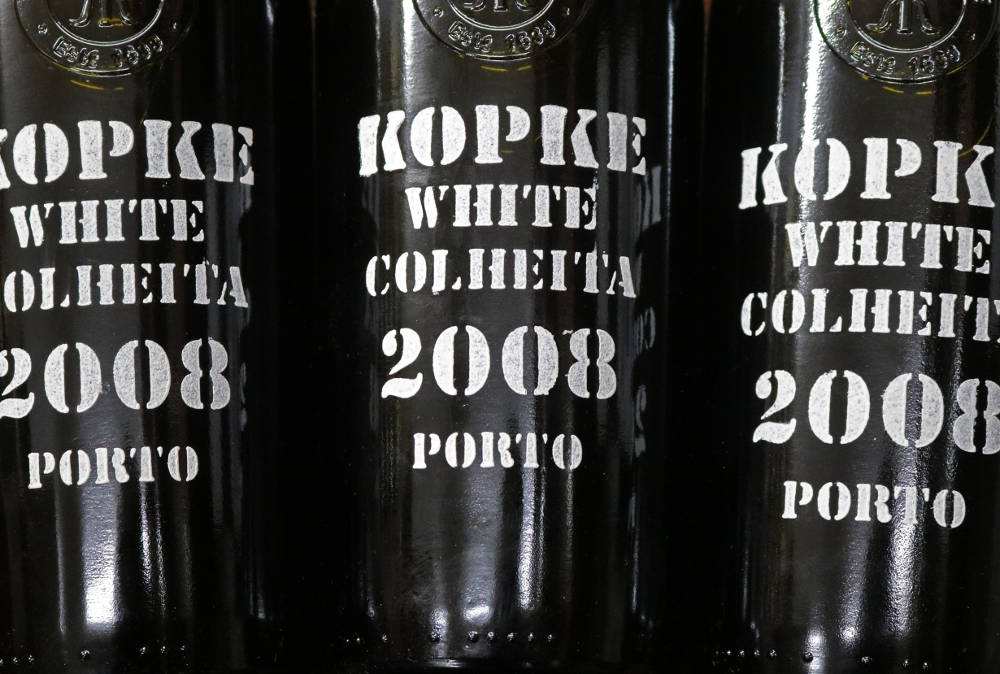
The 2008 port vintage produced excellent wines; had it not come so soon after the outstanding 2007 vintage, it may have been declared. The majority of the 2008 ports possess great colour extraction. The best exhibit finely tuned tannins, crisp acidity and fresh, concentrated wild berry flavours.
Spain: A very good quality year for Rioja, with favourable weather throughout autumn. In Ribera del Duero, temperatures were cooler than normal, giving a slow, balanced ripening process and elegant wines as a result.
Click here to see our range of 2008 Wine
Back to top
2007
This Year in History: Fun Fact: Steve Jobs announced Apple’s very first smartphone, the iPhone 1!
Eurovision Winner: Serbia with the song "Militva" by Marija Serifovic
Top Grossing Movie: Pirates of the Carribean: At the World's End
Bordeaux: The finest 2007 wines tend to be dark ruby-coloured with purple highlights, sweet, ripe berry fruit similar to black cherries and black currants, medium body, silky tannins, low acidity, and pure, round, charming personalities with good equilibrium. By and large, however, the wines lack density, structure, and serious long-term ageing potential. Most will be drinkable as soon as they are bottled, and should age surprisingly well for 10-15 years. Truthfully, most consumers will probably love the style of the vintage’s top wines because they are so flattering, seductive, and fruit-forward.
Champagne: An unusually warm spring led to early flowering and optimism which soon gave way to disappointment with one of the murkiest summers on record. Conditions improved towards September allowing a fair crop, with Chardonnay outperforming the Pinots. The Champagnes produced generally contain above average acidities.
Italian: This was an excellent vintage for Italian wines. A mild winter followed by a warm spring resulted in a lengthy ripening season; this produced well-structured, aromatic wines with plentiful but ripe, velvety tannins.
Portugal:
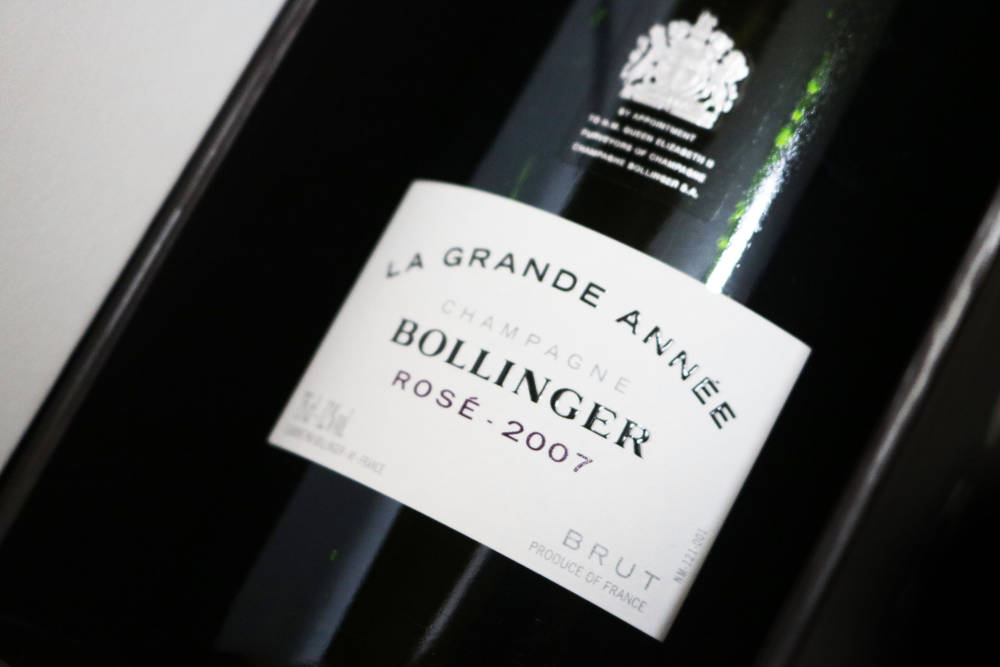
The 2007 Port vintage was the first widely declared vintage since 2003; virtually every Port house that matters made a Vintage Port, attesting to the quality of the year. The growing season was preceded by a wet winter, which put plenty of moisture back into the soil after a lengthy period of dry conditions. Summer temperatures were relatively mild (unlike the torrid conditions in 2003, the last previous declared vintage). September and October weather was close to ideal so that the grapes enjoyed a lengthy hang-time under excellent conditions with full ripening of Turiga Francesa and Turiga Nacional, the two most important grape varieties. The quantities produced are small, so there is a high demand for them. There is little doubt that 2007 is a high class vintage, making a port from this year a great 16 year old wine gift for an anniversary this year.
Spain: After a miserable summer, frost in the latter half of September decimated the crop from many young Ribera del Duero vineyards. Most grapes struggled to ripen, but late pickers were rewarded.
Click here to see our range of 2007 Wine
Back to top
2006
This Year in History: Fun Fact: The Nintendo Wii was the big new games console on the market.
Eurovision Winner: Finland with the song " Hard Roack Hallelujah" by Lordi
Top Grossing Movie: Pirates of the Carribean: Dead Man's Chest
Bordeaux: This vintage produced somewhat hard and tannic wines; whilst they do not have the flesh or ripeness of 2005 or 2003, they will have longevity. In time the 2006 vintage may turn out to be a more classic vintage like 1996 - but with less ripeness.
Champagne: This year boasted an exceptionally hot and sunny June and July with grapes in fine fettle, but a dank August left producers fearful of under-ripeness. Fortunately, warm, bright conditions in September redressed the balance. The wines produced are supple and expressive, making a great 17 year old wine gift for an anniversary this year.
Italian:
Visit our 2006 Wine and Port Offer Page
In Piedmont, a coolish summer became an Indian summer punctuated by two bouts of rain, but the grapes were healthy enough to withstand them. The wines produced are promising. Tuscany produced a very promising vintage with a steady, prolonged growing season and well balanced wines.
Portugal:
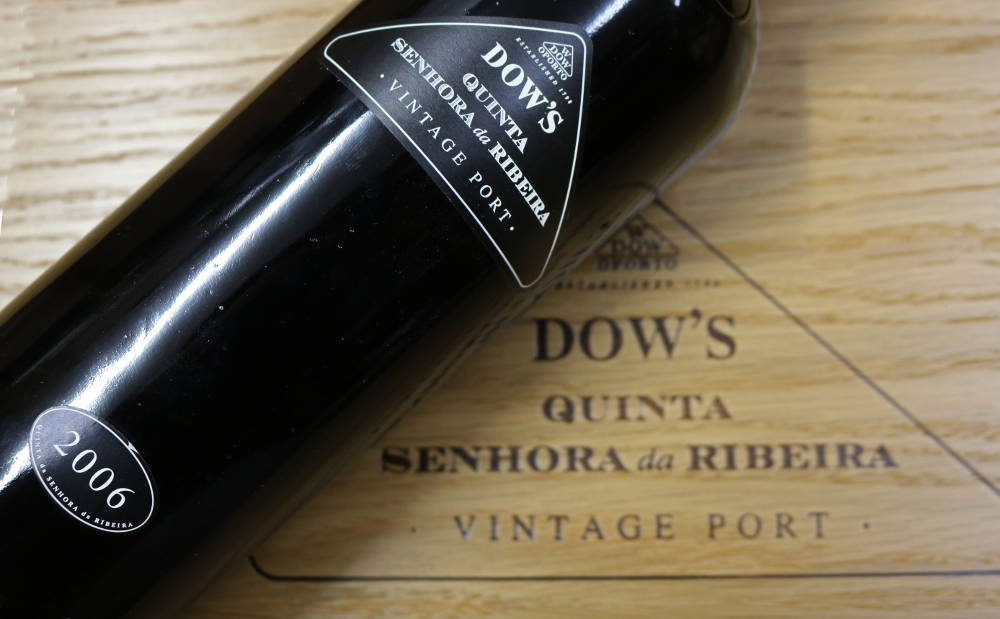
The 2006 Port Vintage was a year that produced good Single Quinta Vintage Ports. Heavy winter rains replenished the drought-exhausted water table following the very good but dry 2005 vintage. Good weather followed, and flowering took place during the hottest May in 40 years. Temperatures steadily increased until a severe hailstorm hit vineyards in the Pinhão valley in the middle of June. Several vineyards lost up to 30% of the crop. A hot July followed, superseded by a cooler August and some much needed rain. More hot weather late August and early September caused some raisining and crop reduction in exposed vineyards. Picking began mid-September just ahead of a rainy spell.
Yields for 2006 were down at least 15% below average.
Click here to see our range of 2006 Wine
Back to top
2005
This Year in History: Fun Fact: The New Forest in Hampshire becomes England's twelfth national park.
Eurovision Winner: Greece with the song "My Number One" by Helena Paparizou
Born in this Year: Alma Elizabeth Deutscher is a British composer, pianist, violinist and conductor. A former child prodigy, Deutscher composed her first piano sonata at the age of five; at seven, she completed the short opera, The Sweeper of Dreams, and later wrote a violin concerto at age nine. At the age of ten, she wrote her first full-length opera, Cinderella, which had its European premiere in Vienna in 2016 under the patronage of conductor Zubin Mehta, and its U.S. premiere a year later. Deutscher's piano concerto was premiered when she was 12. She has lived in Vienna, Austria, since 2018. She made her debut at Carnegie Hall in 2019 in a concert dedicated to her own composition.
Top Grossing Movie: Harry Potter and the Goblet of Fire
Bordeaux: 2005 was an outstanding vintage in Bordeaux, one that produced wines that are rich in substance, flavour and tannin, and from which most have good acidity. 2005 Bordeaux wines were built in many cases for the long haul. The flavours are fresh and certainly cool climate in style, despite the character of the vintage; many show delightfully lively cranberry, redcurrant, red cherry and crunchy blackcurrant leaf character, and yet have a depth, substance and richness. These would make a great 18 year old wine gift for an anniversary this year.
Burgundy: As in Bordeaux this was a quite exceptionally good vintage, although many wines may go through a prolonged stage of chewy adolescence.
Champagne: Variable conditions throughout the year resulted in a lacklustre vintage, though favourable weather in the run-up to harvest meant that ripeness was assured. Generally, the acidity of a 2005 Champagne will be low.
Italian: In Tuscany and Piedmont climate conditions were erratic, with many producers saying 2005 had been a tough and difficult vintage. These tough weather conditions often mean that only the best producers get the best results; the best wines will be Brunello, Barolo or Barbaresco.
Portugal:
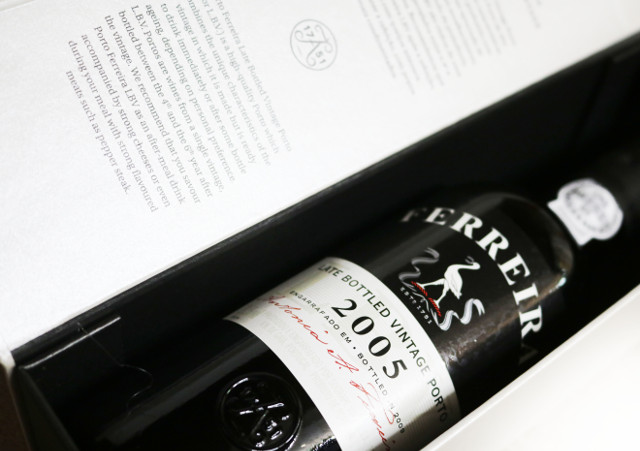
The 2005 Port Vintage was not widely declared but, nevertheless produced some excellent ports. The big producers did not declare the vintage and concentrated on producing Single Quinta ports from selected vineyards. Some smaller producers did declare 2005. The 2005 vintage ports are already approachable but would benefit from further cellaring.
Spain: Another good vintage with high temperatures, but with (just) enough rain.
Click here to see our range of 2005 Wine
Back to top
2004
This Year in History: Fun Fact: Long-running children's animated television series Peppa Pig premieres on the Nick Jr. Channel and Five.
Eurovision Winner: Ukraine with the song "Wild Dances" by Rusiana
Born in this Year: Millie Bobby Brown is a British actress. She gained recognition for playing Eleven in the Netflix science fiction series Stranger Things (2016–present), for which she received nominations for two Primetime Emmy Awards. Brown has starred in the monster film Godzilla: King of the Monsters (2019) and its sequel Godzilla vs. Kong (2021). She also starred in and produced the Netflix mystery film Enola Holmes (2020) and its 2022 sequel. In 2018, Brown was featured in the Time 100 list of the world's most influential people and was appointed as a UNICEF Goodwill Ambassador, the then youngest person selected for this position.
Top Grossing Movie: Shrek 2
Bordeaux: The 2004 wine vintage marked a return to a more classic Bordeaux vintage. The wines are more traditionally styled, and will make fine drinking for many cellars. The vintage seems a little under-rated compared with 2003 and the wines represent good value.
Italian:
Visit our 2004 Wine and Port Offer Page
Produce of Piemonte in 2004 is very promising with few extremes of weather and well balanced wines. In Tuscany, the year was an exceptionally good vintage, central Italy’s equivalent of the perfect growing season that France experienced in 2005.
Portugal: The 2004 vintage was not generally declared, but some wonderful single quinta vintages were bottled. These 2004 Vintage Ports show an intense deep purple-red colour, a factor that was strongly influenced by the August rains that softened the skins and allowed for better colour extraction. The nose is lifted and fresh, again thanks to the cooler August weather. The taste is rich, firm and with good acidity and fine peppery tannins. These wines are most attractive and will age extremely well, making them an ideal 20 year old wine gift for an anniversary this year.
Spain: A very good year, especially for Rioja, with wines that should last well.
Click here to see our range of 2004 Wine
Back to top
2003
This Year in History: Fun Facts: The BBC announces that the hugely popular character Den Watts will return to its soap opera EastEnders later this year, fourteen years after he was supposedly killed off.
Eurovision Winner: Turkey with the song "Everyway That I Can" by Sertab Erener
Top Grossing Movie: The Lord of the Rings: The Return of the King
Bordeaux: The hot summer months of June and July, followed by an August heatwave, set the Bordeaux 2003 wine vintage apart from recent years. On tasting, the tannins are rather prominent in many wines. Many of the wines, particularly on the left bank, are very 'new world' in style, frequently displaying super-ripe blackberry, plum and cherry characteristics. Sauternes also showed well, with a number having very good freshness alongside a rich weight of residual sugar and botrytis (noble rot). A 2003 Bordeaux, whether dry or sweet, would make a perfect 21 year old wine gift for an anniversary celebration this year.
Burgundy: In Burgundy a small proportion of monumental wines from old vines were produced this heatwave year, but generally the frail Pinot Noir grape suffered raisining and made some very unusual wines indeed, some of which provided good, luscious drinking when tasted in 2008. Dry tannins are expected to make their presence increasingly felt over time.
Champagne: Spring frosts followed by one of the hottest summers on record led to small volumes and typically very ripe wines of middling quality. However, 2003 did produce some fine Pinot Noir-dominant blends.
Italian:
Visit our 2003 Wine and Port Offer Page
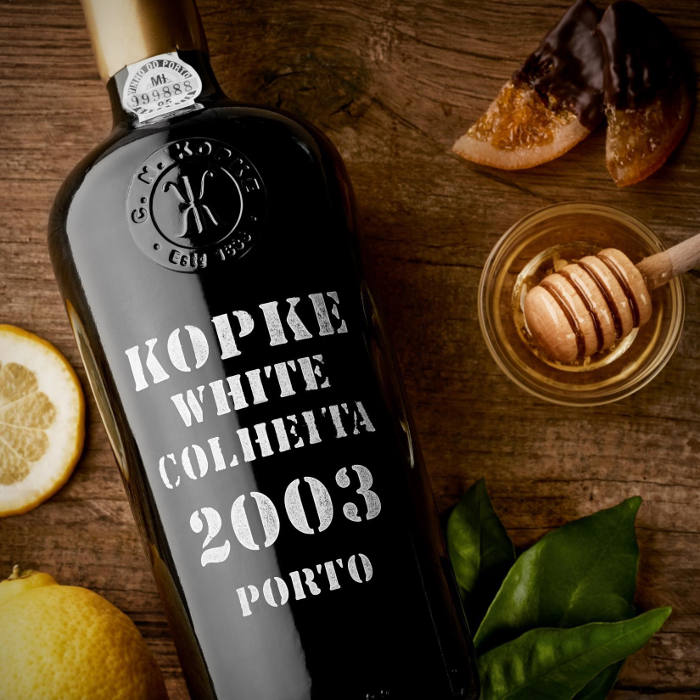
In Piedmont, as elsewhere, the heat wave shrivelled grapes and resulted in some unbalanced musts, although the oldest vines in Barolo and Barbaresco managed to withstand the weather and yield some exceptional wines. As for Tuscany, very difficult heat wave conditions were felt in all but the highest vineyards of Chianti Classico. For this reason, Tuscan 2003 wines tend to be fairly unbalanced.
Portugal: A general declaration of vintage, the 2003 produced classic Vintage Port. This year's wines have great traditional tannic structure with attractive ripe fruit flavours.
Spain: The growing season in Spain was made difficult by drought, however those producers who looked after their vines produced excellent, intensely concentrated wines.
Click here to see our range of 2003 Wine
Back to top
2002
This Year in History: Fun Fact: BBC 6 Music, the first new BBC Radio station in decades, is launched.
Eurovision Winner: Latvia with the song "I Wanna" by Marie N
Top Grossing Movie: The Lord of the Rings: The Two Towers
Bordeaux: For the third year in a row Bordeaux pulled off yet another miracle vintage, thanks to a final bout of fine weather. The long, fine, sunny days of early autumn - and a great October, in fact - opened the way for some fine wines. The best-prepared chateaux made wines ranging from good to excellent. Their wines are strongly built and truly the “Highs” of the vintage. They have high acids (about 15% higher than normal), high alcohol content (over 13% natural alcohol), high tannin content, and high fruit content. They also have tight structure, dark colours, and lots of power. Quite full-bodied, these could make a great 21 year old wine gift for an anniversary this year.
Champagne: The 2002 is proving to be the finest Champagne vintage since 1996, more redolent of 1995 or 1990 in terms of the ripeness of fruit and power of structure.
Italian: The 2002 was a poor vintage for Italian wines - only the best producers' wines will be reliable for quality.
Portugal:
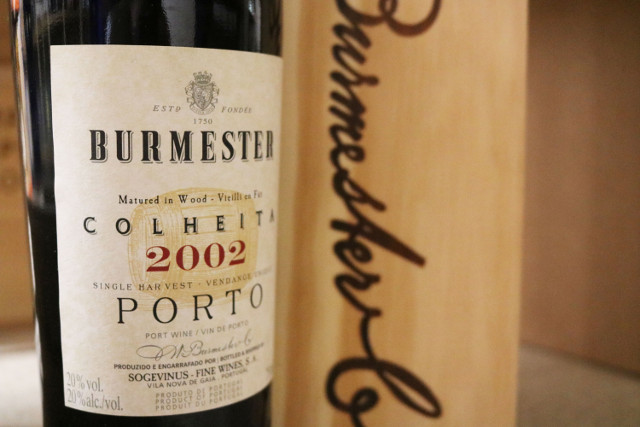
The 2002 Port Vintage was a potentially excellent one for those who picked their grapes before the rains which came late in the season, however, not so great for those who did not.
Click here to see our range of 2002 Wine
Back to top
2001
This Year in History: Fun Fact: Peter Bray completes the first crossing of the Atlantic Ocean in a kayak.
Eurovision Winner: Estonia with the song "Everybody" by Tanel Padar, Dave Benton & 2XL
Top Grossing Movie: Harry Potter and the Sorcerer's Stone
Bordeaux: The 2001 vintage is characterised by wines that are in a classic style, with high tannic qualities and with fresh acidity and medium body. The weather throughout the growing season was cool and cloudy. A mostly dry September and October allowed the late harvest of a large crop. The wines will be relatively slow to evolve given the relatively good acid and tannin levels.
Italian: The 2001 Italian vintage caps off a remarkable string of outstanding vintages for Piedmont that began in 1996. During that relatively brief time period producers gained a great deal of knowledge and experience, both in the vineyard and in the cellar, a positive trend which continues today. In addition, 2001 featured the growing conditions in which Nebbiolo thrives: hot daytime temperatures alternating with cool nights. The favourable weather, along with producers' newfound sense of maturity, combined to produce an extraordinary set of wines. Simply put, for Barolo, 2001 is the most complete of the vintages between 1996 and 2001. These would make an excellent 22 year old wine gift for a birthday or anniversary celebration this year, and will keep well for years to come.
Portugal:
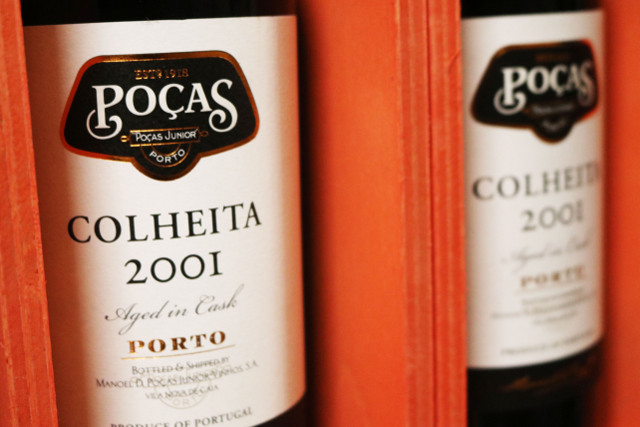
One of the wettest winters on record was followed by a moderately hot summer with light winds, which helped prevent disease. Harvest started at Quinta de Vargellas on September 17th and on the 20th in the Pinhao Valley, so rain on the 29th and again on the 5th of October affected only the tail end of the vintage. All in all, yields were up almost 30% over the preceding year.
David Guimaraens, Head Winemaker at Taylor's, Fonseca and Croft and the sixth generation of his family to make wines for Fonseca, wrote: “This year is certainly distinguished by being a year of larger production with a consistently high overall quality, as has not been seen since 1995.”
Rhone: The 2001 Rhone valley vintage produced powerful, juicy wines with concentrated, ripe fruit and silky tannins. The vintage was marked by a dry summer which concentrated sugar levels and a cooler September which, due to the northerly winds, contributed very good acidity levels alongside ripe tannins. 2001 may be more complete than the 1998s, making it the best vintage here for a dozen years.
Click here to see our range of 2001 Wine
Back to top
2000
This Year in History: Fun Fact: Millennium celebrations take place throughout the UK. The Millennium Dome in London is officially opened by HM The Queen.
Eurovision Winner: Denmark with the song "Fly on the Wings of Love" by the Olsen Brothers
Top Grossing Movie: Mission Impossible 2
Bordeaux: The fabled millennium vintage produced wines that are of true greatness and longevity. They are characterised as being powerful and concentrated, with high tannins. The quality is due to ideal weather from the end of September; this allowed the grapes to develop thick skins from lack of moisture. For the first time in many years there was little rain in the harvest season allowing the skins to thicken further. This served to further concentrate the wines. These have evolved slowly and will continue to do so for decades to come, making them an excellent idea for a 23 year old wine gift for a birthday or anniversary whether to drink now or keep for future drinking.
Italian: 2000 was one of the finest post-war vintages for Piedmont wines. The wines are still tannic and youthful, and will last for many years to come.
Portugal:
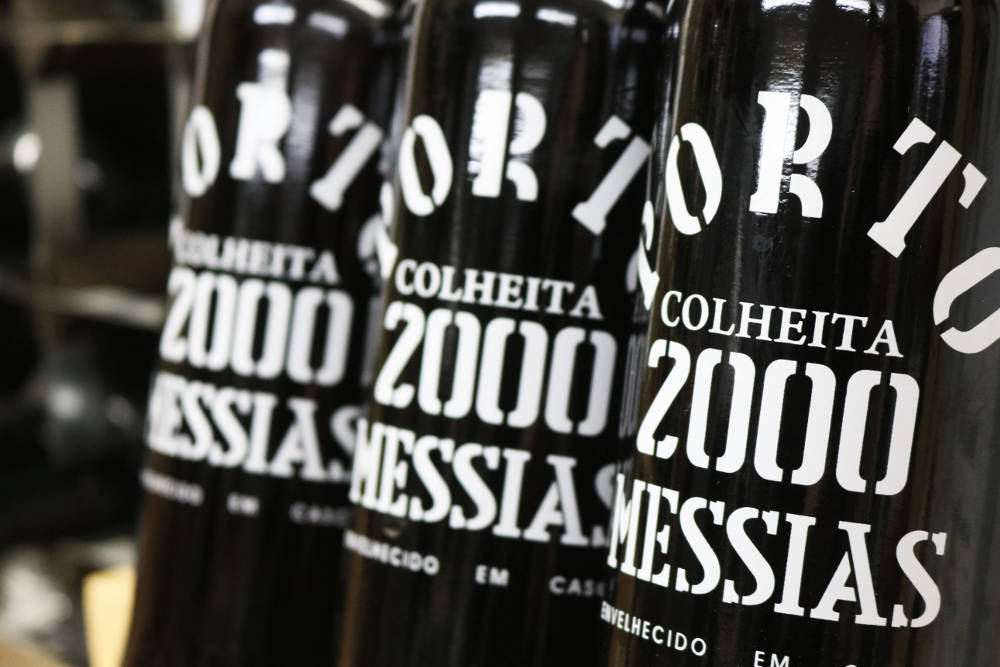
Click here to see our range of 2000 Wine
Back to top
1999
Vintage Summary and Recommendations: A short summary of the fabulous 1999 Vintage with our top recommendations Visit our 1999 Wine and Port Offer Page This Year in History: Fun Facts: Space Shuttle Discovery became the first vessel to dock with the International Space Station. Bordeaux: A very good vintage that produced low acidity, ripe wines which have matured quickly and are drinkable now. However, they should last for years to come. The weather during the growing and harvest season was excessively wet and hot and in earlier times could have been disastrous. However, those Chateau that adopted modern selection and processing techniques produced wines of good quality. Those that did not fared less well, a discrepancy reflected in the wide variation in quality across the region. Italian: The Barolos and Barbarescos are very good and are reminiscent of the 95s in style and structure. 1999 was the third top vintage in a row in Tuscany. Despite the wet weather in most of Italy, the region remained hot and dry for most of the growing season, although there was intermittent rain during the harvest. Those who picked before the September rains have produced deeply coloured wines that are brimming with rich, ripe fruits. Portugal: 1999 was not a general declaration of vintage, however some vineyards produced small quantities of outstanding single quinta wines. These make a great 25 year old wine gift for a birthday or anniversary.
Click here to see our range of 1999 Wine
This Year in History: Fun Fact: The Eurovision Song Contest was held in Birmingham at the National Indoor Arena. Bordeaux: This year favoured the merlot grape, leading to a glorious vintage in Pomerol and St Emilion. This is undoubtedly the greatest vintage for Merlot-dominated wines since 1990, and the quality of the St-Emilions and Pomerols is outstanding being powerful and tannic. The Médoc wines were initially underrated, but properties with the finest terroirs have produced some excellent high-quality wines that are now showing tremendous promise. Champagne: The 1998 champagne has, over the last couple of years, been re-appraised in an upwards direction. What was always seen as very good year is now regarded as an excellent one. The wines are ripe but not overly so, fleshy but with structure to repay cellaring. Italian: Another very good year for Tuscany and Piedmont, although some Tuscan producers suffered from poor picking timing during the October rains. Those that picked before or after were rewarded with long living wines but to be sure, we would recommend picking a Barolo or Barbaresco from Piedmont. The wines are classics and will drink well now or keep for years to come. Portugal: A port wine from 1998 would make an excellent 25 year old wine gift for a birthday or anniversary. This year was not generally declared as a vintage, however a small crop produced some good and powerful Single Quinta Vintage Ports. Colheita or Single Harvest Ports such as Kopke or Barros would make an excellent alternative for port lovers and newcomers alike. Spain: This would have been an exceptional year for Rioja. The weather was mild in winter months with a non frosty Spring offering excellent flowering conditions throughout the summer. Unfortunately, the rain hit hard in mid September forcing an early start to the harvest. By October 12th everyone was picking or had picked, but those who picked late saw the benefit of an Indian summer which allowed ripening to continue in excellent conditions until November 3rd. These later-gathered grapes will, it’s hoped, make some excellent Reservas.
Click here to see our range of 1998 Wine
This Year in History: Fun Fact: The Simpsons became the longest-running animated television series. Bordeaux: The 1997 wines of Bordeaux are characterised by being attractive, soft and user-friendly with broad appeal. They have been quick to mature and, except for the most concentrated wines, should be drunk within the next few years. Italian: 1997 was undoubtedly a great vintage for Italian wines. Like the 1982 and 1990 Bordeaux vintages, it will have its critics because of its extreme style, but if wine is a beverage of pleasure, this vintage offers extraordinary wines. Portugal:
Click here to see our range of 1997 Wine
This Year in History: Fun Fact: The Hubble Space Telescope revealed images of Pluto’s surface for the first time. Bordeaux: The 1996 vintage produced exceptional wines that broke all price records (until the 2000 vintage). The top wines reached full maturity a decade ago, but will keep for many more years. Italian: 1996 was an outstanding vintage for Italian wines. In Piedmont, tricky weather all summer yielded to a period of hot and dry weather from mid-September through to mid-October. This enabled the late-ripening Nebbiolo to achieve a classic balance between fruit and structure. The best Barolos and Barbarescos are substantial on the palate and give every indication of a long life ahead, offering a superlative drinking experience if kept well. Like Piedmont, Tuscany had a cooler than average summer and this enabled a long, slow ripening of the grapes. The wines are richly aromatic, deeply coloured and abundantly fruity - making them brilliant 27 year old wine gifts for a birthday or anniversary. Portugal: Although 1996 was one of the wettest years for port on record, the Douro region produced a large, abundant crop. The year was not declared as a Vintage, however a few good port wines were produced which are noted for being fruity and forward. A 1996 Vintage Port would make for an excellent 27 year old gift for a special anniversary this year. Spain: A very good vintage for Spain, though less fine than the preceding two. The 1996 was particularly successful in Ribera del Duero, where ripe, relatively friendly wines were made.
Click here to see our range of 1996 Wine
This Year in History: Fun Fact: After setting sail in September of ’94, British woman Lisa Clayton completes solo sail non-stop around the world. Bordeaux: The 1995 wine vintage produced consistent Bordeaux wines that reached full maturity by 2012. Superb weather in July and August augured well for the crop, however rain in September slightly impaired the quality. Unlike 1994, the rain only lasted for just over a week and those producers that delayed harvesting were rewarded with a harvest of mature grapes. The wines produced from these vineyards are dense tannic affairs that should mature well. Italian: The 1995 wine vintage in Italy is generally rated as good. Although it was overshadowed by the exceptional vintages that followed. The vintage produced consistent wines - the best examples from Tuscany and Piedmont are now at the peak of their maturity. Portugal: The 1995 port wine vintage is rated as very good. If it hadn't directly followed the quite exceptional 1994 Vintage, 1995 could well have been a fully declared Vintage. It did however produce exceptionally good Single Quintas with concentrated, fruity and well-structured ports. The 1995 port vintage also offers plenty of good examples of barrel aged (tawny) port from established producers such as Kopke, Messias, Barros and Krohn that would offer exceptional drinking today, making these excellent 28 year old wine gifts for a 28th birthday or 28th anniversary celebration. Spain: The 1995 vintage for Spain was an 'Excelente' vintage with what was then (although superseded in 1996, then '97 and '98) the biggest harvest of all time. This was the second 5-star year vintage in a row.
Click here to see our range of 1995 Wine
Vintage Summary and Recommendations: A short summary of the fabulous 1994 Vintage with our top recommendations Visit our 1994 Wine and Port Offer Page This Year in History: Fun Fact: Amazon was founded in this year. Bordeaux: The 1994 vintage is generally rated as good but a little inconsistent. The top estates produced some very fine wines that are far superior to those in the poor years between 1991 and 1993. The best 1994 Bordeaux wines are characterised by high tannin levels with rich fruit and should mature well over the next few years. Italian: In Tuscany, the Chianti Classico, Vino Nobile and Brunello had a very good year with a warm early Spring. The good weather conditions carried through to the harvest season with healthy, ripe fruit. In Piedmont prolonged rain caused serious problems, however a few producers still made good Barolo and Barbaresco wines. Portugal: A 1994 Vintage Port makes a great 30 year old wine gift for a 30th birthday or anniversary: 1994 was one of the great vintages of the 20th Century that produced classic, monumental port wines with rich fruit character. While these wines can be approached in their youth, the best need 20 years in bottle, making them mature for drinking now or perfect to age for another 20 years. Our wine buyer highly recommends the 1994 Taylor's Vintage Port , an outstanding Vintage Port that scored an incredible 100 points from Wine Spectator and 97 from Robert Parker. Spain: This was the ‘Aaah!’ vintage; after three years of drought and indifferent quality, nature relented and provided one of the best vintages of the century (compared by many producers with the legendary 1964). The grapes showed tremendous ripeness, colour and extract. This was a truly great vintage in the making, although (or perhaps because) it was relatively low in quantity.
Click here to see our range of 1994 Wine
This Year in History: Fun Fact: Czechoslovakia officially splits into the Czech Republic and Slovakia. Bordeaux: Champagne: 1993 was a particularly early vintage, helped by scorching spring heats. Harvest thus started early in September, and proved to be prompt and plethoric. Then summertime was dry and sunny. Italian: Italian wines from the 1993 vintage fared better than their predecessors in 1992 - the weather was still unfavourable, however there were more acceptable wines produced. Barolos from this vintage offered a good experience, and although fully mature are still drinking well. Portugal: The 1993 was one of the worst years ever for weather in the Douro, with rain falling throughout the harvest. No declarations were made and little or no vintage Port was made. We would recommend a 30 year old tawny style Port for a 30th Anniversary gift. Whilst these do not have 1993 on the label - they have been aging for 30 years and are amazing fortified wines.
Click here to see our range of 1993 Wine
This Year in History: Fun Fact: 1992 was a year where the average house price was £68,634 and a gallon of petrol cost £2.13. Bordeaux: For Bordeaux, rain during the harvest produced wines of variable quality. The crop was enormous but most of the top vineyards adopted strict selection policies, discarding a large percentage. This led to wines that are characterised by being soft, fruity, and low in acidity level with light to moderate tannin levels and moderate to good concentration. The wines are now mature and should be drunk soon. Italian: A poor year for Italian wines, the weather did not favour the vintage. The best producers will be the only ones to have produced good wines from this year. Portugal: The 1992 vintage was declared by some port houses who produced some rich and concentrated wines. The port was still young in 2008 and benefitted from further cellaring, making them a brilliant 31 year old wine gift for a birthday or anniversary in 2023.
Click here to see our range of 1992 Wine
This Year in History: Fun Fact: The first web page went live on August 6, 1991. It was dedicated to information on the World Wide Web project and was made by Tim Berners-Lee. Bordeaux: Italian: The 1991 Italian vintage was better than first thought, but did not rival the three exceptional vintages that preceded it. July was generally very hot and sunny, which continued into August. September remained warm, but rainfall from the middle of September on prevented Nebbiolo and Barbera from ripening fully. As a result the crop was small and the wines will not maintain the traditional longevity associated with the grape. In Tuscany, most producers in Chianti made only small quantities of Riserva, if any at all. In Montalcino and Montepulciano however, producers who thinned out the crop during the summer were rewarded with the raw materials for wines which have kept well. The best examples of Brunello and Vino Nobile have good depth and structure, and although the fruit is not particularly exuberant they are still drinking well now. Portugal: Declared as a Vintage by some producers, the first since 1985. The 1991 was a very small but good Vintage; the grapes tended to be small with little juice resulting in deep, dense powerful wines for the medium to long term. It was declared by the Symington-owned houses (Dow, Graham, Warre, Smith Woodhouse, Gould Campbell, Quarles Harris) while Taylor and Fonseca declared Single Quinta wines. Both the declared 1991 Vintage Ports and the 1991 Single Quinta wines would make a great 32 year old wine gift for a 32nd birthday or anniversary celebration. Spain: The 1991 Rioja and Ribera del Duero vintage was an excellent one. The crop was small, but the wines produced should have weight, structure and quality for years to come.
Click here to see our range of 1991 Wine
This Year in History: Fun Fact: A Mars bar would have cost you 27p, a litre of unleaded petrol would have cost just 40.2p per litre and the average price of a pint of milk was 30p. Bordeaux: 1990 Wine Vintage was the third year in a row of excellent Bordeaux vintages. The hot, dry sunny year ensured that, like many of the great vintages, 1990 produced rich wines from across the Bordeaux region. Many of the red wines from this vintage have a roasted or baked quality derived from the hot sun ripening the grapes. The vintage is characterised by having a tannic quality coupled with low acidity. Most of the quality wines from this vintage are still at the peak of their maturity, making them great 33 year old wine gifts for a birthday or anniversary. Champagne: A superb year and one of the top half-dozen vintages of the last century. The champagnes display good body and marvellous depth of fruit as well as great finesse and very good longevity. The best will be drinking well for many years to come. Italian: 1990 was a spectacular vintage for Italy, one of the best in modern times. Most producers made very good wines at all levels. The wines are drinking well but will continue to develop with good cellaring. Portugal:
Click here to see our range of 1990 Wine
This Year in History: Fun Fact: Tim Berners-Lee, a British scientist, invented the World Wide Web (WWW). Bordeaux: Champagne: The 2nd in a trio of great vintages. Spring was early and was followed by ideal growing conditions with a very hot summer leading to a large crop of very ripe and healthy grapes being harvested in September and October. The champagnes are rich, luscious and soft, being exceptionally appealing in youth but also possessing enough rip and acidity to reward extended cellaring. In style, and character, the champagnes are reminiscent of the glorious 1982 vintage. Portugal: 1989 was a very hot year in Portugal. The summer was extremely warm which led to an early harvest under ideal climatic conditions. There are some some excellent dry wines produced from this harvest. Our recommendation is the 1989 Poco de Lobo Cabernet Sauvignon , fully mature and still drinking beautifully. Portugal: 1989 was not a general declaration of Vintage for Ports. However this was a good year that produced some attractive, full bodied single quinta wines with plenty of appeal. A Port like our 1989 Messias Vintage Port , recommended by our wine buyer, makes an excellent 34 year old wine gift for a 34th birthday or anniversary. Spain: The 1989 Wine vintage in Spain was above average and many fine wines were produced. The winter of 1988/9 was very cold, dry and frosty - one of the driest of the century. There were heavy frosts at the end of November which affected some of the vines, causing an irregular budding the following spring: Viura was worst hit, with some damage to Tempranillo and less to Garnacha vines. Spring, by contrast, was very warm with the vines developing early and setting taking place in Rioja Baja in the first week of June, with the rest of the region following suit in the next two weeks. The summer was hot but, as so often, afflicted by hailstorms over quite wide areas of Rioja Alta and more localised parts of Rioja Alavesa. However, by the end of summer the vines were estimated to be two weeks in front of a normal year in development terms. The vintage started in Rioja Baja on 6th September.
Click here to see our range of 1989 Wine
This Year in History: Fun Fact: Microsoft sold its one-millionth mouse, and McDonald’s opened its ten-thousandth restaurant. Bordeaux: This was the first in a trio of great vintages for Bordeaux, and one that has been rather overshadowed by the 89s and 90s. 1988 is the most classic of the trio, with many of the wines not being overtly fruit-driven but having levels of extract and concentration that that make them perfect candidates for keeping. These would make a brilliant 35 year old wine gift for a birthday or anniversary celebration. Italian: 1988 Italian wines were produced in an excellent, almost outstanding vintage. Good growing conditions particularly in Tuscany and Piedmont produced rich, full bodied wines that will hold for many years to come. Portugal: 1988 was a very difficult growing year, with bad weather in the spring and summer resulting in a small crop of average quality. As a result there was no declaration of vintage (a mark of the highest quality). Nevertheless, some very attractive single quinta ports were produced.
Click here to see our range of 1988 Wine
This Year in History: Fun Fact: Channel Tunnel construction is initiated, and was expected to open in 1993 or early-1994 and was officially opened 6th May 1994. Bordeaux: In Bordeaux, the 1987 is generally under-rated as a vintage. Had it not been for 14 straight days of rainfall in early October, then the harvest would have been a great one. The wines are characterised by being light to medium bodied, ripe and fruity with low tannins and low acidity. 1987 wines are generally overlooked in favour of the great vintages that followed in 1988-1990. However, those producers who adopted strict selection policies produced some very good wines which still make good drinking but should be consumed soon. Italian: 1987 was a good vintage for the Italian region. The wines produced are generally of good consistency. Barolos are now fully mature and ready for drinking. Portugal: Spain: A highly respected vintage of very good quality. The highest and latest-picked vineyards gave the best grapes – so Rioja Alavesa benefitted.
Click here to see our range of 1987 Wine
This Year in History: Fun Fact: Halley’s Comet appeared in the night sky, as it also did back in 1682, 1758, 1835, and 1910. Halley’s Comet orbits the sun every 75-76 years, and will not be seen again until 2062. Bordeaux: 1986 was a great vintage for the wines produced in the northern part of Bordeaux (St Julien, Pauillac) where many of those wineries produced deep, concentrated wines that will mature over the next decade or two. What marks the 1986 vintage is tannin. The tannins originate from the skins of those well ripened grapes which were left on the vines for several weeks before harvest - in tastings the 1986 usually stands out because of this particular quality. The wines only reached their peak recently but will remain there for many years to come. Drinking well now, these wines would make a great 37 year old wine gift for a birthday or celebration and would grace the table of any anniversary event. Italian: 1986 was a very good year for Italian wines. The wines produced that year are generally quite consistent and there are some great Barolos from Piedmont. The wines have reached full maturity but will last for a few more years. Portugal: A good year that produced forward, fruit packed Single Quinta Vintage port wines that are at their best now and will remain so for many years, however there was no declaration of vintage in 1986. Tawny or Single Harvest Ports will offer a great alternative to Vintage Port. Spain: The 1986 was a good vintage for Rioja and Ribera Del Duero, with the former producing some good but rather lean wines and the latter standing out for its power, structure and complexity.
Click here to see our range of 1986 Wine
This Year in History: Fun Fact: Walt Disney World received its 200-millionth guest. Bordeaux: The 1985 wine vintage produced examples that are characterised by being well developed, rich and having a seductive complexity with an attractive perfume. A drought for much of August and September led to concentrated grapes at harvest. The wines have now generally gone through the peak of their maturity and should be drunk within the next few years. Italian: 1985 was an outstanding vintage for Italian wines, one of the best in the last 50 years for Piedmont and Tuscany. The vintage produced wines of great consistency, and the best wines should be great. Portugal: Spain: 1985 was a near-perfect vintage for Spanish wines, with a warm summer and a perfect ripening season. The wines produced are generally easy-drinking wines of medium intensity. About 10% of wine went into Gran Reserva production.
Click here to see our range of 1985 Wine
Vintage Summary and Recommendations: A short summary of the fabulous 1984 Vintage with our top recommendations This Year in History: The FTSE 100 Index starts and Sweden wins Eurovision with the song " Diggi-loo Diggy-ley" by Herrey's. Entrepreneur Mark Zuckerberg, was born in this year. He became the world's youngest billionaire after founding Facebook social media site in 2004. Bordeaux: The Bordeaux vintage got off to a good start with a warm April. Things quickly went downhill after that; May was cool and rainy which led to poor flowering particularly for the Merlot crop. This had follow on problems in the Right Bank (St Emilion, Pomerol), as there was not enough ripe Merlot to create quality Bordeaux wine. The producers in the Left Bank tended to over compensate with more Cabernet Sauvignon. By the time July arrived, the vintage was lagging behind. July and August were warm, dry months which helped the left bank chateaux into thinking the vintage would end up fine, if their wines were Cabernet Sauvignon based. In September, Cyclone Hortense hit the Bordeaux wine region, the first in its history. Many right bank Chateau declassified their entire crop in St. Emilion and Pomerol. The left bank fared slightly better but the wines produced were diluted; few have survived today and those that have are now quite a rarity. Italian: A challenging vintage that produced some good wines in Piedmont by those producers that adopted strict selection techniques. Some weaker wines were produced in Tuscany. The first three months of the year were cool. Although the weather in April was better, May was cold, cloudy and wet causing problems for bud-break. Flowering was therefore delayed by two to three weeks. The ripening process was hampered as a result of an unsettled summer, however the vintage was salvaged partly by a warm final ripening period for Barolo. In Tuscany this was Chianti's first vintage under the new quality enhancing DOCG laws. This was a poor vintage and no Riservas were made. Producers had to rely heavily on concentrated and severe selection to produce acceptable wines. Portugal: A 1984 Port would make an excellent 40 year old wine gift, whether for a birthday or anniversary. Although there was no declaration of vintage this year, some attractive single Quinta ports were produced. These bottles are by now fully mature but will keep for years. The 1984 vintage started off with a cold wet spring, with summer not really starting until June. The first three weeks of September were fine, hot and dry, but at the end of September the temperature dropped sharply and it never recovered. However, there was good weather in the final part of the harvest and the winemakers' skills were tested in order to produce a good wine. Some excellent examples of the winemakers' talent are around, such as Messias, Warre, Dow and Fonseca. Some excellent single-harvest Colheitas were also produced.
Click here to see our range of 1984 Wine
Vintage Summary and Recommendations: A short summary of the fabulous 1983 Vintage with our top recommendations This Year in History: The final episode of the TV series M*A*S*H, airs on CBS, to a total audience of 121.6M. Luxembourg won Eurovision with the song " Si La Vie Est Cadeau" by Corinne Hermes. Henry Cavill, Actor, was born in this year. He is best known for his role as Superman in several of the DC films. Bordeaux: The 1983 vintage produced wines of mixed quality, with some excellent wines from the Margaux region. A tropical humid heat-wave in August led to over-ripening in some regions, but those Chateaux who adopted careful selection produced some outstanding wines. Those from the Margaux region were probably the greatest of the decade. St Julien and Pauillac also turned out very good wines. The irregularity means that no single characteristic defines the vintage, however the wines are now at the peak of their maturity. Champagne: A good year, that was overshadowed by the outstanding 1982 vintage. The winter was harsh, and conditions did not improve much in spring, which was cold and damp. As a result, flowering was late, although when it did take place it did so under ideal conditions. The sunny, warm weather continued throughout much of the summer, although enough rain fell to prevent the crop from drying out. Rain, and the temperature, fell at the start of September, but conditions picked up in time for the harvest at the end of the month and beginning of October. Italian: The 1983 wine vintage is rated as very good for the regions of Tuscany and Piedmont. The vintage produced rich, structured, full-bodied wines that are still drinking well today. Portugal: 1983 vintage ports are now considered great classic, concentrated, rich and potent wines. It was a general declaration of vintage, with 10 major shippers declaring this year. In youth the wines were powerful yet austere, lacking the showy opulence of the 85s. However, in bottle they have developed marvellously, with the best examples being complex and harmonious. These are excellent value-for-money ports, and would make a brilliant wine gift for a birthday or anniversary.
Click here to see our range of 1983 Wine
Vintage Summary and Recommendations: A short summary of the fabulous 1982 Vintage with our top recommendations This Year in History: UK's fourth terrestrial television channel, Channel 4, begins broadcasting. Germany won Eurovision with the song " Ein Bischen Frieden" by Nicole. Actor Eddie Redmayne was born in this year. His portrayal of Stephen Hawking in the 2014 film The Theory of Everything earned him an Academy Award for Best Actor. Bordeaux: The 1982 was an outstanding wine vintage that produced some of the most complex profound Bordeaux wines since 1961. Great weather made this vintage a success - harvests were boosted by a September heat-wave, the result of which was super-ripe grapes, both in respect of sugar content and physiology. The lesser wines from the St Emilion, Graves, Pomerol and Margaux regions are now fully mature. The heavyweight wines from these regions and St Julien, Pauillac are evolving slowly and will continue to do so for years to come. Champagne: Italian: 1982 was a tremendous vintage for big, rich and fruity Barolo and Barbaresco wines. The grapes were in superb condition for an early harvest and, thanks to the wonderful summer, the crop was large as well as very healthy. Wines from Tuscany such as Chianti or Brunello were also in fine form producing ripe, flavoursome, well-balanced wines. Portugal: 1982 was a good Port Vintage, with elegant and aromatic wines. Although a few Houses declared the Vintage, most made Quinta wines.
Click here to see our range of 1982 Wine
This Year in History: Fun Fact: "Little Miss Bossy", the first book in the Little Miss series (the female counterpart to the Mr. Men series) is first published. Bordeaux: Italian: The good 1981 Italian vintage produced a large crop of consistent wines. The best examples from Tuscany and Piedmont are now at their peak of their maturity, and will offer a good drinking experience. Portugal: No vintage port was made in 1981. Our recommendation would be for a 1981 Colheita port from 1981. Kopke are renowned for their colheita and this would make a wonderful gift for a 42 year old Birthday or Anniversary this year. Spain: 1981 was considered one of the great vintages for Rioja, and this wine is at its peak of maturity.
Click here to see our range of 1981 Wine
This Year in History: Fun Fact: Tennis player Venus Williams was born. Bordeaux: The 1980 wine vintage produced wines of variable quality from Bordeaux. A very wet, cool year resulted in wines that were light and diluted. Nevertheless, some producers who operated a strict selection policy still managed to produce acceptable wines. Champagne: In Champagne, the 1980 is an exceptionally fine, rich vintage. Italian: 1980 for Italian wines was a very good year. The wines are generally quite consistent and there are some great Barolo wines from Piedmont. The wines have reached full maturity but will last for a few more years. Portugal:
Click here to see our range of 1980 Wine
This Year in History: Fun Fact: Board game Trivial Pursuit is launched. Bordeaux: Initially overlooked in preference to the 1978 Vintage, 1979 was one of the very few cool years that produced a good vintage for Bordeaux. The wines were initially very tannic and acidic but after four decades of cellaring the wines have matured nicely and are now at their peak. They will remain so for years to come. Italian: 1979 is a very good wine vintage. Good growing conditions particularly in Tuscany and Piedmont produced rich, full bodied wines. Portugal:
Click here to see our range of 1979 Wine
This Year in History: Fun Fact: Louise Brown, the first “test-tube baby,” was born healthy in Oldham General Hospital, UK. Bordeaux: The 1978 wine vintage was excellent for the Bordeaux region. The dry, hot summer produced wines that were medium-bodied, deeply coloured, fruity and moderately tannic. The wines reached their peak of maturity in the 1990s but are still drinking well now and will continue to do so for some years to come. Italian: 1978 was a trouble free vintage across the Tuscany region with an early spring, warm but not excessively hot summer and well distributed rainfall. There was a certain amount of rain early in the harvest but those producers who picked later benefited from a period of uninterrupted fine weather. Altogether for Tuscany this was a 4 out of 5 Vintage. Conversely, the year started with cold and damp weather in Piedmont. Spring was particularly wet with lower than average seasonal temperatures; not until the second half of June did the weather pick up, too late for the flowering, which took place in very wet conditions causing a significant reduction in the crop. After light rains at the beginning of September, the weather suddenly turned around and the rest of the month was hot and dry with a marked difference between day and nighttime temperatures. The dramatic improvement continued through until the end of the Nebbiolo harvest during the third week of October. Natural selection and a warm autumn meant a very small crop of thick-skinned Nebbiolo grapes in Barolo and Barbaresco. By the end of the season this hailed as a great, long-lived vintage with a rating of 5/5. The produce of an exceptional vintage, 1970 ageing wine such as Barolo would make an excellent 45 year old wine gift for any birthday or anniversary. Portugal:
Click here to see our range of 1978 Wine
This Year in History: Fun Fact: British Airways launched regular supersonic Concorde service between London and New York. Bordeaux: Poor weather throughout the growing season in Bordeaux led to a very small crop of thin, light 1977 wines, most of which were drunk within a few years of the vintage. As a result, wines originating from this vintage are rare. Italian: 1977 was a good vintage for Italian wines. Top regions such as Tuscany and Piedmont produced rich, full bodied wines - they are now fully mature but will still make good drinking today. Portugal: Spain: A few top producers in Spain made very good wine – for example, Martínez Bujanda and Salceda – but most of it was run-of-the-mill and was drunk as joven (very young wine). A meagre 1% achieved Gran Reserva status.
Click here to see our range of 1977 Wine
This Year in History: Fun Fact: The first commercial Concorde flight takes off[6] from Heathrow Airport for Bahrain. Bordeaux: 1976 wines still offer delightful, attractive drinking if they have been well stored. The wines are characterised as soft-bodied, with low acidity levels. Italian: A large crop was produced, but the 1976 wines lacked the ripeness and longevity of the preceding vintage. Although the wines will not improve further with age, they are still very drinkable - Barolo or Amarone being the most likely to offer a great experience. Portugal: Following the driest winter on record there was a total drought throughout the summer, until the end of August. This resulted in a very low production, however those ports that were produced are exceptionally concentrated and full-bodied. They lack a little freshness but this is understandable given the dry conditions. There are very few bottle aged ports available but the Colheita ports (barrel aged) from this year are excellent. These would make a great 47 year old wine gift for a birthday or anniversary. Spain: A good year that produced good quantities of Rioja. Gran Reserva made the annual average of 7%.
Click here to see our range of 1976 Wine
This Year in History: Fun Facts: The first episode of the popular sitcom Fawlty Towers is broadcast on BBC Two. Bordeaux: The summer months were hot and, initially, dry. Despite storms in August, good weather was restored through September and October, permitting the harvest to go on uninfluenced by rain. The wines on release were incredibly tannic yet were intensely fruity and rich. This has mellowed somewhat over 40+ years of cellaring leaving excellent examples of wines that will last well into the future. Italian: The 1975 is widely regarded as an excellent vintage for Tuscany. The wines are generally big on alcohol, colour, extract and acidity. 1975 is remembered for the extremely hot and dry summer which produced grapes of high concentration, although the harvest in Tuscany was complicated by late rainfall. 1975 was without a doubt the outstanding Brunello vintage of the decade and in the opinion of many producers one of the all time greats. The best wines in Chianti were very good indeed. Portugal:
Click here to see our range of 1975 Wine
Vintage Summary and Recommendations: A short summary of the 1974 Vintage with our top recommendations Visit our 1974 Wine and Port Offer Page This Year in History: New Year's Day is celebrated as a public holiday for the first time and Sweden wins Eurovision with the Abba song "Waterloo". Olivia Colman, Actress, British actress was born in this year. She who won an Academy Award for Best Actress for her role as Queen Anne in the 2018 film The Favourite and was cast as Queen Elizabeth II in the Netflix series The Crown. Bordeaux: A massive crop was produced, but the 1974 wines from Bordeaux were hard and tannic and lacked the ripeness of the 1975 vintage. The wines have declined gracefully over the decades and only the top houses will be drinkable nowadays. Italian: A 1974 wine from Italy will make a perfect 50 year old wine gift. Celebrated as a great vintage in Italy at the time, the 1974 vintage is now still considered to be very good. The 1974 vintage produced a large crop, close to the 1964 but with less quality. Summer was hot and dry and a mild autumn allowed the grapes to ripen fully. The wines produced are characterised as being fairly firm and tannic with low acidity but good, rich fruit. The harvest time was very long and lasted through November. Wines produced in this year have reached full maturity but continue to hold. Portugal: The 1974 port vintage produced some excellent single harvest colheita, making a port from this year the ideal 50 year old wine gift for a 50th birthday or anniversary. For vintage ports it was a moderate year that was not declared by the major port houses; despite a huge crop, very few vintage port wines were bottled from this year and the bottles that were produced are very rare.
Click here to see our range of 1974 Wine
Vintage Summary and Recommendations: A short summary of the 1973 Vintage with our top recommendations This Year in History: Television sitcom Last of the Summer Wine begins its first series run on BBC One.The Eurovision Winner was Luxembourg with the song "Tu Te Reconnaitras" by Anne-Marie David. Tom Kerridge, Chef, was born in this year and features on the reality culinary programs MasterChef, Saturday Kitchen, and Great British Menu. Bordeaux: Bordeaux 1973 wines are the product of a cold, wet summer, which was made worse by a rain in late August which bloated the grapes just before harvest. When released they were light, early drinking wines and time has not improved them! If you’re seeking a gift to celebrate a birthday or anniversary, we would recommend a bottle of colheita Port or a 1973 Montilla Moriles. Italian: Only a small crop of 1973 wine was produced in Italy and the wines are now very rare. The growing season was held back by inclement weather in the main Italian wine regions of Piedmont and Tuscany. Tuscany produced a small crop of Brunello and Chianti, generally characterised as having good colour, high acidity and some dryness. The best of the vintage originates from the more southerly regions. Portugal: 1973 was not declared and very little Port exists from this year. A wet winter followed by an inconsistent summer led to a small crop. In 1973 there was a lack of quality spirit to fortify the grapes resulting in very little Port being made. Remarkably, we discovered a cask of 1973 white colheita Port at Devesa and persuaded them to bottle it exclusively for us.
Click here to see our range of 1973 Wine
Vintage Summary and Recommendations: A short summary of the 1972 Vintage with our top recommendations This Year in History: The Tim Rice and Andrew Lloyd Webber musical Jesus Christ Superstar makes its West End debut. Luxembourg wins Eurovision with the song "Apres Toi" by Vicky Leandros and Zinedine Zidane, Football Player, Star attacking midfielder, led the French national team for over 10 years and. He helped France win the 1998 FIFA World Cup Championship, scoring two goals in the final match. Bordeaux: Bordeaux 1972 wines are generally characterised by having good colour, with dryness and high acidity. However, the style was for early drinking and very few examples exist today. The growing season was difficult with the grape development held back by inclement weather - this did not allow the grapes to fully ripen by harvest time. However, sweet wines from Sauternes and Barsac of this year are very good. Italian: Only a small crop of 1972 wine was produced in Italy and the wines are now very rare. The growing season was held back by inclement weather in the main Italian wine regions of Piedmont and Tuscany. Tuscany produced a small crop of Brunello and Chianti, generally characterised as having good colour, high acidity and some dryness. The best of the vintage originates from the more southerly regions. Portugal: A good vintage that was not declared, some vintage port and single quintas were produced in this year. Port wines from 1972 are now fully mature but well stored examples will last for many years more, making them a great 51 year old wine gift for a birthday or anniversary.
Click here to see our range of 1972 Wine
This Year in History: Fun Facts: The United Kingdom became the sixth nation successfully to launch a satellite into orbit using its own launch vehicle, the Prospero (X-3) experimental communications satellite (built at the Royal Aircraft Establishment, Farnborough), using a Black Arrow carrier rocket from Woomera Launch Area 5 in South Australia. Bordeaux: Italian: Considered to be one of the greatest vintages of the 20th century for Italian wine, excellent growing conditions during 1971 produced a small crop of rich, full bodied wines that have aged gracefully and will last for many years. These wines would make an excellent 50 year old wine gift for a birthday or anniversary. In Piedmont, Barolo and Barbaresco are outstanding with a high level of consistency. In Tuscany, the best results were in Chianti where this year was officially rated a 5-star vintage. Many of the wines have shown exceptional ageing qualities. It was also a good vintage for Brunello. A 1971 Italian wine would be our recommendation for a superb 52 year old wine gift for a special anniversary or birthday. Portugal: No Vintage Ports were produced in 1971.
Click here to see our range of 1971 Wine
This Year in History: Fun Fact: Fast food restaurants serving hamburgers, fried chicken and French fries arrived in Britain and became popular during the 1970s. Bordeaux: An outstanding vintage, against which others are often compared. The 1970 is the best vintage between the outstanding years of 1961 and 1982. Perfect weather led to huge crop that set a record at the time, but was also of a high quality across all regions. The wines generally have a dark colour, are fragrant, have full body and a richness of fruit. The wines produced are consistent and will continue to drink well for decades to come. Italian: The Italian 1970 wine vintage was an outstanding one for the wine regions of Tuscany and Piedmont. The 1970 wine vintage produced rich, structured, full bodied wines that are still drinking well today. In Tuscany the spring was unusually cold resulting in a late bud break. This was mitigated by a long hot summer which continued well into autumn. The producers took advantage to harvest late, obtaining very good sugar levels. The vintage was excellent for Chianti and Brunello. In Piedmont It was a very good vintage obscured by legendary 1971 vintage. Barolo, Barbaresco, Nebbiolo all shine through. Portugal: Spain: The 1970 Rioja vintage was recognised by wine critics from around the world as a very good vintage - this was a turning point for the industry and caused a surge in consumer interest in the wines of Spain.
Click here to see our range of 1970 Wine
This Year in History: Fun Fact: The world’s largest aeroplane, The Boeing 747, makes its first-ever commercial flight. Bordeaux: The 1969 wine vintage was unkind to Bordeaux reds. Rain during the September harvest contributed to what was a small crop of light-weight wines that lacked longevity. Only first growth wines will be drinkable. However, sweet wines from the regions of Sauternes and Barsac were very good in this year and will last for many more years. Italian: 1969 was a good vintage for Italian wines. The weather was good throughout the year enabling the grapes to reach a high degree of ripeness. Of particular note are the heavyweight, long-lived wines such as Barolo, Brunello and lighter wines such as Chianti and Valpolicella. The wines are now fully mature and still drinking well. Portugal:
Click here to see our range of 1969 Wine
This Year in History: Fun Fact: – Gardeners' World debuts on BBC1 television, featuring Percy Thrower. Bordeaux: Poor weather throughout the growing and harvest seasons led to a small, low quality, vintage. Most of the 1968 wine produced was consumed within a few years of the vintage and very few examples exist today. Those that still exist are well into decline and are unlikely to be of good drinking. Italian: 1968 was a good year for Italian heavyweight wines such as Barolo and Brunello. Whilst Bordeaux suffered from a poor vintage, 1968 marked somewhat of a renaissance for Italian wines particularly those from Tuscany and Piedmont. 1968 was the vintage that Sassicaia was first offered on the open market. Portugal:
Click here to see our range of 1968 Wine
This Year in History: Fun Fact: The first scheduled colour television broadcasts from six transmitters covering the main population centres in England began on BBC2 for certain programmes, the first being live coverage from the Wimbledon Championships. A full colour service (other than news programmes) began on BBC2 on 2 December. Bordeaux: The 1967 vintage is generally considered to be a good, solid vintage that favoured the vineyards in regions that harvested early such as Pomerol, Graves and St Emilion. The 1967 wines will not improve further with age and are still very drinkable and pleasant. Italian: 1967 Italian wines represent an outstanding vintage which was probably the best of the decade. Good growing conditions particularly in Tuscany and Piedmont produced rich, full bodied wines that will last for many years to come. Portugal:
Click here to see our range of 1967 Wine
This Year in History: Fun Fact: The Beatles play their last conventional live concert in Britain, at the Empire Pool (Wembley) on the bill alongside The Rolling Stones and The Who. Bordeaux: 1966 was a very good wine vintage for Bordeaux. At the time the wines were tannic and had high acidity. Over the past four decades, the tannins have faded to make the wines more drinkable. The best quality wines such as Latour and Palmer are still in their prime even now and will remain so for many years to come. Other Bordeaux wines will remain good to drink. Italian: 1966 produced a good vintage for Italian wines from Piedmont and Tuscany. Quality Italian reds such as Barolo and Brunello are still drinking well today. Portugal: Making the perfect 57 year old wine gift for anniversaries or birthdays, 1966 is an outstanding Port vintage of exceptional quality that was generally declared. Always overshadowed by the legendary 1963, this year is now recognised as being one of the very best post-war Vintage Ports. The wines are characterised by being long lasting with firm, perfect weight and balance. Most will outlast their 1963 counterparts and turn out greater in the long run.
Click here to see our range of 1966 Wine
This Year in History: Fun Fact: Pizza Express opens its first restaurant in London. Bordeaux: 1965 Bordeaux Wines are generally considered to have produced a poor vintage due to wet weather. It is unlikely that anything other than the first growths will have stood the test of time. Italian: Whilst Bordeaux suffered from poor weather, Piedmont and Tuscany produced an abundant crop of long-lived wines that still make good drinking today. Portugal: Port wines from 1965 make a great 57 year old wine gift, whether for a 57th birthday or anniversary. Ports of this year were shaped by a hot dry summer, with a little welcome sporadic rain. In general they are rich and powerful port wines with burnt coffee bean tawny characteristics typical of a hot vintage. The vintage was not declared by the major port houses who were looking ahead to the glorious 66 vintage, and there are very few single quintas port around, however there are some outstanding colheita ports available such as the highly recommended 1965 Taylor's Single Harvest .
Click here to see our range of 1965 Wine
Vintage Summary and Recommendations: A short summary of the fabulous 1964 Vintage with our top recommendations This Year in History: BBC Two begins scheduled broadcasting; its first programme is Play School. Bordeaux: In Bordeaux, the red wines from the 1964 vintage were generally characterized by a lighter and more elegant style. They may not have the power, richness, or aging potential of some of the top vintages, but they can still offer pleasant drinking experiences. The harvest and weather favoured those producers on the right bank who harvested early (Graves, St Emilion and Pomerol). Italian: An outstanding 5-star vintage in Piedmont and Tuscany that produced wines of immense grandeur. The depth of the bouquet and the fullness of flavour came together with rounded tannins to produce immense wines of character and dimension. Growers could leave the grapes on the vine to become ripe, and harvest went on until mid-November to give a large crop. Portugal: A bottle of port from 1964 makes the perfect 60 year old wine gift in 2024, whether for a birthday or anniversary. Our wine buyer recommends the single harvest colheita ports such as the as these are drinking very well. They also come with the added advantage that they can be savoured for months after opening. The 1964 port vintage was a challenging year due to fluctuating weather conditions; a small amount of single quinta port was made but it is very rare. However, some truly excellent single harvest Colheitas were produced. The weather at the start of the year was unsettled, with rain and thunderstorms at the end of July followed by a hot, dry August which developed the vines. The hot weather continued throughout the season and into the harvest, when it began to fluctuate. The grapes harvested were more raisin than the winemakers would like and this is reflected in the small amounts of port produced. Spain: 1964 has been known as the 'vintage of the century' for Rioja. Tastings of various wines from different estates and classifications reveal the same incredible sweet fruit, vibrancy and youthfulness. An excellent vintage for Spain.
Click here to see our range of 1964 Wine
Vintage Summary and Recommendations: A short summary of the fabulous 1963 Vintage with our top recommendations This Year in History: Fun Fact: First episode of the BBC Television science fiction series Doctor Who is broadcast with William Hartnell as the First Doctor. Bordeaux: The 1963 wine vintage was a very poor for Bordeaux wines. The winter was harsh, the spring weather did little to promote successful flowering, and the weather throughout summer was cold and damp right through to September. Because of this, rot was a continual issue throughout the region. Italian: The Italian 1963 wine vintage was hampered by wet weather and is generally considered to be a mediocre vintage for Italian wines from Piedmont and Tuscany. Quality Italian reds such as Barolo and Brunello are most likely to have longevity. Portugal: 1963 vintage ports are the benchmark against which others are compared: the Vintage is considered to be legendary. The perfect 60 year old wine gift for a birthday or anniversary, anyone born in 1963 has a wine for life. Cockburn, Croft, Dow, Fonseca, Graham, Quinta do Noval Nacional, Taylor and Warre all stand out amongst a uniformly excellent field of producers. The combination of a near-perfect growing season and temperate weather during the harvest made for this incredible vintage - nearly all the shippers produced supremely balanced and well-structured wines for a full-on declaration. Ports from this year never fail to impress with their essential three components of fruit, tannin and elegance. Ageing supremely and retaining their youth, these ports often appear to be younger than they actually are!
Click here to see our range of 1963 Wine
This Year in History: Fun Fact: The Sunday Times becomes the first newspaper to print a colour supplement. Bordeaux: 1962 wines represent an outstanding vintage that was unfortunately overshadowed by legendary 1961. Consequently, it is one of the most underrated vintages still available. Good weather in the summer and harvest led to what, at the time, was a record crop. The wines were delightful and well proportioned across all regions from the start, and the top wines have maintained this quality to this day. These make the perfect 60 year old wine gifts for a birthday or anniversary. Italian: An excellent vintage across the main regions of Piedmont and Tuscany. The 1962 wines produced exhibit a deep colour, rich intensity and good structure. The top quality Italian reds such as Barolo and Brunello are still drinking well today. Portugal:
Click here to see our range of 1962 Wine
This Year in History: Fun Fact: The farthing coin, used since the thirteenth century, ceases to be legal tender in the United Kingdom. Bordeaux: This is one of the legendary vintages of the century. Although most of the 1961 wines are now fading slowly, the top examples continue to shine through offering concentrated, ripe fruit with amazing bouquets. The crop was tiny and there are very few examples available. Provided the bottles have been stored correctly these wines should last for another few years. Italian: In Italy, 1961 is considered to be one of the greatest vintages of the 20th century. The wines from Piedmont (Barolo, Barbaresco and Barbera) and Tuscany (Chianti, Brunello) are outstanding. Now fully mature these wines, with careful cellaring, will still keep for many years to come. Portugal: While not generally a declared year, the hot weather produced some concentrated ports in 1961. The harvest started in extremely hot conditions at the river quinta in early September, progressing in other areas until the end of the month making it a long, drawn out vintage. The picking required a very rigorous selection which entailed picking out the burnt and imperfect grapes from the bunches before putting them in the baskets. This led to a small harvest, making bottles from this year quite rare. Making a great 61 year old wine gift for any birthday or anniversary, the 1961 ports produced are still drinking well today.
Click here to see our range of 1961 Wine
This Year in History: Fun Fact: ITV broadcasts the first live Football League match to be shown on television and the last for 23 years. Bordeaux: The vintage suffered from two rain-filled months of August and September. The wines produced in 1960 were very delicate and light in Bordeaux and only the first growth and Grand Cru wines will now be drinkable. The great estates from Sauternes and Barsac produced some good sweet wines in what was generally a depressed decade for the region. Italian: The 1960 is rated as an average vintage for Italian wines. Heavy-weight, longer lived wines from 1960 such as Barolo and Amarone are still drinking well - they still exhibit a good structure and have deep colour with rich intensity. Portugal:
Click here to see our range of 1960 Wine
This Year in History: Fun Fact: British Empire Day becomes Commonwealth Day. Bordeaux: 1959 was one of the great vintages of the century producing wines that are full-bodied, extremely alcoholic and opulent, with high degrees of tannin and extract. Initially the wines were criticised for having low acidity, however over time the wines have matured more slowly than the great vintage of 1961 and now after six decades the wines surpass the 1961s in many cases. Well-stored 1959 wines are still at their peak and will remain so for years to come, making an excellent 63 year old wine gift for a 63rd birthday or anniversary. Italian: The 1959 Italian wine vintage was a very good vintage that has often been overlooked in favour of the outstanding 1958 and 1961 vintages. The wines produced exhibit a deep colour, rich intensity and have a good structure. The top quality Italian reds such as Barolo and Brunello are still drinking well today. Portugal:
Click here to see our range of 1959 Wine
This Year in History: Fun Fact: First broadcast of the long-running BBC Television children's programme Blue Peter. Italian: 1958 was a good year for Italian heavyweights such as Barolo and Brunello, which were built to last. Well-stored examples of 1958 wines such as these still make very good drinking today, and would make great 64 year old wine gifts for a birthday or anniversary celebration this year. Portugal: 1958 ports represent a good year with some fragrant and delicate Vintage Ports, despite the rather damp weather conditions throughout. This year was declared by some, but not all, of the major Port houses.
Click here to see our range of 1958 Wine
This Year in History: Fun Fact: The Royal Christmas Message is broadcast on television with the Queen on camera for the first time. Bordeaux: A very good vintage. A cold summer led to a small crop and wines that had extremely high acidity. The high acidity has enabled the wines to last well beyond later, more celebrated, vintages. Well-stored examples of 1957 wines will still be very drinkable now. Italian: The 1957 Italian vintage was a strong candidate for the ‘vintage of the decade’ in what was a run of solid vintages between 1954 and 1958. The main regions of Tuscany and Piedmont produced rich, full bodied wines. The 1957 wines are mature, but heavy-weights such as Brunello and Barolos will still keep for many years to come. These would make a brilliant 65 year old wine gift for a birthday or anniversary celebration this year. Portugal:
Click here to see our range of 1957 Wine
This Year in History: Fun Fact: Eurovision first aired. Bordeaux: Unfortunately, poor weather conditions led to the production of one of the worst vintages on record for Bordeaux - avoid! Italian: While the rest of Europe suffered poor weather, Italy produced a good vintage. Top regions such as Tuscany and Piedmont produced rich, full bodied wines. The 1956 wines are fully mature but will still make good drinking today, especially long-lived grapes such as Barolo - these would make a great 66 year old wine gift for a birthday or anniversary this year.
Click here to see our range of 1956 Wine
This Year in History: Fun Fact: The average house price in Great Britain in 1955 is just £1,928. Bordeaux: The 1955 Bordeaux wine vintage is now considered to be outstanding. Good weather conditions led to a large, healthy crop. For many years the wines from the 1955 vintage were much maligned for being harsh and impenetrable. However, decades of maturation have softened them and they are now at their peak. The wines are characterised by being full bodied and rich. Italian: The 1955 Italian vintage was part of a run of solid vintages between 1954 and 1958. The main regions of Tuscany and Piedmont produced rich, full bodied wines. Wines from this vintage are mature but heavy-weights such as Brunello and Barolos are going on strong, and will offer an excellent drinking experience if kept well. Portugal:
Click here to see our range of 1955 Wine
This Year in History: Fun Fact: The first UK Wimpy Bar is opened at the Lyons Corner House in Coventry Street, London. Bordeaux: One to avoid! 1954 Bordeaux wine is the product of a poor growing season that ended with an equally poor harvest. The 1954 Bordeaux growing season was cool and extremely damp. September got off to a decent start, giving vintners false hope as even September was also consumed by more periods of steady cold and rain. 1954 Bordeaux wine was poor the day it was released and should not be purchased today for drinking. Italian: A moderate year for Piedmont. Portugal: This year was a good vintage that is now very hard to find, and would make a perfect 70 year old wine gift for a birthday or anniversary. Not a declared year, this Vintage has been fully mature for many years - however if well cellared, the best 1954 port wines will be fine for years to come.
Click here to see our range of 1954 Wine
This Year in History: Fun Fact: – Tommy Taylor, 21-year-old centre forward, becomes Britain's most expensive footballer in a £29,999 transfer from Barnsley to Manchester United. Bordeaux: Another strong candidate for Bordeaux vintage of the century, the 1953 wines are sumptuous and rich, and have always been exalted highly by critics. The 1953 vintage reached its peak in the 1970s and is now declining slowly, however the wines are still very drinkable and will last many more years. These would make a good 68 year old wine gift for a birthday or anniversary celebration this year. Italian: The 1953 vintage was generally an excellent year for Italian wine, as it was for other regions throughout Europe. Portugal: 1953 was not a declared year, so Ports from the year are difficult to find.
Click here to see our range of 1953 Wine
This Year in History: Fun Fact: Sooty, Harry Corbett's glove puppet teddy bear, first appears on BBC Television. He would get his own series three years later. Bordeaux: 1952 was a fine year for Bordeaux Wines, with the right bank (St-Emilion and Pomerol) on top form. Italian: Long lasting 1952 wines such as Barolo are still drinking well. Portugal:
Click here to see our range of 1952 Wine
This Year in History: Fun Fact: The radio series The Archers begins on the BBC Light Programme. It will still be on the air 70 years later. Bordeaux: Unfortunately, bad conditions led to a poor year for Bordeaux. Italian: A very good year for Italian heavyweights such as Brunello and Barolo, 1951 wines from Italy are rare and in short supply. Portugal:
Click here to see our range of 1951 Wine
This Year in History: Fun Fact: The BBC Light Programme first airs the daily children's radio feature Listen with Mother Bordeaux: The top Bordeaux wines from 1950 are prodigious and outstanding, the two best appellations being St Emilion and Pomerol. The 1950 wines are unbelievably rich, unctuous and concentrated and in many cases are capable of rivaling the greatest of the 1949 and 1947 vintages. Any examples of these which have been kept with care would make a good 71 year old wine gift for a birthday or anniversary this year. Italian: Long lived 1950 wines, such as Barolos from the Piedmont region, have stood the test of time and are still drinking well in what was a fair-to-good vintage. Portugal:
Click here to see our range of 1950 Wine
This Year in History: Fun Fact: Laurence Olivier's film Hamlet (1948) becomes the first British film to win a 'Best Picture' Oscar. Bordeaux: The finest 1949 wines are still in full blossom, displaying remarkable richness and concentration. This is one of the quartet of remarkable vintages of the late 1940's - '45, '47, '48 and '49. Renowned wine critic Robert Parker states that this is the greatest of the four vintages possessing greater balance, harmony, and fruit than the 1945's and more complexity than the 1948's. In short the wines are magnificent! Italian: 1949 wine exhibits a good vintage for most of the Italian regions. The long-lived Barolos are still drinking well today. Portugal: A poor year for the Oporto ports.
Click here to see our range of 1949 Wine
This Year in History: Fun Fact: Rowntree's introduce Polo mint sweets. Bordeaux: An excellent vintage that had the misfortune to fall between two legendary vintages; often when Bordeaux has three outstanding vintages in a row, one is forgotten. The wines have aged extremely well and the best still tend to make excellent drinking today. 1948 wines will last for many years to come, making them a great idea for a 73 year old wine gift, for a birthday or anniversary celebration this year. Portugal: 1948 was a very good port vintage that was only declared by 9 shippers. It was a seven year wait after this until the next declared vintage.
Click here to see our range of 1948 Wine
This Year in History: Fun Fact: Raising of school leaving age to fifteen. Bordeaux: The 1947 wine vintage was another superb, legendary year for Bordeaux and Burgundy. Portugal: The 1947 port vintage was outstanding. This year produced elegant and delicate ports and was declared by only 11 shippers. Well cellared wines are drinking well and will last for many more years. Very popular in the wine starved 1950's which is why little remains - a port from this year would make an extremely rare 72 year old wine gift for a birthday or anniversary this year.
Click here to see our range of 1947 Wine
This Year in History: Fun Fact: London Heathrow Airport opened fully for civilian use. Bordeaux: The 1946 Bordeaux wine vintage was always going to be in the shadow of the legend that was the 1945. Nevertheless, 1946 holds up a a very good vintage. Portugal: The 1946 port vintage is considered to have produced good quality ports, but no producer declared the year; the quality of the following vintage would have become clear already.
Click here to see our range of 1946 Wine
This Year in History: Fun Fact: The grammar school at Windermere reorganises itself to become Britain's first comprehensive school. Bordeaux: The 1945 wine vintage was, without doubt, the vintage of the century. No vintage in the post-war era enjoys the reputation that 1945 does. The celebration of the end of the war, combined with the fact that the weather was remarkable, produced one of the smallest, most concentrated crops of grapes ever seen. Many of the top wines are still not fully mature and will last for another 20-30 years. Portugal: The 1945 port vintage was the first end-of-war vintage. It was a superb quality five-star vintage, although the quantity produced was small. 22 shippers declared the vintage, with Cockburn being the only major abstention. The ports are now very rare but are still drinking well today, making them an excellent 76 year old wine gift for a birthday or anniversary this year.
Click here to see our range of 1945 Wine
This Year in History: Fun Fact: Release of Laurence Olivier's Henry V, the first work of Shakespeare filmed in colour. Bordeaux: The 1944 vintage produced a good standard of Bordeaux wines. France was exceedingly fortunate in the matter of weather during the war. Never, certainly, in the last half century have the French vineyard districts known a comparable succession of dry summers or a higher average of good or creditable vintage years. Italian: The 1944 Italian Vintage was overshadowed by the war, however a limited number of bottles were still made. The best examples come from Barolo and the area of Piemonte and these are fine wines that will still be drinking well today. Portugal:
Click here to see our range of 1944 Wine
This Year in History: Fun Fact: Mick Jagger, English rock singer, Rolling Stones, was born. Bordeaux: 1943 wine exhibits the very best of the war-time vintages. Wines are in very short supply. The French, took great care of their vines during the wartime era; the damage in general was substantially less than during the war of 1914-18. Furthermore, France was exceedingly fortunate in the matter of weather during the war. Never, certainly, in the last half century have the French vineyard districts known a comparable succession of dry summers or a higher average of good or creditable vintage years.
Click here to see our range of 1943 Wine
This Year in History: Fun Fact: Pan American Airlines becomes the first commercial airline to have a flight go around the world. Bordeaux: The 1942 vintage produced good quality wines during a difficult harvest under wartime conditions. France was exceedingly fortunate in the matter of weather during the war. Never, certainly, in the last half century have the French vineyard districts known a comparable succession of dry summers or a higher average of good or creditable vintage years. Portugal: This year was, despite WWII, declared by some shippers such as Graham's. Production was small due to continued post-war restrictions, but those wines which have been cared for are still drinking well now. These would make an excellent 80 year old wine gift for a birthday or anniversary this year.
Click here to see our range of 1942 Wine
Poor year. This Year in History: Fun Fact: Dumbo was completed and delivered to Disney's distributor, RKO Radio Pictures, on September 11, 1941. RKO initially balked at the film's 64-minute length and asked Disney to add another ten minutes. Disney refused, "No, that's as far as I can stretch it. You can stretch a thing so far and then it won't hold. The picture is right as it is. And another ten minutes is liable to cost five hundred thousand dollars. I can't afford it." Portugal: A few rare bottles of Colheita exist - a rare and precious commodity.
Click here to see our range of 1941 Wine
1940 was a very good year for Bordeaux, but wines are in very short supply. This Year in History: Fun Fact: Woody Woodpecker makes his debut in the animated short, Knock Knock. It is not until 1941 that his current name is adopted. Bordeaux: Most of France was hit hard by the German Occupation from 1940 to 1944, but down in Bordeaux the wine business thrived. 1940 was a classic year that marked the end of a poor run of vintages during the late 1930s. Some of the best wines of the century originated from the war years. The long hot summer of 1940 produced well-rounded wines that have withstood the test of time. Portugal: In Portugal, the Tawny (Colheita) Ports that were produced are drinking well. 1940 ports produced a small crop.
Click here to see our range of 1940 Wine
Start of the war years, so production and supply was disrupted. This Year in History: Fun Fact: Batman, the fictional character created by Bill Finger and Bob Kane, makes his first appearance in Detective Comics
Click here to see our range of 1939 Wine
Another good year, but not renowned for staying power. This Year in History: Fun Fact: The steam locomotive Mallard sets the world speed record for steam, by reaching 125.88 mph on the London and North Eastern Railway.
Click here to see our range of 1938 Wine
Good vintage. This Year in History: Fun Fact: Safety glass in vehicle windscreens becomes mandatory in the United Kingdom.
Click here to see our range of 1937 Wine
Good to very good vintage in general throughout Europe. This Year in History: Fun Facts: England celebrates its first ever win over the All Blacks in rugby union, in particular the two famous tries by "The Prince" HH Alexander Obolensky.
Click here to see our range of 1936 Wine
Decent Bordeaux, very good red Burgundy, Great Port. This Year in History: Fun Fact: Reflective cat's-eyes first used on British roads. Portugal: Declared as a vintage by many houses and shipped with the 1934's the 1935s are classic refined wines, sweet and rich with fruit and tannins.
Click here to see our range of 1935 Wine
Very good indeed. This Year in History: Fun Fact: The London Zoo penguin pool, designed by Berthold Lubetkin's Tecton Architectural Group, one of the most significant examples of modern architecture in Britain, is opened. Portugal: The extremely hot 1934 Vintage produced some rich, thick and powerful Vintage Port. 1934 is a rare vintage only shipped by 12 houses in small quantities. It is considered to be a very fine year equivalent to the great 1935 vintage and considered by some to be better. The declaration was small owing to the great depression at the time.
Click here to see our range of 1934 Wine
Better, but a small crop and scarce. This Year in History: Fun Fact: The London Underground diagram designed by Harry Beck is introduced to the public.
Click here to see our range of 1933 Wine
Three strikes in a row; a very poor year indeed. This Year in History: Fun Fact: The BBC Empire Service, later known as the BBC World Service, begins broadcasting using a shortwave radio facility at its Daventry transmitting station.
Click here to see our range of 1932 Wine
This Year in History: Fun Fact: The Vic-Wells Ballet, later to become The Royal Ballet, debuts in London. Bordeaux: Poor year again except excellent Port. Italian: Generally an exquisite vintage for Piedmont with sensational wines of harmonious balance and flavour. Portugal: An outstanding Vintage Port year declared by a few shippers. The year produced Quinta Do Noval 1931 - one of the greatest Vintage Ports ever made. A note from Amyas Warre of the Symington Port Group, which owns the well known names as W&J Graham Vintage Port, Dow Vintage Port and Warre Vintage Port, stated "In the finest vineyards some good wine with plenty of colour is promised but elsewhere the mostos (musts) are thin and green."
Click here to see our range of 1931 Wine
Poor Bordeaux year, so back to Cognac and Armagnac once more. This Year in History: Fun Fact: Laurence Olivier marries actress Jill Esmond.
Click here to see our range of 1930 Wine
Superb vintage. The Latour is renowned, but will cost a packet. This Year in History: Fun Fact: First Tesco store opens, at Burnt Oak, Edgware, Middlesex. Bordeaux: 1929 wine from Bordeaux wine is often compared to its closest vintage, 1928. But the two styles of Bordeaux wine could not be more different. 1928 Bordeaux is a brutally tannic vintage. 1929 Bordeaux is a completely different story. Prior to 1959, it was considered the most opulent, sensuous vintage of the century the day the wines were bottled. 1929 Bordeaux wines were so rich, lush, ripe and sexy when they were first tasted, commentators of the day were convinced the wines would not be long lived. Those types of nonsense comments are still made today with this style of Bordeaux wine. 1929 Bordeaux is the product of a very hot, dry, growing season. It was also the driest vintage of the century in its day. The perfect amount of light rain fell during harvest which gave the vines the nourishment they desperately needed. The 1929 Bordeaux harvest kicked into high gear September 26. The 1929 Bordeaux harvest took place under warm, sunny conditions.1929 Bordeaux wine was successful in every appellation. The Left Bank produced incredibly, opulent, rich wines. In Pomerol and St. Emilion, some of the best wines of the century were produced.
Click here to see our range of 1929 Wine
Very good Bordeaux. This Year in History: Fun Fact: Scottish-born microbiologist Alexander Fleming, at St Mary's Hospital, London, accidentally rediscovers the antibiotic which he will call Penicillin.
Click here to see our range of 1928 Wine
Sauternes a better bet than Claret, but excellent Port. This Year in History: Fun Fact: First live sports broadcast on the BBC. The rugby union international England v Wales is commented on by Teddy Wakelam. A week later the first football match is broadcast. Portugal: The 1927 Port vintage is a legend! It is widely accepted as one of the great vintage Port years of the 20th century, declared by about 30 shippers. The weather through the growing season allowed for a relatively early harvest. The harvest was enormous and most Port houses declared a far larger quantity than was usual in vintage years. Despite the large volumes released, quality was extremely high, with concentrated fruit and fine structure, which has allowed the wines to age extremely well. The release was at a time of economic depression and much of the vintage was unsold and so ended up being blended with standard ruby Ports.
Click here to see our range of 1927 Wine
Great Bordeaux vintage; top Burgundies may have some interest. This Year in History: Fun Fact: K2 red telephone box introduced, chiefly in London area.
Click here to see our range of 1926 Wine
Vintage deemed as 'early drinking', so scarce and may not have lasted. This Year in History: Fun Fact: London's first double-decker buses with covered top decks are introduced.
Click here to see our range of 1925 Wine
A great vintage and reputedly still drinking very well. This Year in History: Fun Fact: The Sunday Express becomes the first newspaper to publish a crossword.
Click here to see our range of 1924 Wine
Average year. This Year in History: Fun Fact: The original Wembley Stadium in London, England, opens its doors to the public for the first time, staging the FA Cup Final between Bolton Wanderers and West Ham United.
Click here to see our range of 1923 Wine
This Year in History: Fun Fact: The British Broadcasting Company (BBC) is formed. Portugal: Declared by most shippers, excellent Vintage, again in a more elegant style similar to the 1917.
Click here to see our range of 1922 Wine
Big, hot vintage produced profound wines, so may have lasted well. This Year in History: Fun Fact: Sunday postal collection and delivery is suspended.
Click here to see our range of 1921 Wine
Fine vintage in Bordeaux. Top wines should be very good. This Year in History: Fun Fact: The first night bus services are introduced in London.
Click here to see our range of 1920 Wine
Good vintage but earlier drinking style, so not a lot has survived. This Year in History: Fun Fact: Forestry Commission set up.
Click here to see our range of 1919 Wine
Excellent vintage. This Year in History: Fun Fact: Cecil Chubb donates Stonehenge to the nation.
Click here to see our range of 1918 Wine
Bordeaux had a good vintage, but still war time so not much about. This Year in History: Fun Fact: J. R. R. Tolkien, on medical leave from the British Army at Great Haywood, begins writing The Book of Lost Tales (the first version of The Silmarillion), starting with the "Fall of Gondolin"; thus Tolkien's mythopoeic Middle-earth legendarium is first chronicled in prose.
Click here to see our range of 1917 Wine
Average year and always tannic. Unlikely to be great drinking now. This Year in History: Fun Fact: The Royal Army Medical Corps carries out the first successful blood transfusion using blood that has been stored and cooled.
Click here to see our range of 1916 Wine
War time in France, so very little wine available. This Year in History: Fun Fact: Photographs required in British passports for the first time.
Click here to see our range of 1915 Wine
Excellent vintage for Bordeaux, small crop so very scarce. This Year in History: Fun Fact: Sir Ernest Shackleton's Imperial Trans-Antarctic Expedition sets sail on the Endurance from Plymouth in an attempt to cross Antarctica.
Click here to see our range of 1914 Wine
Another poor to moderate vintage for Bordeaux. This Year in History: Fun Fact: the British Board of Film Censors receives the authority to classify and censor films.
Click here to see our range of 1913 Wine
Average vintage, but some good Bordeaux. Excellent Port. This Year in History: Fun Fact: British polar explorer Robert Falcon Scott and a team of four reach the South Pole to find that Roald Amundsen had beaten them to it. Portugal: A superb classic Vintage, full-bodied with concentration and balance, almost all shippers declared.
Click here to see our range of 1912 Wine
Poor Bordeaux vintage. Spirits like Armagnac probably safer This Year in History: Fun Fact: the Official Secrets Act 1911 comes into effect.
Click here to see our range of 1911 Wine
Very good vintage all round. Armagnac and Cognacs This Year in History: Fun Fact: Old Trafford, the largest football stadium in England with an 80,000 capacity, is opened.
Click here to see our range of 1910 Wine
This Year in History: Fun Fact: Bakerloo line of the London Underground opened. Portugal: he yield is shorter than was expected: this is no doubt due to the constant hot weather all through July, Aug and part of September which, as it was accompanied by occasional strong East winds, not only had the effect of hardening the skins of the grapes but also actually burnt up a very considerable proportion of them, more especially in the lower and flatter parts of the vineyards. In spite of this however the mostos (musts) seem clean and promise body and colour.
Click here to see our range of 1906 Wine
This Year in History: Fun Fact: The first taxicabs with taximeters begin operating in London.
Click here to see our range of 1907 Wine
This Year in History: Fun Fact: The title Prime Minister of the United Kingdom is officially recognised by Edward VII by a royal warrant.
Click here to see our range of 1905 Wine
This Year in History: Fun Fact: The London Symphony Orchestra performs its first concert.
Click here to see our range of 1904 Wine
This Year in History: Fun Fact: The Ford Motor Company is founded by Henry Ford with $28,000 in cash from 12 investors.
Click here to see our range of 1903 Wine
This Year in History: Fun Fact: Love it or hate it...... Marmite was first produced, in Burton upon Trent.
Click here to see our range of 1902 Wine
This Year in History: Fun Fact: The first UK Fingerprint Bureau is established at Scotland Yard, the Metropolitan Police headquarters in London, by Edward Henry.
Click here to see our range of 1901 Wine
This Year in History: Fun Fact: Liquorice Allsorts first marketed by Bassetts of Sheffield.
Click here to see our range of 1899 Wine
This Year in History: Fun Fact: The Blue Cross animal welfare charity is founded as Our Dumb Friends League in London, a "society for the encouragement of kindness to animals".
Click here to see our range of 1897 Wine
This Year in History: Fun Fact: Blackpool Pleasure Beach amusement park established.
Click here to see our range of 1896 Wine
This Year in History: Fun Fact: The World Figure Skating Championships are held in London.
Click here to see our range of 1898 Wine
This Year in History: Fun Fact: Three years after the formation of the Football League, a Second Division is created.Its twelve members are: Small Heath of Birmingham, Sheffield United, Darwen of Lancashire, Grimsby Town, Ardwick of Manchester, Burton Swifts of Staffordshire, Northwich Victoria of Cheshire, Bootle of Liverpool, Lincoln City, Crewe Alexandra, Burslem Port Vale of Staffordshire and Walsall Town Swifts.
Click here to see our range of 1892 Wine
This Year in History: Fun Fact: The name 'HP Sauce' is first registered.
Click here to see our range of 1895 Wine
This Year in History: Fun Fact: Arthur Conan Doyle's detective Sherlock Holmes appears in The Strand Magazine for the first time.
Click here to see our range of 1891 Wine
This Year in History: Fun Fact: Blackpool Tower opened in Blackpool, Lancashire, as a visitor attraction.
Click here to see our range of 1894 Wine
This Year in History: Fun Fact: The first British Ladies Amateur Golf Championship is held, at the Royal Lytham & St Annes Golf Club.
Click here to see our range of 1893 Wine
This Year in History: Fun Fact: Battersea Bridge over the River Thames opens in London.
Click here to see our range of 1890 Wine
This Year in History: Fun Fact: Queen Victoria and the country celebrate a Golden Jubilee, the 50th year of her reign.
Click here to see our range of 1887 Wine
This Year in History: Fun Fact: The Football Association recognises professional players in England.
Click here to see our range of 1885 Wine
This Year in History: Fun Fact: the Marks & Spencer department store chain starts life as Michael Marks’ market stall in Leeds Kirkgate Market, Yorkshire.
Click here to see our range of 1884 Wine
This Year in History: Fun Fact: GPO officially replaces the title "letter carrier" by "postman".
Click here to see our range of 1883 Wine
This Year in History: Fun Fact: Holborn Viaduct power station in the City of London, the world's first coal-fired public electricity generating station, begins operation, supplying street lighting and some premises.
Click here to see our range of 1882 Wine
This Year in History: Fun Fact: Godalming, Surrey becomes the first town to have its streets illuminated by electric light (hydroelectrically generated).
Click here to see our range of 1881 Wine
This Year in History: Fun Fact: Time in the United Kingdom: Greenwich Mean Time adopted as the legal standard throughout Great Britain by the Statutes (Definition of Time) Act.
Click here to see our range of 1880 Wine
This Year in History: Fun Fact: Probably the longest ever fog in the city's history engulfs London.
Click here to see our range of 1879 Wine
This Year in History: Fun Fact: All England Lawn Tennis and Croquet Club stages its first lawn tennis tournament at Wimbledon.[2] Spencer Gore becomes first gentlemen's singles champion (the final having been delayed by rain).
Click here to see our range of 1877 Wine
This Year in History: Fun Fact: first weekly weather report published in the UK.
Click here to see our range of 1878 Wine
This Year in History: Fun Fact: Grey squirrel introduced to England at Henbury Park, Cheshire.
Click here to see our range of 1876 Wine
This Year in History: Fun Fact: The Times publishes the first daily weather map.
Click here to see our range of 1875 Wine
This Year in History: Fun Fact: Work begins on the Natural History Museum, London.
Click here to see our range of 1873 Wine
This Year in History: Fun Fact: First edition of Chambers's English Dictionary.
Click here to see our range of 1872 Wine
This Year in History: Fun Fact: Rugby Football Union established in London.
Click here to see our range of 1871 Wine
This Year in History: Fun Fact: General Post Office takes over business of private telegraph companies and introduce postcards and halfpenny postage stamps.
Click here to see our range of 1870 Wine
This Year in History: Fun Fact: The world's first traffic lights are installed in Parliament Square in London.
Click here to see our range of 1868 Wine
This Year in History: Fun Fact: Laying of the foundation stone of the Royal Albert Hall by Queen Victoria.
Click here to see our range of 1867 Wine
This Year in History: Fun Fact: 1865 sees the publication of Lewis Carroll's novel Alice's Adventures in Wonderland.
Click here to see our range of 1865 Wine
This Year in History: Fun Fact: General Post Office begins erection of hexagonal pillar boxes to the design of John Penfold.
Click here to see our range of 1866 Wine
This Year in History: Fun Fact: The Clifton Suspension Bridge across the Bristol Avon, designed by Isambard Kingdom Brunel and completed as a memorial to him, opens to traffic and overarm bowling legalised in cricket.
Click here to see our range of 1864 Wine
This Year in History: Fun Fact: the Football Association is founded at the Freemasons' Tavern in Long Acre, London and the laws are agreed with the first game being played under the new rules at Mortlake between Ebenezer Morley's Barnes Club and Richmond F.C., ending in a goalless draw.
Click here to see our range of 1863 Wine
This Year in History: Fun Fact: Charles Dodgson ('Lewis Carroll') takes Alice Liddell and her sisters on a rowing trip on The Isis from Folly Bridge, Oxford, to Godstow on which he tells the story that becomes Alice's Adventures in Wonderland.
Click here to see our range of 1862 Wine
This Year in History: Fun Fact: HMS Warrior, the world's first ocean-going (all) iron-hulled armoured battleship is completed and commissioned.
Click here to see our range of 1861 Wine
This Year in History: Fun Fact: Charles Dickens embarks on his first professional tour giving readings from his works; this will comprise 129 appearances in 49 different towns throughout England, Scotland and Ireland.
Click here to see our range of 1858 Wine
This Year in History: Fun Fact: The Nightingale Training School and Home for Nurses, the first nursing school based on the ideas of Florence Nightingale, is opened at St Thomas' Hospital in London.
Click here to see our range of 1860 Wine
This Year in History: Fun Fact: National Portrait Gallery, London, formally established.
Click here to see our range of 1856 Wine
This Year in History: Fun Fact: explorer David Livingstone discovers Victoria Falls in Africa.
Click here to see our range of 1855 Wine
This Year in History: Fun Fact: Halifax Permanent Benefit Building Society takes its first deposits.
Click here to see our range of 1853 Wine
This Year in History: Fun Fact: First protected submarine telegraph cable laid, across the English Channel. Portugal: During the 19th century the practice of 'declaring' wines from exceptional years gained momentum with 1847, 1851, 1858, 1863 and 1868 all proving to be fine port vintages. These wines came to be appreciated, less for their youthful vigour and more for the character and complexity that they gained with age in bottle.
Click here to see our range of 1851 Wine
This Year in History: Fun Fact: The hippopotamus Obaysch arrives at London Zoo from Egypt, the first to live in the British Isles since prehistoric times.
Click here to see our range of 1850 Wine
This Year in History: Fun Fact: Emily Brontë's novel Wuthering Heights is pulished under the pen name of Ellis Bell. Portugal: During the 19th century the practice of 'declaring' wines from exceptional years gained momentum with 1847, 1851, 1858, 1863 and 1868 all proving to be fine port vintages. These wines came to be appreciated, less for their youthful vigour and more for the character and complexity that they gained with age in bottle.
Click here to see our range of 1847 Wine
This Year in History: Fun Fact: King's College Hospital opens in Portugal Street, London.
Click here to see our range of 1840 Wine
This Year in History: Fun Fact: Edwin Budding is granted a patent for the invention of the lawnmower.
Click here to see our range of 1830 Wine
This Year in History: Fun Fact: General Register Office begins the practice of registering births, marriages and deaths in England and Wales.
Click here to see our range of 1837 Wine
This Year in History: Fun Fact: First national general domestic poultry show in the U.K. held at London Zoo.
Click here to see our range of 1845 Wine
This Year in History: Fun Fact: Architect and inventor Joseph Hansom patents the Hansom cab.
Click here to see our range of 1834 Wine
This Year in History: Fun Fact: 1827 sees the launch of the London Standard newspaper.
Click here to see our range of 1827 Wine
This Year in History: Fun Fact: On November 20, 1820, the Nantucket, MA, whaling ship Essex sinks after being attacked by a sperm whale. The event inspires Herman Melville's 1851 novel, Moby Dick.
Click here to see our range of 1820 Wine
This Year in History: Fun Fact: Sir William Hillary founds the National Institution for the Preservation of Life from Shipwreck, after 1854 known as the Royal National Lifeboat Institution and the Society for the Prevention of Cruelty to Animals established.
Click here to see our range of 1824 Wine
This Year in History: Fun Fact: Jones, Watts and Doulton begin life as a stoneware pottery in South London.
Click here to see our range of 1815 Wine
This Year in History: Fun Fact: Building of Regent Street begins John Nash's development of the West End of London. Cognac: 1811 was regarded at the time as the greatest vintage in living memory, and is now universally held to be the finest vintage of the 19th century throughout the vineyards of Western Europe. In the same year, Napoleon himself visited the region, and was presented with a barrel of cognac as a gift for his young son. Many ascribed the extraordinary weather to the remarkable astronomical event that had dominated the year. The exceptional quality of 1811 cognac was recognised immediately, and the leading producers marked the vintage either with the date on the bottle, or, more unusually, with a picture of the comet forever associated with the vintage. The date "1811" or the star (as the comet symbol soon became) were regarded as signs of infallible quality, and the leading producers were not slow to exploit this. The Russian Empire removes Anton II, Catholicos Patriarch of Georgia, from his office, placing a Russian-appointed bishop at the head of the Georgian church. The Argentine Government declares freedom of expression for the press.
Click here to see our range of 1811 Wine
This Year in History: Fun Fact: Henry Bell's PS Comet begins a passenger service on the River Clyde between Glasgow and Greenock, the first commercially successful steamboat service in Europe.
Click here to see our range of 1812 Wine
This Year in History: Fun Fact: the UK's strongest ever recorded tornado strikes Portsmouth with a top wind speed of 213 to 240 mph (343 to 386 km/h) (T8 (F4) rating).
Click here to see our range of 1810 Wine
This Year in History: Fun Fact: Osmington White Horse cut in Dorset.
Click here to see our range of 1808 Wine
This Year in History: Fun Fact: Annual British iron production reaches 260,000 tons.
Click here to see our range of 1806 Wine
This Year in History: Fun Fact: London Docks open.
Click here to see our range of 1805 Wine
This Year in History: Fun Fact: Matthew Flinders completes the first known circumnavigation of Australia.
Click here to see our range of 1803 Wine
This Year in History: Fun Fact: Royal Military Academy, Sandhurst, admits its first intake.
Click here to see our range of 1802 Wine
This Year in History: Fun Fact: William Bligh arrives back in Britain with the first report of the Mutiny on the Bounty.
Click here to see our range of 1790 Wine
This Year in History: Fun Fact: Andrew Pears introduces Pears soap in London.
Click here to see our range of 1789 Wine
This Year in History: Fun Fact: The Iron Bridge is erected across the River Severn in Shropshire; the first all cast-iron bridge ever constructed.
Click here to see our range of 1779 Wine
This Year in History: Fun Fact: a lightning strike causes a major fire at Portsmouth Royal Dockyard; substantial rebuilding follows.
Click here to see our range of 1760 Wine
This Year in History: Fun Fact: University College London is founded, under the name University of London.
Click here to see our range of 1826 Wine
1999 Wine and Port
If you were born or have a special anniverary in 1999 - then you are very lucky. A 1999 wine from Italy, Bordeaux or Portugal will make a perfect 25 year old wine gift. The 1999 vintage produced some fabulous wines from Bordeaux and North Italy as welll as some fine Ports. Any of these will be drinking very well and will cellar for many years to come.
Our Wine Expert currently recommends the following wines for this year:
Eurovision Winner: Sweden with the song "Take Me to your Heaven" by Charlotte Nilsson
Top Grossing Movie: Star Wars: Ep 1 The Phantom Menace
Back to top
1998
Eurovision Winner: Israel with the song "Diva" by Dana International
Top Grossing Movie: Armageddon
Back to top
1997
Eurovision Winners: UNITED KINGDOM!!! "Love Shine a Light" by Katrina and the Waves
Top Grossing Movie: Titanic
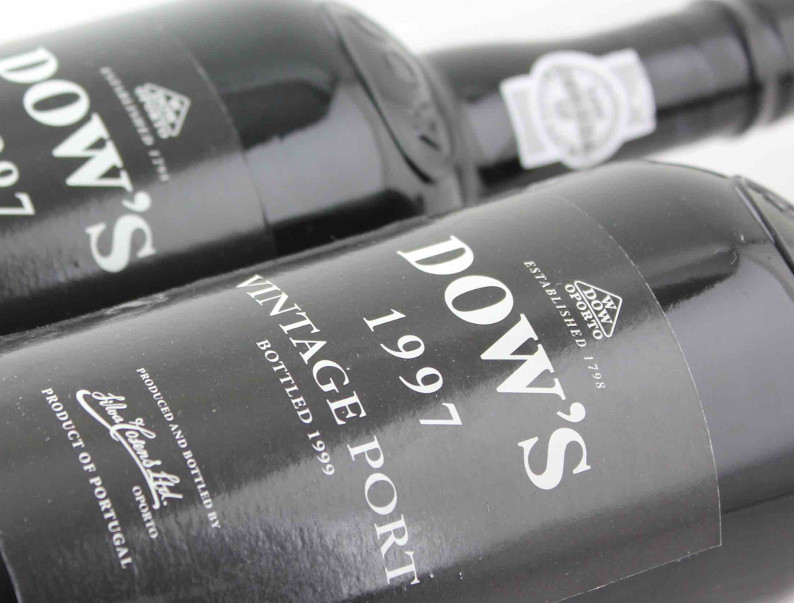
Back to top
1996
Eurovision Winner: Ireland with the song "The Voice" by Eimar Quinn
Top Grossing Movie: Independence Day
Back to top
1995
Eurovision Winner: Norway with the song "Nocturne" by Secret Garden
Top Grossing Movie: Die Hard: With a Vengeance
Back to top
1994
1994 Wine and Port
If you were born or have an anniversary in 1994 - then you are in luck! The 1994 vintage produced some of the finest Ports and wines of the late 20th century, with exceptional quality in Bordeaux, the Douro Valley, and various regions of Italy. These wines are highly sought after by collectors and connoisseurs as they are drinking well and continue to command high prices.
Our Wine Expert currently recommends the following wines for this year:
Eurovision Winner: Ireland with the song "Rock n Roll Kids" by Paul Harrington & Charlie McGettigan
Born in this Year: Tom Daley, Diver, Olympic medalist
Top Grossing Movie: The Lion King
Back to top
1993
Eurovision Winner: Ireland with the song "In Your Eyes" by Niamh Kavanagh
Born in this Year: Jodie Comer is an English actress. She is known for her broad range and expressive approach to the craft of acting and for her work in British television. Born and raised in Liverpool, Comer began her career in an episode of The Royal Today in 2008. She gained recognition for appearing in the series My Mad Fat Diary (2013–2015) and Doctor Foster (2015–2017), and earned acclaim for starring in the drama miniseries Thirteen (2016).
From 2018 to 2022, Comer starred as sociopathic assassin Villanelle in the BBC America spy thriller series Killing Eve, winning a British Academy Television Award and a Primetime Emmy Award. For starring as a healthcare assistant in the television film Help (2021), she won another British Academy Television Award. Comer expanded to films with starring roles in the action film Free Guy and period drama The Last Duel (both 2021). Comer made her West End theatre debut in Suzie Miller's one-woman play Prima Facie in 2022, which earned her an Evening Standard Theatre Award and a Laurence Olivier Award. Following its transfer to Broadway theatre in 2023, she won a Tony Award.
Top Grossing Movie: Jurassic Park
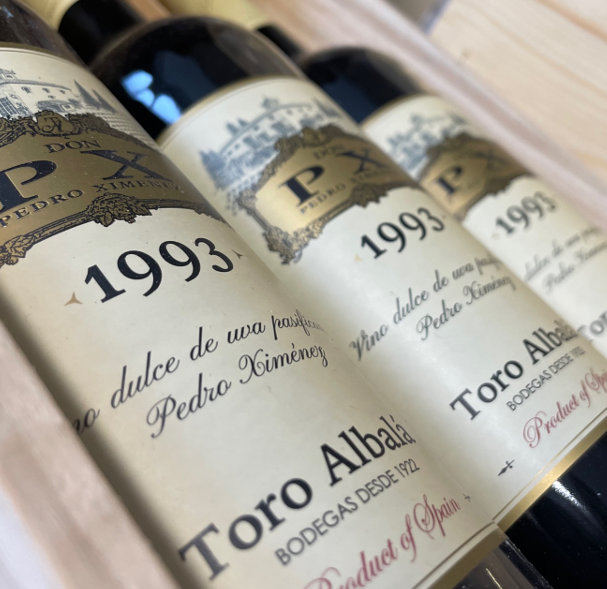
If you were born in 1993 or have a significant anniversary in that year, then we would recommend a Bordeaux wine or a Pedro Ximenez fortified wine.
1993 Bordeaux: The 1993 in Bordeaux is considered to be a moderate vintage, following on from the poor vintages of 1991 and 1992. Despite some dilution from late rains in September, the better examples of wine from this year exhibit a deep colour, rich intensity and good structure. The top wines from 1993 find more favour with critics than 1991 and 1992 and should still offer a good drinking experience now, making them a good 30 year old wine gift for a 30th birthday or anniversary celebration.
Back to top
1992
Eurovision Winner: Ireland with the song "Why Me" by Linda Martin
Born in this Year: Daisy Ridley is an English actress. She is best known for her breakthrough role as "Rey" in the 2015 film, Star Wars: Episode VII - The Force Awakens (2015). Daisy was born in Westminster.
Top Grossing Movie: Aladdin
Back to top
1991
Eurovision Winner: Sweden with the song "Fangad Av En Stormvind" by Carola
Born in this Year: Ed Sheeran, Pop Singer, Singer/songwriter who first gained attention for his hit 2011 song "The A Team," which went 4x platinum. His 2014 single "Thinking Out Loud" earned him two Grammy Awards for Song of the Year and Best Pop Solo Performance.
Top Grossing Movie: Terminator 2: Judgment Day
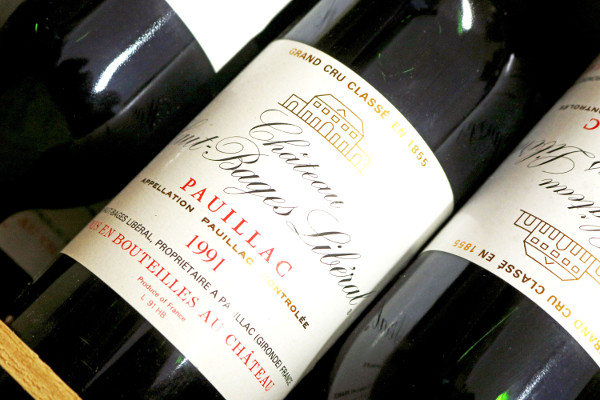
The 1991 was generally an inconsistent vintage for Bordeaux, with First and Second Growths still drinking well. An abnormally cold, frosty April killed many of the buds on the vines - particularly those in the east side of Bordeaux (Pomerol and St Emilion). Although new buds formed and developed, the harvest was always going to be late to allow the grapes to mature fully. Despite the set-back, some acceptable, light wines were produced from northern vineyards of Medoc and Graves.
Back to top
1990
Eurovision Winner: Italy with the song "Insieme: 1992" by Toto Cutugno
Born this Year: Caroline Wozniacki, Tennis Player, Tennis phenom who earned her first world number 1 ranking in October 2010. She earned her first grand slam victory after winning the Australian Open in 2018. She reached the finals of the US Open in 2009 and 2014.
Top Grossing Movie: Ghost
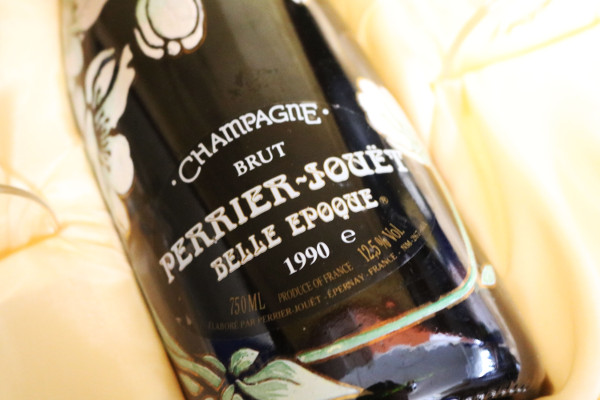
The 1990 Port vintage produced abundant quantities of good quality port wine. Generally produced as Single Qunitas and outstanding Colheita Port. Paul Symington writes "The Douro 1990 Vintage can be summed up in just four words – production, enormous – quality, excellent. The 1990 Vintage has probably favoured not so much the very early starting quintas, but those whose grapes were picked from the third week of September onwards; however, overall quality promises to be good to excellent." 29 October 1990.
Back to top
1989
Eurovision Winner: Yugoslavia with the song "Rock Me" by Riva
Born in this Year: Rebecca Adlington, Swimmer, Olympic freestyle swimmer who won two gold medals at the 2008 Summer Olympics in Beijing, in the 400m and 800m events.
Top Grossing Movie: Indiana Jones and the Last Crusade
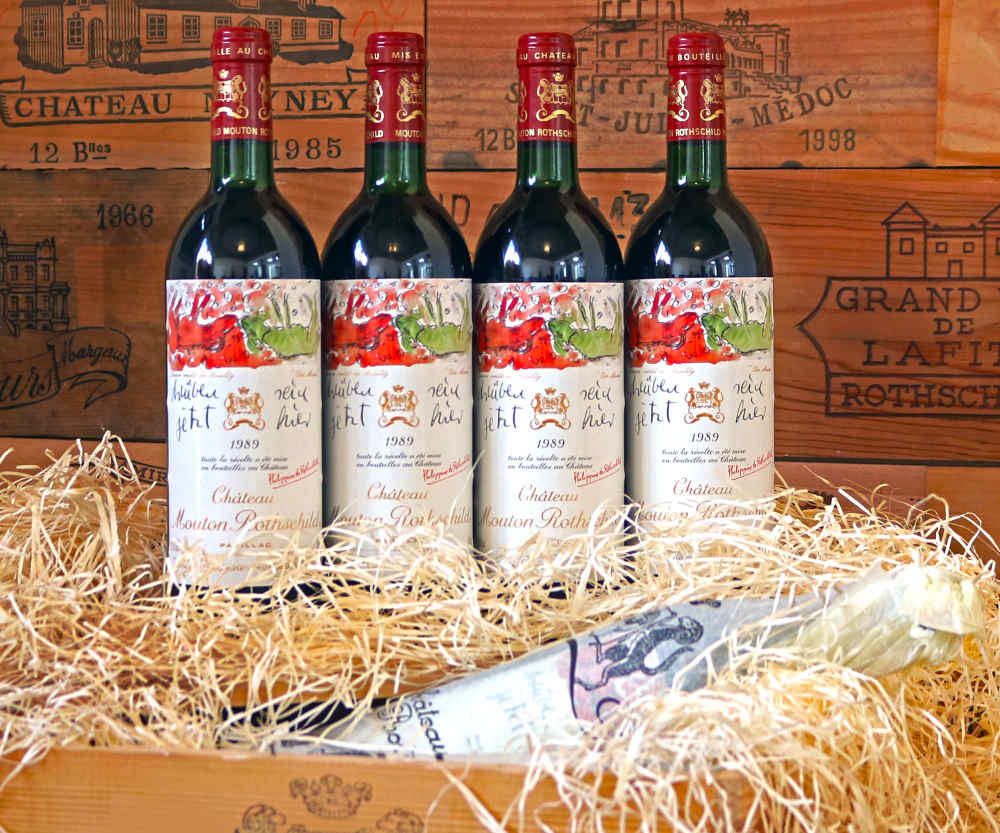
The 1989 vintage was the middle year of a successful run of three vintages from 1988 to 1990. The vintage is now regarded as an excellent vintage for Bordeaux. As with the other successful vintages the weather was kind with a long, hot, dry summer ripening the grapes. The conditions seemed to favour St Julien, Pauillac and Pomerol but not so much Margaux. The wines from this vintage are generally characterised by high tannin levels, low acidity and high alcohol levels due to the ripe grapes. Our recommendation would be a luscious sweet and long-lived 1989 Sauternes .
Back to top
1988
Eurovision Winner: Switzerland with the song "Ne Partez Pas Sans Moi" by Celine Dion
Born in this Year: Princess Beatrice Daughter of Sarah, Duchess of York and Prince Andrew who is known to occasionally take on Royal duties such as attending charity events.She is the first female, in the line of succession to the thrones of the sixteen Commonwealth realms but the sixth overall.
Top Grossing Movie: Rain Man
Back to top
1987
Eurovision Winner: Ireland with the song "Hold Me Now" by Johnny Logan
Born in this Year: Sir Andy Murray, Tennis Player, Professional tennis champion who won the Gold Medal in the 2012 and 2016 Men's Tennis Olympics. He also won the 2012 US Open and the 2013 and 2016 Wimbledon Opens. He became the first British man in 77 years to win the British Open when he defeated Novak Djokovic in 2013.
Top Grossing Movie: Fatal Attraction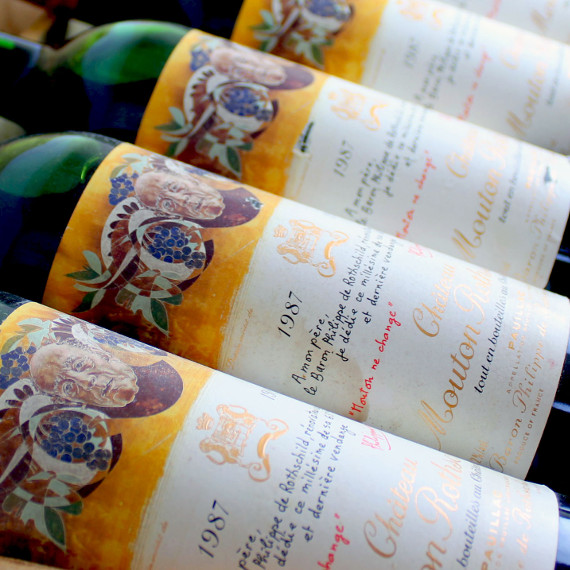 The 1987 was very close to being a fully-fledged Vintage. The port wines are balanced and elegant and will provide fine drinking in the medium-term. The result is that the consumer can buy Ports at a fraction of the price of what they would have cost, providing good value for money. These quality Ports would make an excellent 36 year old wine gift for a birthday or anniversary.
Back to top
1986
Eurovision Winner: Belgium with the song "J'aime La Vie" by Sandra Kim
Born in this Year: Jessica Ennis-Hill, Athlete, She won the Heptathlon gold medal in the 2012 London Olympics and broke the British national record for the high jump and the 100 meter hurdles.
Top Grossing Movie: Top Gun
Back to top
1985
Eurovision Winner: Norway with the song " La Det Swinge" by Bobbysocks
Born in this Year: Wayne Rooney, Footballer, Star forward who became one of Manchester United's all-time top scorers and led the club to five Premier League titles between 2007 and 2013. He announced his retirement in January 2021 and transitioned to a full-time manager role with Derby County after previously serving as the team's player-manager. He became the youngest player to represent England when he made his senior international debut in 2003. He was named PFA Players' Player of the Year and the FWA Footballer of the Year in 2010.
Top Grossing Movie: Back to the Future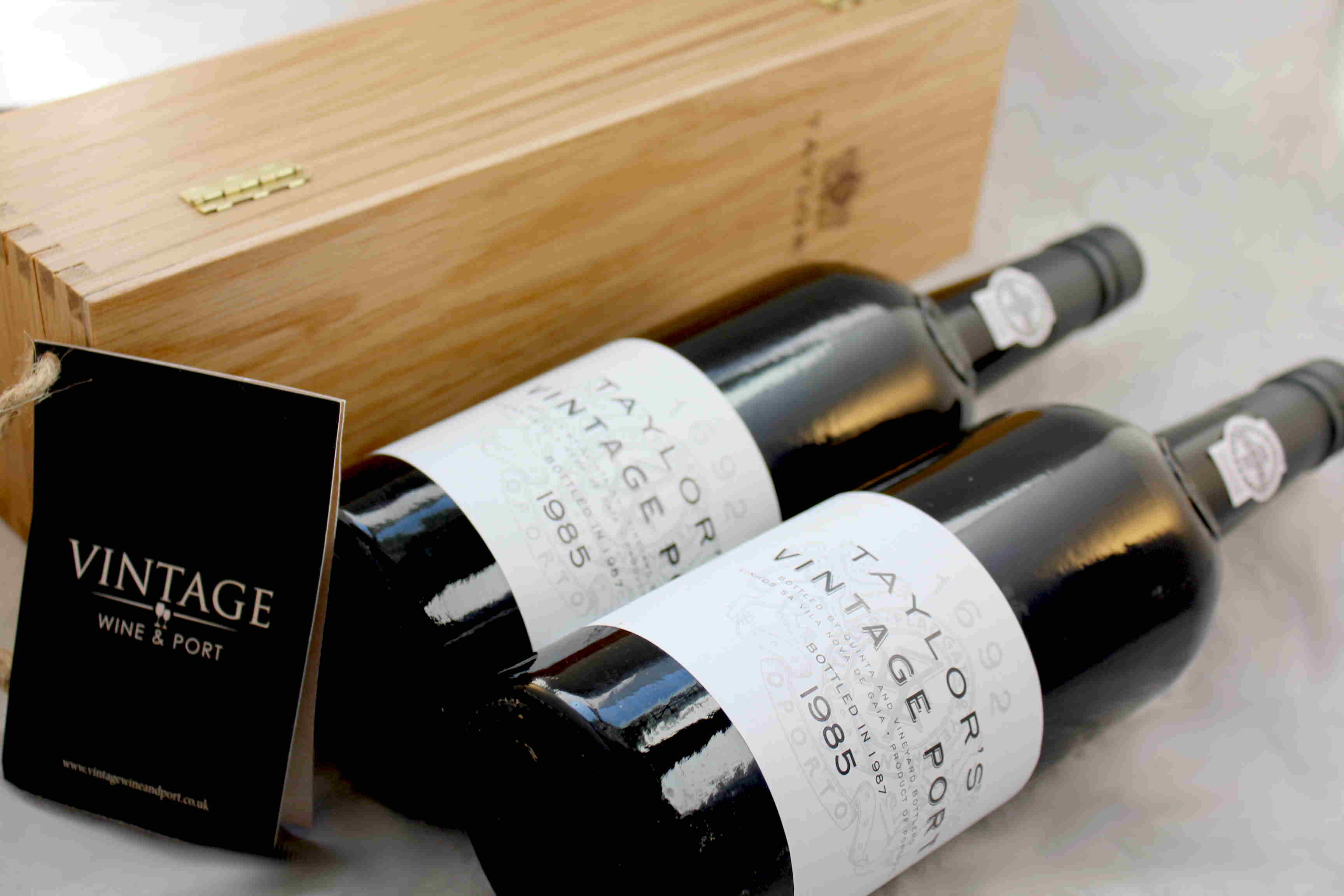 The 1985 is a great classic Port Vintage, with concentrated, rich and potent wines. The year was a general declaration of vintage, the majority of Houses judging it to be up to their high standards. 1985 was a model year for the growth of the vines: a wet winter followed by a moderate spring led into an extremely warm June and a hot July and August. The harvest took place under perfect weather conditions, and the fermentations went well also. From the very start shippers were predicting outstanding wines. The resulting ports are characterised as being forward with enormous structure, and staggering depth, dimension, and length. They are at the peak of their maturity and will remain so for another 10-15 years. A Port from 1985 would make an excellent 38 year old wine gift for a birthday or anniversary.
Back to top
1984
1982 Wine and Port
The weather conditions during the the 1984 growing season were challenging across Europe with variable weather patterns leading to an uneven ripening and difficulties with grape maturation. As a result, the majority of Bordeaux and Italian wines from this vintage tend to lack the richness and concentration found in better years. In Portugal's Douro Valley, where Port wine is produced, the 1984 vintage was a good one, but not widely declared.
Our Wine Expert currently recommends the following wines for this year:
Visit our 1984 Wine and Port Offer Page
Top Grossing Movie: Indiana Jones and the Temple of Doom
Back to top
1983
1983 Wine and Port
The 1983 vintage produced some fabulous Vintage Ports that are drinking well today and will last for decades. In Bordeaux and Italy the vintage was challenging. Top producers who selected their grapes produced some very good wines. These wines are still in their drinking window and will continue to hold.
Our Wine Expert currently recommends the following wines for this year:
Top Grossing Movie: Star Wars Ep. VI: Return of the Jedi
Back to top
1982
1982 Wine and Port
The 1982 vintage produced some of the finest wines of the 20th century, with exceptional quality in Bordeaux, the Douro Valley, and various regions of Italy. These wines are highly sought after by collectors and connoisseurs as they are drinking well and continue to command high prices.
Our Wine Expert currently recommends the following wines for this year:
Top Grossing Movie: E.T The Extra Terrestrial.
Back to top
1981
Eurovision Winner: UNITED KINGDOM with "Making your Mind Up" by Bucks Fizz
Born in this Year: Zara Phillips, Princess, Second-eldest grandchild of Elizabeth II and Prince Philip, daughter of Princess Anne who is known for her professional equestrian talents. She won a Silver Medal at the London 2012 Olympic as a part of the British equestrian team.
Top Grossing Movie: Raiders of the Lost Ark
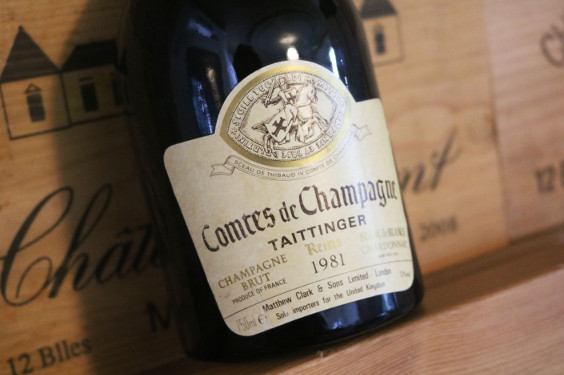
Back to top
1980
Eurovision Winner: Ireland with the song "What's Another Year" by Johnny Logan
Born in this Year: Bradley Wiggins, Cyclist, Professional cyclist, known for becoming the first British winner of the Tour De France in 2012. He won his first Olympic gold medal at the 2004 games, then won two more in 2008.
Top Grossing Movie: Star Wars Ep. V: The Empire Strikes Back
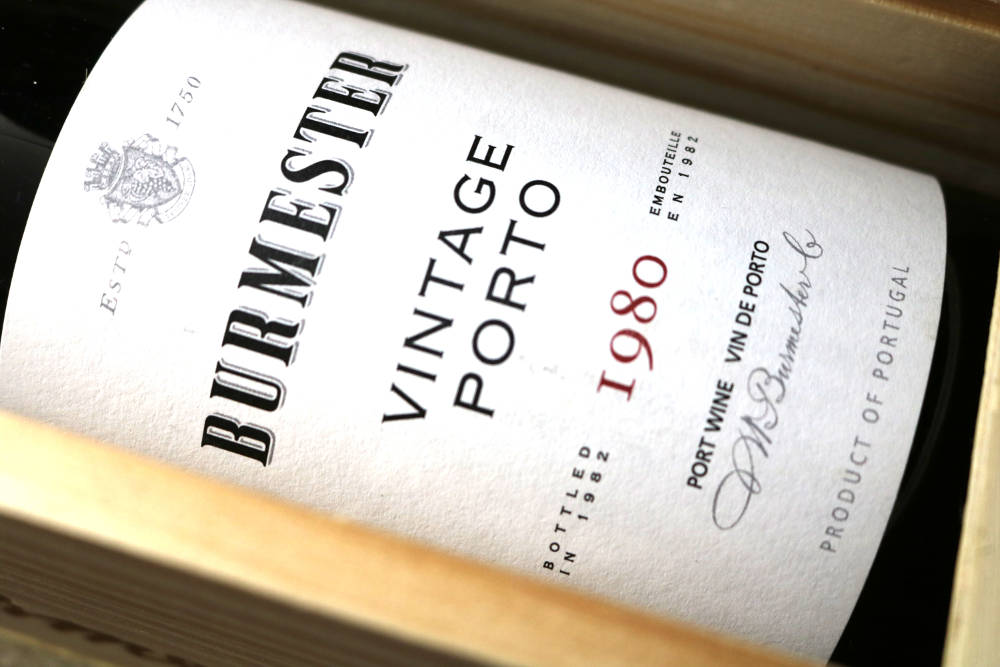
The 1980 Port vintage is rated as outstanding and was generally declared vintage. Over time the 1980 Ports have been hugely under-rated book-ended by the great 1977 and large abundant 1983 and 1985 vintages. This vintage is ready now but will continue to develop and keep for decades, making them the perfect 43 year old wine gift for a birthday or anniversary.
An unusually early spring was followed by an extremely dry growing season and sugar readings were on the low side when picking began a week or so later than normal, at the end of September.
Back to top
1979
Eurovision Winner: Israel with the song "Hallelujah" by Milk and Honey
Born in this Year: Jonny Wilkinson, Rugby Player, English rugby star who played fly-half for Toulon and England's national team. He wrote about the Six Nations tournaments and Rugby World Cups for The Times in 2011. He helped England win the Rugby World Cup in 2003.
Top Grossing Movie: Moonraker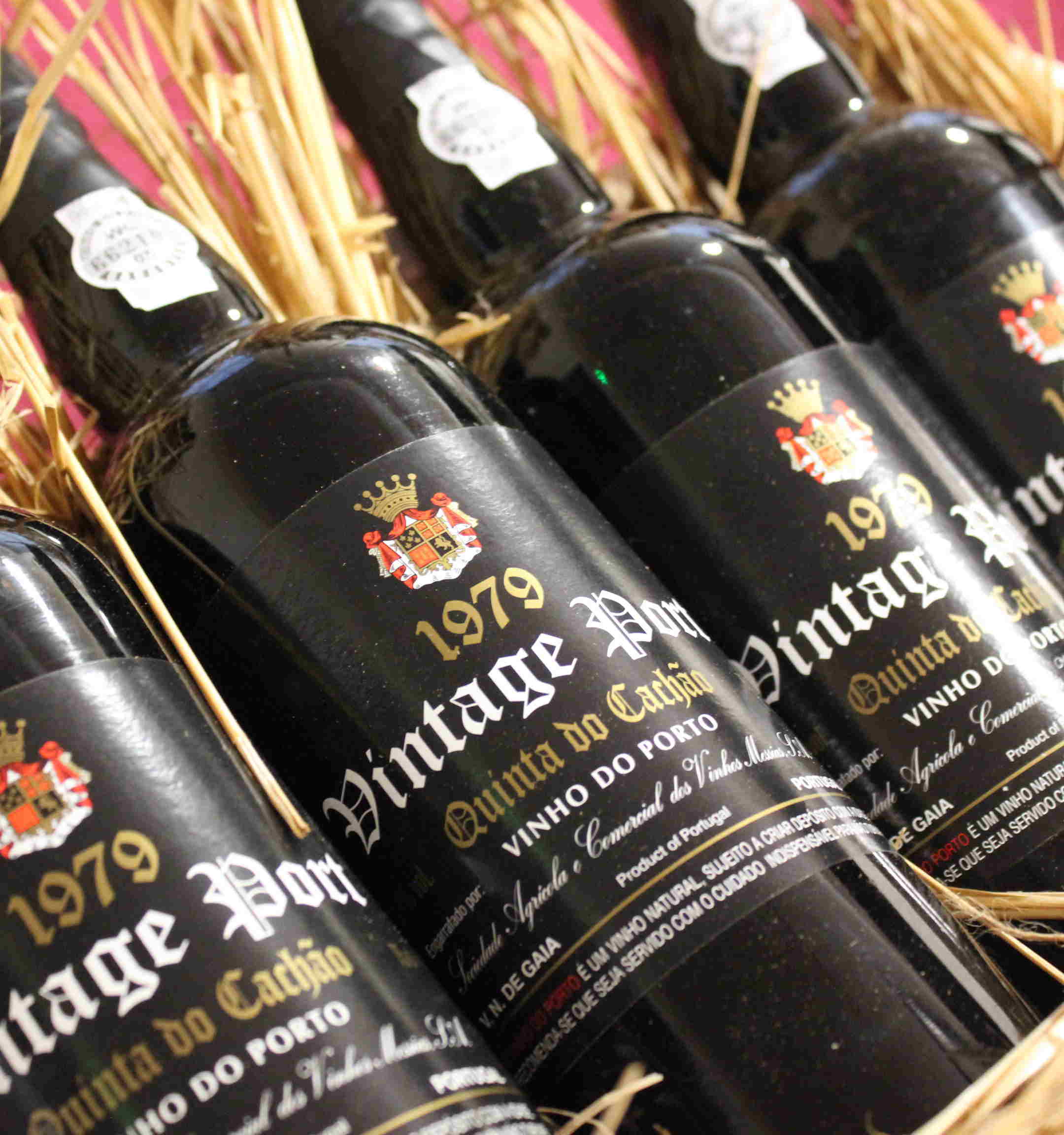 A Vintage Port from 1979 makes an excellent 44 year old wine gift for a 44th birthday or anniversary. Still drinking well, 1979 ports are part of a span of good vintages from 1977 to 1980. A very wet winter was followed by a dry hot summer and no rainfall from late June until 18th September. The crop was large and produced many quite good straight forward single-quinta wines that are now mature but will keep well for years.
Back to top
1978
Eurovision Winner: Israel with the song "A-Ba-Ni-Bi" by Izhar Cohen and the Alphabeta
Born in this Year: Matthew Bellamy, Singer, Lead singer, guitarist, pianist, and songwriter for the rock band Muse, the group known for songs like "Starlight" and "Uprising." He is joined in the band by bassist Christopher Wolstenholme and drummer Dominic Howard. He prefers to use the same guitar as Jimi Hendrix. In 2010, he set the Guinness world record for most guitars smashed on a tour; he destroyed 140 during his Absolution Tour.
Top Grossing Movie: Grease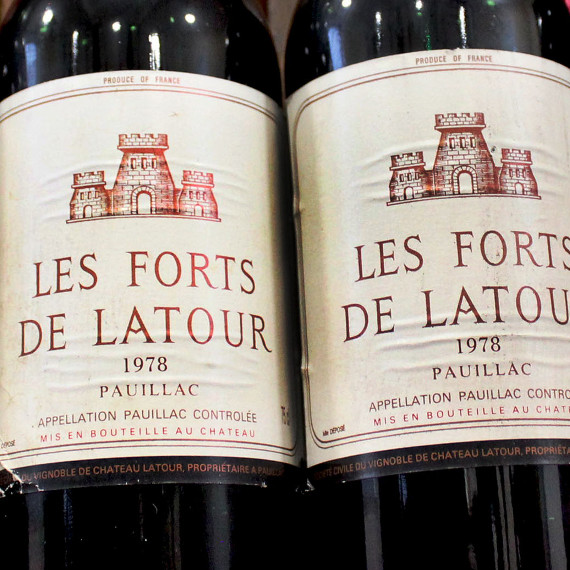 1978 was a good Port vintage, although not a declared one; the wines are not outstanding but are still attractive and drinkable. 1978 was the year when the labelling of 'single quinta' became popular. Michael Symington, Head Winemaker at Symington Family Estates (Owners of Warre's, Dow's, Cockburn's, Smith Woodhouse and Graham's among others) wrote of the 1978 vintage "Musts showed exceptional colour and body and very dark, heavy wines have certainly been made. Not a trace of mould or rot was to be seen on the grapes coming in, and seldom can a Vintage have been made from more uniformly healthy grapes."
Back to top
1977
Eurovision Winner: France with the song " L'Oiseau Et L'Enfant" by Marie Myriam
Born in this Year: Andrew "Freddie" Flintoff, Cricketer, Retired English all-rounder known as "Freddie" who was named ICC ODI Player of the Year in 2004 and ICC Player of the Year in 2005. He finished his Test career with more than 3,000 runs and 200 wickets taken. He won the BBC Sports Personality of the Year honor in 2005, the first cricketer to do so since Ian Botham in 1981.
Top Grossing Movie: Star Wars Ep. IV: A New Hope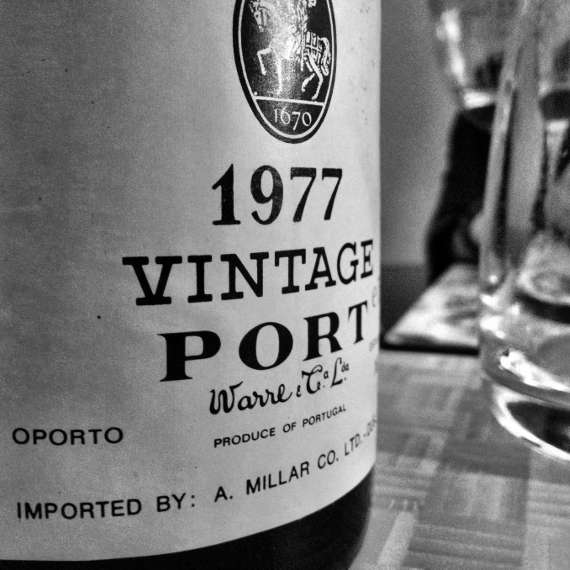 The 1977 was a classic vintage, declared by all the major port houses. Even after more than thirty years, the ports are only just becoming approachable and will last for many more decades. The port wines are concentrated, complex, well structured and balanced. Marked by strong tannins, these wines have great finesse and staying power. A 1977 port would make a brilliant 46 year old wine gift for a birthday or anniversary!
Back to top
1976
Eurovision Winner: UNITED KINGHDOM with the song "Save Your Kisses For Me" by Brotherhood of Man
Born in this Year: Chris Hoy, Cyclist, Scottish Olympian and one of the most successful cyclists of all time. He won his first Olympic gold medal at the 2004 Olympics, followed by three gold medals at the 2008 Olympics and two more in 2012.
Top Grossing Movie: Rocky
Rain during the harvest that followed the long hot summer of 1976 tarnished what could have been the vintage of the decade. Much to general surprise, the 1976 vintage although mature on release has maintained its maturity to date.
Back to top
1975
Eurovision Winner: Netherlands with the song "Ding-A-Dong" by Teach-In
Born in this Year: David Beckham, Footballer, star midfielder who became the first British soccer player to compete in 100 Champions League matches as well as the first to win league titles in four countries. He led Manchester United to 6 Premier League titles from 1993 to 2003 before continuing his career with Real Madrid and the LA Galaxy. He broke the England national team appearance record for outfield players, and played the final game of his 20-year career on May 18, 2013.
Top Grossing Movie: Jaws The 1975 vintage port declaration came shortly after the 1974 revolution. Under pressure of nationalisation, the port shippers were keen to show what was possible after a run of weak vintages. Whilst the ports are not in the same league as the other 70's declarations like the 1970 or the 1977, they have stood up well and represent a superb quality vs price ratio. Recent tastings have demonstrated that the best are elegant and a pleasure to drink. The wines are now fully mature, with the top producers producing good '75s that will grow old gracefully. They are elegant, fruity and well balanced but not big. A port from 1975 would make an excellent 48 year old wine gift for a birthday or anniversary.
Back to top
1974
1974 Wine and Port
The 1974 vintage was good for Italian Wines and Colheita Ports but challenging for Bordeaux which suffered from cool and wet weather leading to low yields and difficulties with ripening.
Our Wine Expert currently recommends the following wines for this year:
Top Grossing Movie: Towering Inferno
Back to top
1973
1973 Wine and Port
The 1973 vintage was generally considered better than the preceding 1972 vintage, but it still wasn't a standout year for Port or wine production in Europe. In Portugal's Douro Valley, the 1973 vintage was not widely declared by Port houses. Some Port houses did produce and release 1973 vintage Ports, but they are generally considered to be of moderate quality as they tend to lack the richness and depth of better vintages.
Our Wine Expert currently recommends the following wines for this year:
Top Grossing Movie: The Exorcist
The 1973 wine vintage produced an enormous crop of easy drinking wines full of succulent fruit. The best examples from vineyards that adopted good selection are still drinking well today, although wines from Pauillac and Graves stand out. The weather was dry and warm throughout most of spring, providing good conditions for flowering. Heavy rain fell during much of July, but the month that followed was hot and dry. September began fine, but wet conditions returned from the middle of the month onwards.
Back to top
1972
1972 Wine and Port
The 1972 vintage was challenging for both Port and wine production in Europe. In Portugal's Douro Valley, the 1972 vintage was generally not declared by most Port houses.The weather conditions during the growing season were unfavorable, leading to wines that lacked concentration and depth. In Europe, including Italy, the 1972 vintage was also challenging due to adverse weather conditions.The vintage was characterized by a cool and wet growing season, which led to difficulties with grape ripening and resulted in wines that lack depth and concentration.
Our Wine Expert currently recommends the following wines for this year:
Top Grossing Movie: The Godfather
Back to top
1971
Eurovision Winner: Monaco with the song "Un Banc, Un Arbre, Une Rue" by Severine
Born in this Year: Lance Armstrong, Cyclist, Seven-time Tour de France champion.
Top Grossing Movie: Diamonds Are Forever
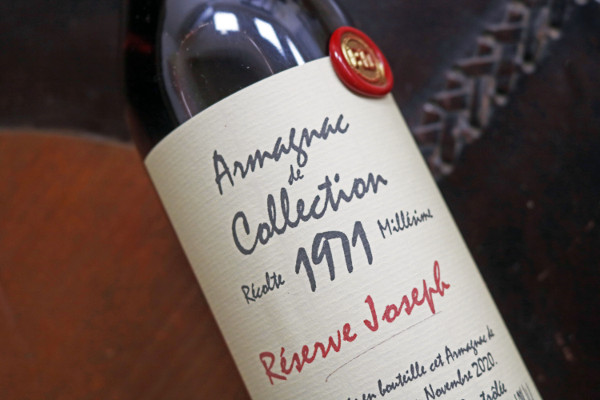
Back to top
1970
Eurovision Winner: Ireland with the song "All Kinds of Everything" by Dana
Born in this Year: Andre Agassi, Tennis Player, former tennis star who won all four Grand Slam titles, including the Australian Open four times from 1995 to 2003. He was inducted into the International Tennis Hall of Fame in 2011. He is an active philanthropist and in 2014 remodeled a vacant University of Phoenix building into an independent school.
Top Grossing Movie: Love Story
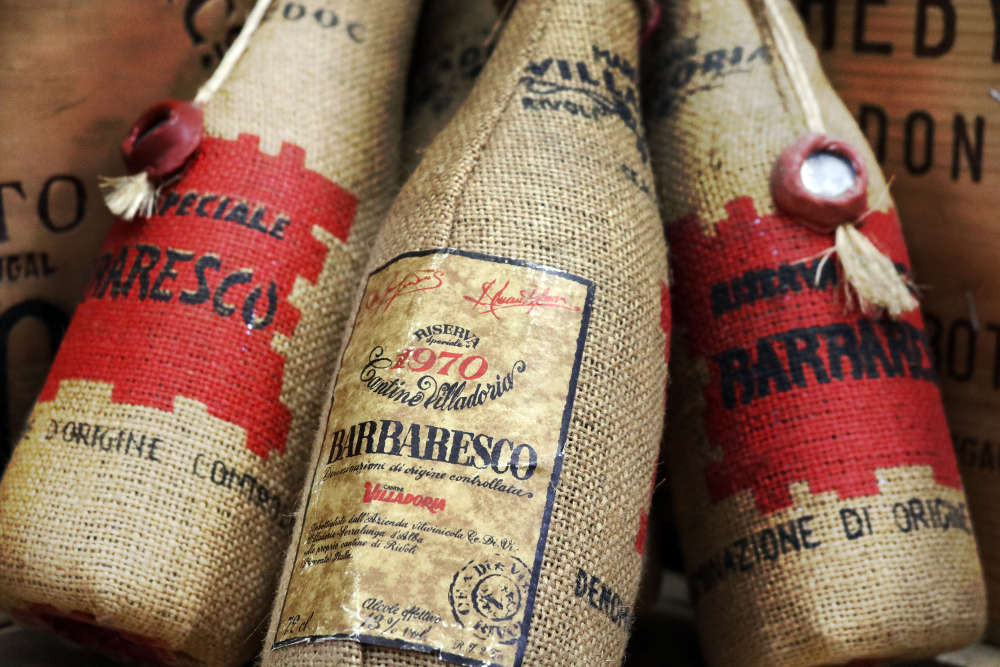
The 1970 Port Vintage was universally declared as a vintage of outstanding quality. Ideal growing conditions produced what is now a classic, outstanding vintage. The 1970 port wines have great balance, good structure, and will age superbly for decades to come. Declared by all the major port houses, 1970 is one of the finest Port vintages for the last 50 years - a bottle from this year would make a stunning 53 year old wine gift for a birthday or 53rd anniversary this year.
Back to top
1969
Eurovision Winners: France, Netherlands, Spain and UNITED KINGDOM with the song "Boom Bang-a-Bang" by Lulu
Born in this Year: Catherine Zeta-Jones, Actress, She won an Academy Award for Best Supporting Actress for her role in Chicago and played roles in Entrapment and Traffic. Also married to Michael Douglas since 2000.
Top Grossing Movie: Butch Cassidy and the Sundance Kid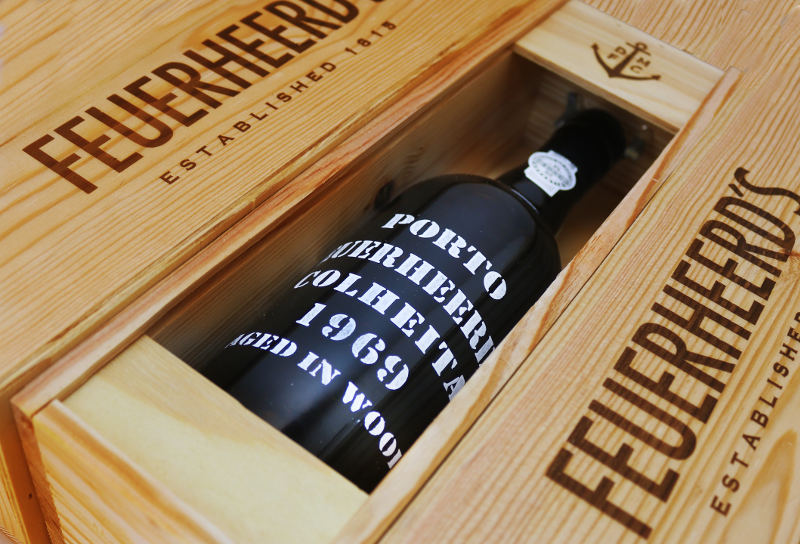 A vintage Port from the 1969 vintage makes a perfect 54 year old wine gift for a birthday or anniversary. Some excellent Colheita (Tawny) Ports were produced from the 1969 harvest and these are highly recommended by our wine buyer. The 1969 vintage was good enough to yield a few single Quinta vintage ports, notably Taylors Vargellas and some exceptional Colheita ports.
Back to top
1968
Eurovision Winner: Spain with the song "La La La" by Massiel
Born in this Year: Kylie Minogue, Pop Singer, Grammy Award-winning pop star who released the biggest Australian hit of the decade, "The Loco-Motion." She had a comeback in the 2000s with the #1 single "Can't Get You Out of My Head."
Top Grossing Movie: 2001: A Space Odyssey Making an excellent 55 year old wine gift for a birthday or anniversary, 1968 Port wines follow a strong run of vintages in the 1960's. The summer was hot and dry with no rain whatsoever in June and July, and only a little in August and September. The harvest should have produced solid good wines. However, only a few vintage ports (Sandeman) and Single Quinta ports were declared. There are still a few Colheita ports available which are drinking very well but stocks are tiny. These bottles are now very rare!
Back to top
1967
Eurovision: UNITED KINGDOM with the song "Puppet on a String" by Sandie Shaw
Born in this Year: Julia Roberts, Actress, Gained fame after starring in Pretty Woman and went on to win an Oscar for her leading role in Erin Brockovich in 2000. Other notable films include Hook, Mona Lisa Smile, Mirror Mirror and August: Osage County.
Top Grossing Movie: The Jungle Book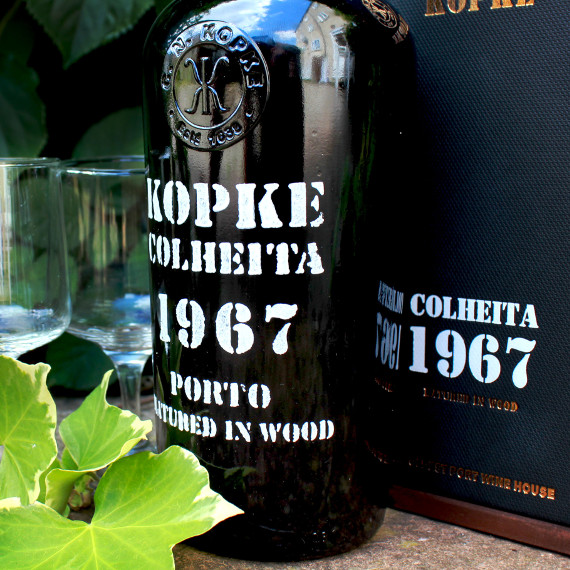 Making a great 56 year old wine gift for any 56th birthday or anniversary, the 1967 port vintage is a very good vintage that was somewhat overshadowed by the exceptional 1966. It was declared by about 15 shippers. The 1967 ports showed well at recent tastings; they have good structure and elegant fruit and will keep for many years to come.
Back to top
1966
Eurovision Winner: Austria with the song "Merci Cherie" by Udo Jurgens
Born in this Year: Paul Hollywood, Chef, English baker and chef who is well known as a judge on the The Great British Bake Off. He has written a number of books, including 100 Great Breads, The Great British Bake Off, How to Bake, Bread, and American Baking Competition.
Top Grossing Movie: The Bible
Back to top
1965
Eurovision Winner: Luxembourg with the song " Poupee De Cire, Poupee De Son" by France Gall
Born in this Year: JK Rowling, Author, English author who wrote the bestselling Harry Potter fantasy books. Her first novel in the series, Harry Potter and the Philosopher's Stone, was followed by six equally popular installments, all of which were made into feature films.
Top Grossing Movie: The Sound of Music
Back to top
1964
1964 Wine and Port
The 1964 wine vintage was a five star vintage for north Italy producing some very fine wines that are still drinking today. The vintage was very good for Port, although not declared) and also for Bordeaux. Any of these wines would make a fabulous gift for a 60th Anniversary or birthday.
Our Wine Expert currently recommends the following wines for this year:
Eurovision Winner: Italy with the song "Non Ho Leta" by Gigliola Cinquetti
Born in this Year: Jeff Bezos, Entrepreneur, Billionaire and founder of Amazon.com. In 2013, he purchased The Washington Post. He is considered to be an e-commerce pioneer and consumerism revolutionary. His company Bezos Expeditions is a partial funder of businesses such as Airbnb, Twitter, and Uber.
Top Grossing Movie: Goldfinger
Back to top
1963
1963 Wine and Port
The 1963 vintage produced some of the finest Vintage Portwines of the 20th century and we would recommend any of these. Across the rest of Europe, it was one of the coldest years on record wiping out most of the production. Very little 1963 wine remains, and what does, will be well past its prime.
Our Wine Expert currently recommends the following wines for this year:
Eurovision Winner: Denmark with the song "Dansevise" by Grethe & Jorgen Ingmann
Born in this Year: Whitney Houston, R&B Singer, R&B and pop performer who became the most awarded female singer in history for hits such as "Hold Me" from her record-breaking self-titled album.
Top Grossing Movie: Cleopatra
Back to top
1962
Eurovision Winner: France with the song " Un Premier Amour" by Isabelle Aubret
Born in this Year: Sir Steven Geoffrey Redgrave CBE DL, British retired rower, who won gold medals at five consecutive Olympic Games from 1984 to 2000.
Top Grossing Movie: Lawrence of Arabia
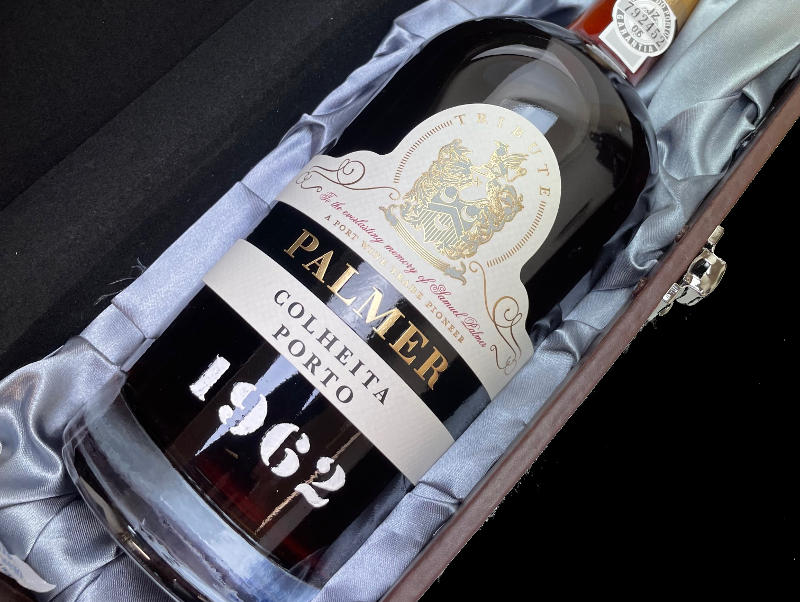
Back to top
1961
Eurovision Winner: Luxembourg with the song "Nous Les Amoureux"
Born in this Year: Princess Diana, officially known as Diana, Princess of Wales, she married King Charles III while he was still the heir to the throne of 16 Commonwealth realms. She became an international icon for her beauty and her work with charities.
Top Grossing Movie: 101 Dalmations
Back to top
1960
Eurovision Winner: France with the song "Tom Pillibi" by Jean-Claude Pascal
Born in this Year: Ayrton Senna, Racing Driver, Brazilian Formula One race car driver who died in a crash at the Imola circuit while he was leading the 1994 San Marino Grand Prix. He had a long-running rivalry with driver Alain Prost. To honor his memory, Lewis Hamilton drove his old MP4/4 car for a BBC special.
Top Grossing Movie: Spartacus
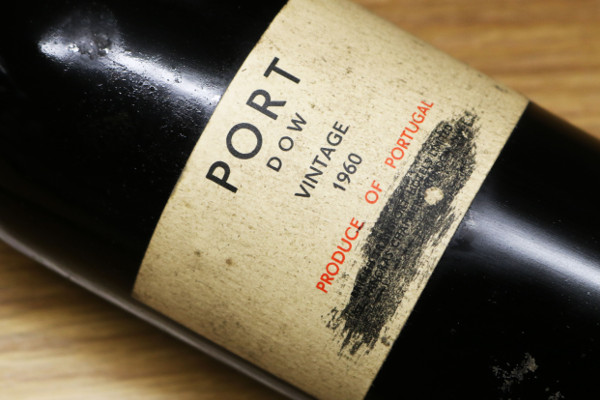
The 1960 Port Vintage was outstanding and was declared by all of the major Port houses. Port wines from 1960 have now settled into glorious old Vintage Ports of the very highest quality. After more than 64 years bottle-ageing, these wines have a superb combination of lovely mature fruit combined with the elegance that only this length of time in bottle can give. An incredible 64 year old wine gift for a birthday or anniversary, they will last for decades to come or offer a superlative drinking experience now.
Back to top
1959
Eurovision Winner: Netherlands with the song "Een Beetje" by Teddy Scholten
Born in this Year: Simon Cowell, Talent Manager, Television producer, executive, and talent manager who has served as a judge on American Idol, Britain's Got Talent and The X Factor. He also produced America's Got Talent and served as the CEO of the entertainment company Syco.
Top Grossing Movie: Ben-Hur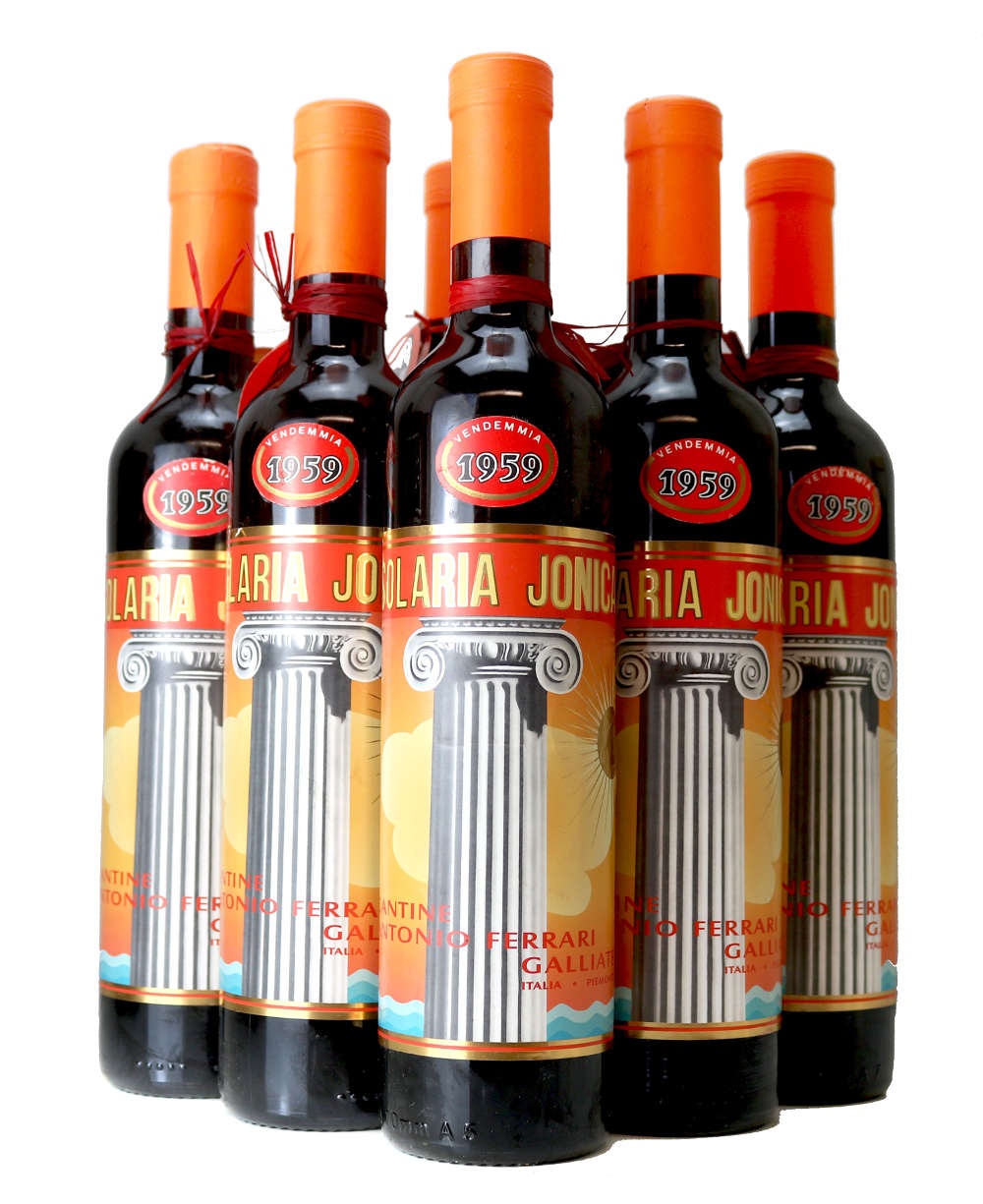 The 1959 port wine vintage was a poor one. There were no declarations for vintage port and only a few single harvest colheitas were made.
Back to top
1958
Eurovision Winner: France with the song " Dors Mon Amour" by Andre Ciaveau
Born in this Year: Andrea Bocelli, Opera Singer, Operatic tenor who became blind at the age of 12 and who won the Newcomers Sanremo Music Festival in 1994.
Top Grossing Movie: South Pacific
Back to top
1957
Eurovision Winner: Netherlands with the song "Net Als Toen" by Corry Brokken
Born in this Year: Sid Vicious, Punk Singer, punk rock personality and bassist with Sex Pistols who overdosed on heroin in his sleep. His solo music was collected on the posthumous album Sid Sings.
Top Grossing Movie: The Bridge on the River Kwai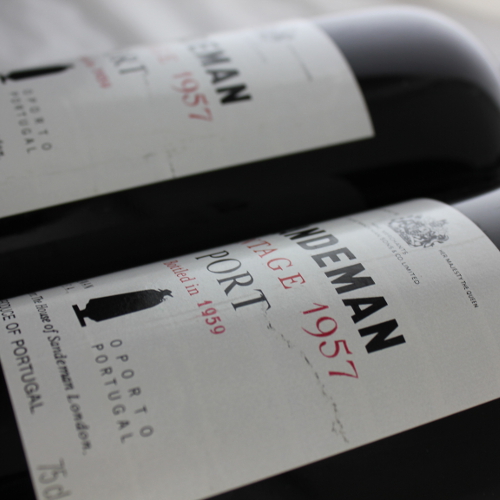 The 1957 was a good vintage, although not generally declared. 1957 Port wines are very difficult to get hold of due to the tiny production.
Back to top
1956
Eurovision Winner: Switzerland with the song "Refrain" by Lys Assia. The 1956 Eurovision Song Contest was primarily a radio show, although some cameras were taping the contest for the few Europeans who had a television set at that time.
Born in this Year: Tom Hanks, Actor, legendary actor who won back-to-back Academy Awards for Best Actor for his roles in Philadelphia in 1993 and Forrest Gump in 1994. He has starred in many other classics, including Cast Away, The Green Mile, Saving Private Ryan, and Apollo 13. In 2019, he was cast as Mr. Rogers in the biopic A Beautiful Day in the Neighborhood.
Top Grossing Movie: The Ten Commandments
Back to top
1955
Born in this Year: Steve Jobs, Entrepreneur, led the personal computer revolution by co-founding Apple with Steve Wozniak. During his time as CEO of Apple, the company released such revolutionary devices as the iMac, iPod, iPhone and iPad. He also founded the software company NeXT and was a chairman for Pixar and a member of The Walt Disney Company's board of directors.
Top Grossing Movie: Lady and the Tramp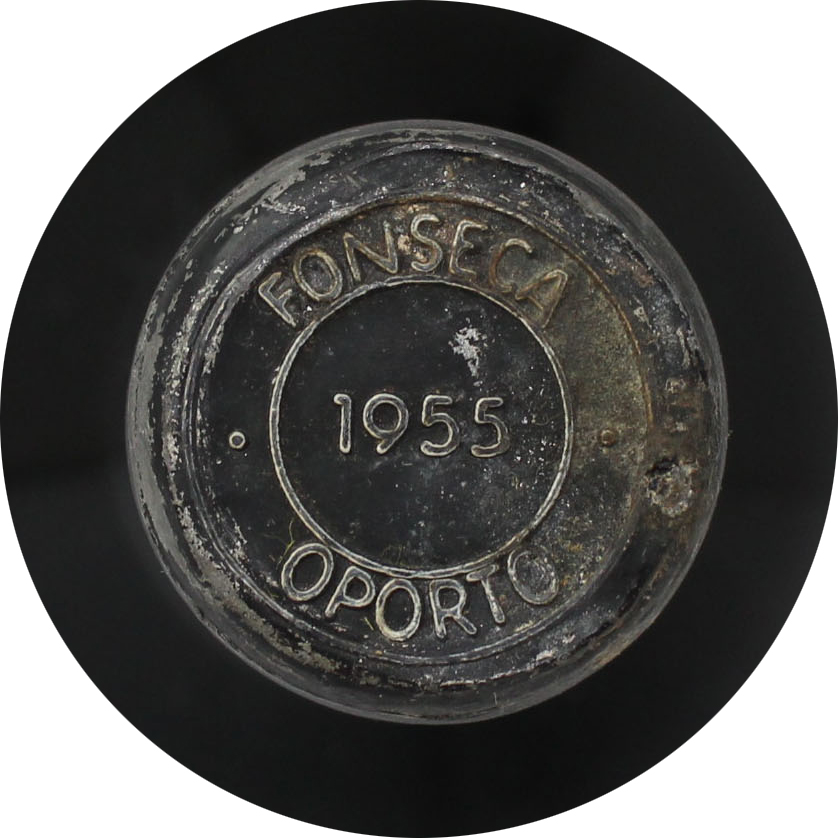 The 1955 port vintage produced outstanding, fruity wines for long-term ageing - a real pleasure to drink, now or in a few decades time. One of the most underrated Vintages of the 20th Century, 1955 was declared by most of the major Port houses and would make a brilliant 67 year old wine gift for a birthday or anniversary celebration this year. Ports from this vintage are characterised by having outstanding fruit and being superbly balanced wines, fruity, smooth and concentrated.
Back to top
1954
Born in this Year: John Travolta, Movie Actor, actor who starred in the 1970s hit films Saturday Night Fever and Grease. He later went on to play Vincent Vega in the critically acclaimed 1994 film Pulp Fiction and he also starred in Get Shorty, Ladder 49, Wild Hogs, Hairspray, and Swordfish.
Top Grossing 1954 Movie: White Christmas
Back to top
1953
Born in this Year: Cyndi Lauper, Pop Singer, flamboyant pop singer who first gained notoriety for her playful track "Girls Just Want to Have Fun".
Top Grossing Movie: Peter Pan
Back to top
1952
Born in this Year: Calamity Jane, Explorer, Known to have been instrumental in fighting Indians, she was a famous American frontierswoman, like Annie Oakley and Belle Starr. She held down many a job, working as a dishwasher, a cook, a waitress, a dance-hall girl, a nurse, an ox team driver, a scout, and more in order to support her family. Despite being recognized mainly for her grit and fire, she was also said to show compassion to the sick and poor.
Top Grossing Movie: The Greatest Show On Earth
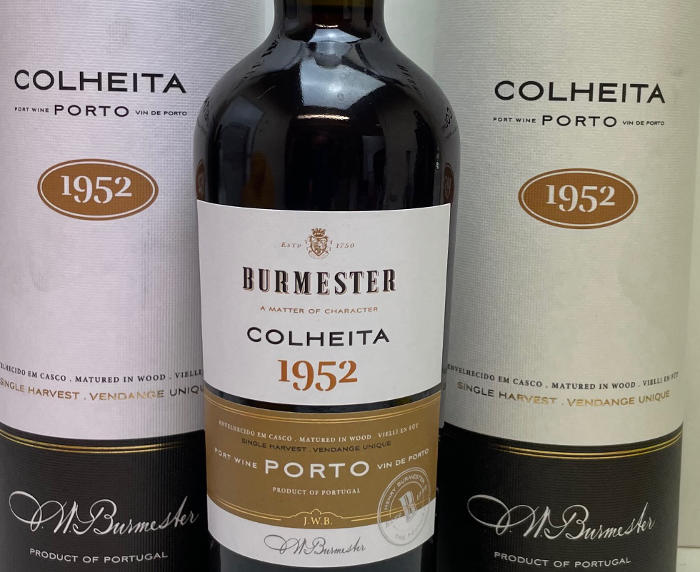
Back to top
1951
Born in this Year: Sally Ride, Astronaut, American astronaut and physicist who joined NASA in 1978 and became the first American woman to enter low-Earth orbit. She flew two missions aboard the Challenger shuttle: STS-7 and STS-41-G. At the time of her first spaceflight in 1983, she was the youngest American to enter space.
Top Grossing Movie: Quo Vadis?
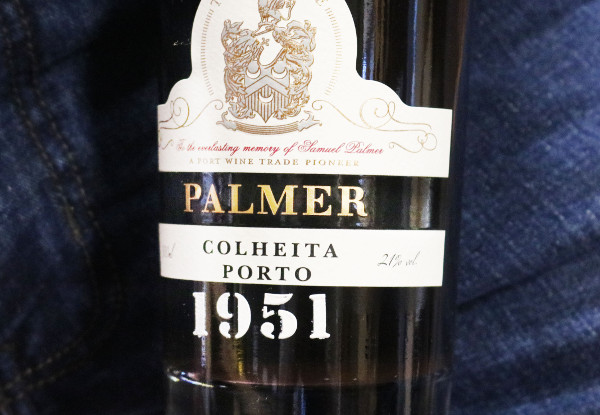
1951 was not a declared vintage for Port. A Colheita (barrel aged single harvest) Port is a good alternative for this vintage, and would be a lovely 70 year old wine gift for a birthday or anniversary celebration this year. 1951 Single Quinta ports may still be drinkable, but are in short supply.
The weather throughout the growing season was good and only broke after the grapes were in.
Maurice Symington writes in his winemakers Diary
" The lagares took plenty of “work”: colour good. Temperatures felt low in the lagares. Grapes rendered more than estimated. Bomfim musts approximately 96/97 pipes. Zimbro about 35 and Sra da Ribeira (excluding outside grapes) about 70. There seems no reason not to be satisfied with this vintage from every angle."
Production was limited to Single Quintas Vintage Ports. We have not had the opportunity to taste any 1951 Single Quintas, but reports indicate that this was not a strong vintage.
However, some excellent 1951 Colheita (barrel aged) ports were made and these are sublime. They are in very short supply.
Back to top
1950
Born in this Year: Princess Anne, the only daughter of Prince Philip and Queen Elizabeth II, who is known for her charitable work and philanthropy. She became the first member of the British Royal Family to compete in the Olympic Games when she participated in the 1976 Olympics as a member of the British equestrian team.
Top Grossing Movie: Cinderella
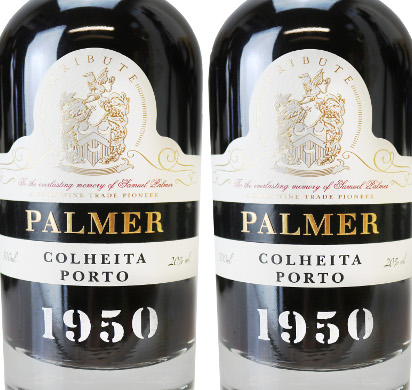
Back to top
1949
Born in this Year: Niki Lauda, Racing Car Driver, Austrian Formula One racer who won three F1 World Championships in 1975, 1977, and 1984. He became the first driver in F1 history to have been a champion for both Ferrari and McLaren. Also an aviation entrepreneur, he founded three airlines.
Top Grossing Movie: Samson and Delilah
Back to top
1948
Born in this Year: King Charles III, King, Became King of the United Kingdom in September 2022, following the death of his mother, Queen Elizabeth II. He was crowned May 6th, 2023. Prior to becoming king, he was the prince of Wales and he was the longest-serving heir apparent in British history as well as the oldest heir apparent in over 300 years.
Top Grossing Movie: The Snake Pit
Back to top
1947
Born in this Year: Elton John, Singer, rock and roll legend who has sold over 250 million albums in a career that's spanned over 50 years. He is best known for such hit songs as "Rocket Man," "Tiny Dancer," "Bennie and the Jets" and "Candle in the Wind." In 2019, they released the film Rocketman based on his life. He began playing the piano at age three and won a junior scholarship to the Royal Academy of Music. He performed at Princess Diana's funeral at Westminster Abbey in 1997 and he was knighted by Queen Elizabeth II in 1998.
Top Grossing Movie: Miracle on 34th Street
Back to top
1946
Born in this Year: Michael Rosen, Children's Author, children's author and poet who penned well over a hundred books. He earned an M.A. in Children's Literature from the University of Reading in 1993 and went on to receive a Ph.D. from the University of North London. He published his first book of children's poetry, Mind Your Own Business, in 1974.
Top Grossing Movie: Song of the South
Back to top
1945
Born in this Year: Helen Mirren, Movie Actress, longtime actress who won an Academy Award for Best Actress for her portrayal of Elizabeth II in the 2006 film The Queen. She starred in Phil Spector in 2013 and her role as Madame Mallory in the 2014 film The Hundred-Foot Journey learned her a Golden Globe nomination for Best Actress in a Motion Picture, Musical or Comedy.
Top Grossing Movie: The Bells of St Mary's
Back to top
1944
Born in this Year: Erno Rubik, Architect, Hungarian architect and professor of architecture most notable for inventing the Rubik's cube in 1974. He works in video game development and in 2010 he received The Hungarian Order of Merit Cross of the star. He founded the International Rubik Foundation to support young talented engineers and architects.
Top Grossing Movie: Going my Way The 1944 Port vintage was not declared; no Vintage Port or Single Quinta port was produced in this year. However, some excellent Colheita and Tawny Ports from 1944 were made and we are proud to offer one of the largest collections in the UK. Making the perfect 75 year old wine gifts for a birthday or anniversary, these Colheita ports are true rarities which have been barrel aged until a special bottling commissioned by Vintage Wine and Port. The 1944 Kopke Colheita Port has been selected by the producer as being of the highest quality, and we would recommend it as a truly excellent gift. These colheita ports from the 1944 harvest have already undergone oxidative ageing and as with all tawny port can therefore be savoured over two months after opening.
Back to top
1943
Born in this Year: Joni Mitchell, Folk Singer, folk singer-songwriter whose album Blue, which features songs like "A Case of You" and "River," is considered one of the greatest albums of all time by Rolling Stone.
Top Grossing Movie: This is the Army
Back to top
1942
Born in this Year: Muhammed Ali, Boxer, born Cassius Clay, he became a boxing icon as well as a peace activist and a philanthropist. He was known as "The Greatest," recording 56 career wins, 37 of them by knockout, in his 61 professional bouts.
Top Grossing Movie: Bambi
Back to top
1941
Born in this Year: Alex Ferguson, Football Manager, who led Manchester United from 1986 to 2013, helping the club win 13 Premier League and 2 Champions League titles.
Top Grossing Movie: Sargeant York
Back to top
1940
The French, took great care of their vines during the wartime era; the damage in general was substantially less than during the war of 1914-18 and was extensive only in Alsace, around Colmar. The town of Chablis was badly hit in 1940, but the vines escaped injury. a few chais(wine-making plants) and cellars in Bordeaux were wrecked by Allied bombings; the village of Comblanchien on the Côte d'Or was burned to the ground by the Germans in 1944.
Furthermore, France was exceedingly fortunate in the matter of weather during the war. Never, certainly, in the last half century have the French vineyard districts known a comparable succession of dry summers or a higher average of good or creditable vintage years.
Lastly, of course, the French did an extraordinary job of hiding and protecting their stocks, walling up portions of their cellars, burying their more precious bottles, bilking, cheating, duping, and deceiving the Germans on every possible occasion and in every possible way
Born in this Year: Ringo Starr, Drummer, musician, actor, and singer who was a member of the English rock band The Beatles until their breakup in April 1970. He wrote "Don't Pass Me By" and "Octopus's Garden."
Top Grossing Movie: Pinocchio
Back to top
1939
Born in this Year: Francis Ford Coppola, Director, acclaimed director of the iconic 1972 film The Godfather, for which he won the Academy Awards for Best Adapted Screenplay and Best Picture. He also directed The Godfathers Part II and Part III as well as the Vietnam War epic Apocalypse Now with Martin Sheen and Marlon Brando. He has directed over 30 feature films in his illustrious career.
Top Grossing Movie: Gone with the Wind
Back to top
1938
Born in this Year: Evel Knievel, Daredevil, famed daredevil motorcyclist and cultural icon who jumped over 50 cars at the L.A. Coliseum. He was inducted into the Guinness Book of World Records for having "the most broken bones in a lifetime" after failing to jump Snake River Canyon in a steam-powered rocket. He once jumped over the Grand Canyon on his motorcycle.
Top Grossing Movie: You can't Take it With You
Back to top
1937
Born in this Year: Bobby Charlton, Football Player, English football legend who spent 17 years with Manchester United and 12 years with England's national team in a career that spanned from 1956 to 1976. He led England to a World Cup Championship in 1966 while winning the 1966 Golden Ball award and retired with the most career goals for both England (49) and Manchester United (249).
Top Grossing Movie: Snow White and the Seven Dwarves
Back to top
1936
Born in this Year: Brian Blessed, Movie Actor, Prolific English television and voice actor who became known for lending his voice to films such as Tarzan and Star Wars: Episode I. He has also voiced characters on several television shows, including Family Guy, Peppa Pig, and Danger Mouse.
Top Grossing Movie: How to Become a Detective
Back to top
1935
Born in this Year: Julie Andrews, Movie Actress, She gained fame for her beloved musical roles in Mary Poppins and The Sound of Music, and became a Dame for the performing arts for Queen Elizabeth II. She became the most successful actress in the world after appearing in Torn Curtain and Thoroughly Modern Millie in the 1960s. She is in great company with Elvis Presley and our very own Mary Berry who were also born in this year.
Top Grossing Movie: Top Hat
Despite a difficult season with a drought that wasn’t broken until September by “a little rain,” harvest began 23 September and continued in perfect conditions. Andrew James Symington’s notes, dated 14 October 1935 state:
I am inclined to think that the quality and good colour inspires hopes that the 1935 may prove good enough to make a Jubilee Vintage – quantity is less than last year – but quality appears to be better.
These wines are now mature, but if well-cellared the best still have a good life ahead of them, as they are still showing good fruit and tannin integration with lovely balance and elegance.
Back to top
1934
Born in this Year: Jane Goodall, Zoologist, Iconic British primatologist, ethnologist, and anthropologist who lived with and studied the chimpanzees of East Africa. She is a UN Messenger of Peace and she has worked with Nonhuman Rights Project. During her 45 year study of chimpanzees she observed that they had distinct personalities, were capable of rational thought and emotions like joy and sorrow, and demonstrated behaviors such as hugs, kisses, pats on the back, and even tickling.
Top Grossing Movie: It Happened One Night
Back to top
1933
Born in this Year: Michael Caine, Movie Actor, Across his fifty-year career, he has had roles in The Cider House Rules, The Italian Job, Get Carter, Kingsman: The Secret Service and The Prestige. He was knighted in 2000. Though he often played a debonair tough man in his earlier days, he often played a wise mentor in his old age.
Top Grossing Movie: King Kong
Back to top
1932
Born in this Year: Quentin Blake, Cartoonist, artist who illustrated the classic children's books of Roald Dahl and other authors. He was awarded the biennial international Hans Christian Andersen Award in 2002 and was the first British Children's Laureate from 1999 until 2001.
Top Grossing Movie: The Old Dark House
Back to top
1931
Born in this Year: Willie Shoemaker, Horse Jockey, who won 8,833 horse races in his 40-year career. He was placed in a shoebox and the shoebox was placed in the oven when he was a baby to keep him alive. He was honored by the National Museum of Racing and Hall of Fame in 1958.
Top Grossing Movie: Frankenstein
Back to top
1930
Born in this Year: Neil Armstrong, Astronaut, American astronaut, aerospace engineer, test pilot, and professor who became the first person to set foot on the moon on July 20, 1969. He spent 8 days, 14 hours, 12 minutes, and 30 seconds in space. Over 450 million people, which at the time was more than one-eighth of Earth's population, watched him step on the Moon.
Top Grossing Movie: Tom Sawyer
Back to top
1929
Born in this Year: Audrey Hepburn, Movie Actress, Iconic star of Breakfast at Tiffany's who won an Oscar, a BAFTA Award, and a Golden Globe Award for her performance in Roman Holiday. In 1993, she received a Screen Actors Guild Life Achievement Award. She was in great company as Grace Kelly, Movie Actress, was also born in this year.
Top Grossing Movie: The Broadway Melody
Back to top
1928
Born in this Year: Bernard Cribbins, TV Actor, enduring actor and singer who has re-invented himself over the decades as a narrator for the children's show, Wombles, a novelty rock singer, and the companion to the Tenth Doctor in Doctor Who. He appeared in the latter from 2007 until 2020. Throughout his prolific acting career, he amassed over 120 acting credits.
Top Grossing Movie: The Singing Fool
Back to top
1927
Born in this Year: Roger Moore, Movie Actor, he replaced Sean Connery as James Bond in 1973 and won a Monte Carlo TV Festival Lifetime Achievement Award in 2004. His other major works include Ivanhoe, Maverick, and The Saint, where he played Simon Templar.
Top Grossing Movie: The Jazz Singer
Back to top
1926
Born in this Year: Our beloved Queen Elizabeth. The longest-lived and longest-reigning monarch in British history, Elizabeth is the constitutional head of 16 sovereign states and head of the Commonwealth of Nations. In her capacity as British monarch she also ceremonially heads the Church of England as its Supreme Governor. In 2017 she became the first British monarch to reach her Sapphire Jubilee.
Top Grossing Movie: Aloma of the South Seas
Back to top
1925
Born in this Year: Margaret Thatcher, World Leader, she led the United Kingdom's Conservative Party from 1975 to 1990 and served as its first female Prime Minister from 1979 to 1990. Originally a chemist, she entered into politics and became known as the Iron Lady for her unwavering politics.
Top Grossing Movie: The Big Parade
Back to top
1924
Born in this Year: Benny Hill, Comedian, English comedian and actor who starred on the television program The Benny Hill Show from 1955 to 1991. He is best known for his "run-off" gag where he would be chased by the cast of his show and other stock comedy characters.
Top Grossing Movie: Der Mude Tod
Back to top
1923
Born in this Year: Richard Attenborough, Director, British director who won Academy Awards for Best Picture and Best Director for the 1982 film Gandhi. He also played John Hammond in Steven Spielberg's 1993 film Jurassic Park.
Top Grossing Movie: The Covered Wagon
Back to top
1922
Born in this Year: Judy Garland, Movie Actress, Movie icon who played Dorothy in The Wizard of Oz and became the youngest winner of the Cecil B. DeMille Award for lifetime achievement at the age of 39. She was nominated for Academy Awards for her roles in the films A Star is Born and Judgment at Nuremberg. She was in good company with Ava Gardner and Doris Day who were also born in this year.
Top Grossing Movie: Robin Hood
Back to top
1921
Born in this Year: Prince Philip, Prince, Duke of Edinburgh and husband of Queen Elizabeth II. He earned the distinction of being the longest-serving and oldest spouse of a reigning British monarch.
Top Grossing Movie: The Four Horsemen of the Apocalypse
Back to top
1920
Born in this Year: Rosalind Franklin, Biologist,Known for her important contributions to the study of deoxyribonucleic acid (DNA), she made groundbreaking discoveries related to the structure of the polio and tobacco mosaic viruses. In 2022, a bacteria was named Franklinella in her honor. While working as a researcher at King's College London, she became the first scientist to use the X-ray diffraction technique to study DNA.
Top Grossing Movie: Over The Hill to the Poorhouse
Back to top
1919
Born in this Year: Nat King Cole, Jazz singer, Jazz pianist and baritone vocalist whose trio released the classic Christmas song "Chestnuts Roasting on an Open Fire." He was one of the first African-Americans to have his own show when he became the host of The Nat King Cole Show.
Top Grossing Movie: South
Back to top
1918
Born in this Year: Nelson Mandela, World Leader, South African revolutionary and politician who radically changed the conditions of the Apartheid state of South Africa by addressing institutionalized racism and inequality. He served 27 years in prison and, upon his release in 1994, he became South Africa's first black chief executive, an office he served for five years. He received the Nobel Peace Prize in 1993 while he was still in prison.
Top Grossing Movie: Godovshchina revolyutsii
Back to top
1917
Born in this Year: Louis Zamperini, War Hero, he finished 8th in the 5000 meter race at the 1936 Olympics in Berlin Germany. He then earned a Purple Heart medal after being held as a prisoner of war in Ofuna, Japan during World War II. Laura Hillenbrand wrote a book about his life and it was adapted into a 2014 film called Unbroken, directed by Angelina Jolie.
Top Grossing Movie: Cleopatra
Back to top
1916
Born in this Year: Roald Dahl, Children's Author, welsh-born novelist, screenwriter, and fighter pilot who authored such children's classics as James and the Giant Peach, The BFG, and Matilda. Many of his popular books, including The Witches, Charlie and the Chocolate Factory, and Fantastic Mr. Fox, have been made into feature films.
Top Grossing Movie: 20,000 Leagues Under the Sea
Back to top
1915
Born in this Year: Frank Sinatra, Pop Singer, swing-era singing icon who won eleven Grammy Awards, including the Legend Award and the Lifetime Achievement Award for his timeless hits, like "Come Fly With Me." He also went by the nicknames Ol' Blue Eyes and The Chairman of the Board. He was the leader of The Rat Pack. His album, Strangers in the Night, topped the Billboard and won the Grammy Award for Record of the Year.
Top Grossing Movie: The Birth of a Nation
Back to top
1914
Born in this Year: Joe Dimaggio, Baseball Player, Yankees Hall of Fame outfielder who was named to 13 All-Star games, won 9 World Series, and was named AL MVP 3 times. He set an MLB record with an amazing 56-game hitting streak that many believe will never be broken.
Top Grossing Movie: The Million Dollar Mystery
Back to top
1913
Born in this Year: Sid James, Comedian, radio and screen comedian who was Tony Hancock's co-star in Hancock's Half Hour, which ran on television from 1956 to 1960. He also starred in the shows Two In Clover and Bless this House. His characters in nearly 20 Carry On films, a sequence of 31 low-budget British comedy motion pictures produced between 1958 and 1992.
Top Grossing Film: Traffic in Souls
Back to top
1912
Born in this Year: Gene Kelly, Movie Actor, popular actor and dancer who choreographed his own dance routines in such hit 1940s and '50s films as Singin' in the Rain, Anchors Aweigh, An American in Paris and On the Town. He was ranked 15th on the American Film Institute's list of the Greatest Male Stars of All Time in 1999.
Top Grossing Movie: Can anyone let us know?
Well cellared wines still show great balance and lovely soft fruit flavours.
Back to top
1911
Born in this Year: Ronald Reagan, US President, 40th president of the United States whose controversial economics philosophy, Reaganomics, impacted the latter part of the 20th century.
Top Grossing Movie: Dante's Inferno
Back to top
1910
Born in this Year: Mother Teresa, Religious Leader, born Anjeze Bojaxhiu, she was a Catholic nun who made it her life's work to care for the sick and disadvantaged. She spent most of her life doing missionary work in India and in 1950 she established the Missionaries of Charity in Calcutta, which provides hospices for those suffering from AIDS, leprosy, and other illnesses.
Back to top
1906
Born in this Year: Lou Costello, Comedian, Actor and comedian who played an overweight, foolhardy character in the burlesque comedy show Abbott and Costello. He and his comedy partner Bud Abbot are best known for their immortal 'Who's On First?' routine, which they first performed in the 1940 film One Night In The Tropics.
Amyas Warre
2 October 1906
Back to top
1907
Born in this Year: Sir Laurence Olivier, Movie Actor, premier actor of his generation who starred in Pride and Prejudice and The Prince and the Showgirl. He won three Golden Globe Awards and as many BAFTA Awards, and received an honorary statuette and certificate from the Oscars for his performance in Hamlet.
Back to top
1905
Born in this Year: Greta Garbo, Movie Actress, Swedish film star who rose to fame in the 1930s. For her role as the title character in the 1935 film Anna Karenina, she received a New York Film Critics Circle Award for Best Actress.
Back to top
1904
Born in this Year: Salvador Dali, Painter, Surrealist artist known for such works as his painting The Persistence of Memory, which depicts a melting clock and other dreamlike images. His eccentric and flamboyant appearance included a mustache that was inspired by Diego Velázquez, the 17th century Spanish painter.
Back to top
1903
Born in this Year: George Orwell, Novelist, British dystopian author best known for the novels Nineteen Eighty-Four and Animal Farm. His other works include an acclaimed autobiographical account of the Spanish Civil War and multiple political essays.
Back to top
1902
Born in this Year: Charles Lindbergh, Pilot, famous aviator and inventor who made the first solo airplane flight across the Atlantic in 1927. The historic flight began in Long Island and ended in Paris.
Back to top
1901
Born in this Year: Walt Disney, Entrepreneur, animator, voice actor, producer, and entertainer who founded The Walt Disney Company and created the iconic character Mickey Mouse. He produced such classic films as Snow White and the Seven Dwarfs, Pinocchio and Cinderella.
Back to top
1899
Born in this Year: Humphrey Bogart, Movie Actor, classic actor who played Rick Blaine in Casablanca and Sam Spade in the Maltese Falcon. Known as a cultural icon, the American Film Institute called him the greatest male star in cinema's history in 1999. His other film credits include The Big Sleep, The African Queen, Dark Passage, Key Largo, and The Treasure of the Sierra Madre.
Back to top
1897
Born in this Year: Enid Blyton, Children's Author, exclusively a children's author, her books sold more than 600 million copies worldwide. She is best known for such book series as The Famous Five and The Secret Seven. She published roughly 800 children's books over the course of her forty-year career.
Back to top
1896
Born in this Year: George Burns, TV Actor, cigar-smoking comedian and partner of Gracie Allen whose career thrived in its transitions between vaudeville, film, radio, and television. Burns and Gracie shared a television show, The George Burns & Gracie Allen Show, which ran from 1950-1958.
Back to top
1898
Born in this Year: C S Lewis, Children's Author, Irish-born author who became known for his Chronicles of Narnia books, which center upon a group of English children who venture into a fantasy world by way of a magical wardrobe. Many of his works, including his Narnia series, contain Christian symbolism and themes.
Back to top
1892
Born in this Year: J R R Tolkien, Novelist, English author, poet, and professor who wrote The Hobbit and The Lord of the Rings trilogy. He was ranked by The Times, a London newspaper, as one of the 50 greatest English authors since 1945 and he is widely considered to be the father of the modern fantasy genre.
Back to top
1895
Born in this Year: Babe Ruth, Baseball Player, revered by many as the greatest baseball player of all time, he set career records for home runs, RBIs, and bases on balls that have since been broken. He won 7 World Series Championships, 12 American League home run titles, 6 AL RBI titles and the 1924 AL batting title. He played for the New York Yankees from 1920 to 1934 after the Boston Red Sox traded him in exchange for cash.
Back to top
1891
Born in this Year: Cole Porter, Songwriter, Songwriter and winner of the 1948 Tony Award for Best Musical for Kiss Me, Kate. He wrote such American musical theater and popular standards as "Night and Day," "I Get a Kick Out of You," and "I've Got You Under My Skin."
Back to top
1894
Born in this Year: Max Miller, Comedian, British comedian and singer known for his flamboyant suits and wicked charm. Though he never swore on stage, his risqué jokes often got him into trouble with television and radio censors.
Back to top
1893
Born in this Year: Mae West, Movie Actress, Actress, singer, and Hollywood sex symbol whose career spanned seven decades. Her notable films include I'm No Angel, You Done Me Wrong, and Go West, Young Man. In 1999, the American Film Institute placed her 15th on their list of the greatest female film stars of all time.
Back to top
1890
Born in this Year: Colonel Sanders, Entrepreneur, born Harland David Sanders, he was an American businessman and entrepreneur, best known for building his Kentucky Fried Chicken cafe into a fast-food empire. He sold KFC to John Y. Brown Jr., Jack Massey, and a group of investors for $2 million in 1964.
Back to top
1887
Born in this Year: Frederick Fleet, Titanic Survivor, sailor known for being the watchman on the HMS Titanic. He spotted the iceberg that the ship would hit and famously uttered the line "Iceberg, right ahead!" He survived.
Back to top
1885
Born in this Year: Hugo Boss, Fashion Designer, former fashion designer best known for founding his famous self-titled international brand. He founded his own clothing company in 1923, after serving in the army during the first World War.
Back to top
1884
Born in this Year: Eleanor Roosevelt, First Lady, the longest serving First Lady in US History and feminist icon who was known for her humanitarian efforts. In her long career in politics, she fought for an expanded role of women in the workplace, the civil rights of African-Americans, and the rights of World War II veterans and refugees.
Back to top
1883
Born in this Year: Coco Chanel, Fashion Designer, French fashion designer who became imortalized for her suits, perfumes, and handbags. Her bestselling perfume Chanel No. 5 became an iconic scent as well as her handbag with the infamous interlocked-CC monogram. As an orphaned child, she taught herself how to sew and found her first job as a seamstress.
Back to top
1882
Born in this Year: Virginia Woolf, Novelist, British novelist, essayist, and feminist whose famous modernist novels include Mrs. Dalloway and To the Lighthouse. She suffered from depression throughout her life and tragically drowned herself at the age of 59.
Back to top
1881
Born in this Year: Pablo Picasso, Painter, 20th-century painter and sculptor who co-founded the Cubist movement and co-invented several new styles of art, including constructed sculpture, collage, and the plastic arts.
Back to top
1880
Born in this Year: George Marshall. War Hero, American World War II-era leader who served as Army Chief of Staff, Secretary of Defense, and Secretary of State. He won the Nobel Peace Prize in 1953 for his Marshall Plan, which provided for the rebuilding of post-World War II Europe.
Back to top
1879
Born in this Year: Albert Einstein, Physicist, Iconic genius and legendary theoretical physicist who formulated the Theory of Relativity and the mass-energy equivalence formula. Born in Germany, he came to America when Hitler rose to power. He worked on the Manhattan Project, which developed the atomic bomb.
Back to top
1877
Born in this Year: Charles Coburn, Movie Actor, one of Hollywoood's best known character actors, he played a genial father figure in the 1943 film, The More the Merrier. His performance earned him an Academy Award for Best Supporting Actor. Entering Hollywood at the age of 60, he made a name for himself with his unique monocle-and-cigar look, and played an Oscar-winning role in the The More the Merrier.
Back to top
1878
Born in this Year: Louis Chevrolet, Entrepreneur, Engineer and racing car enthusiast who founded the Chevrolet Motor Car Company in 1911 and the Frontenac Motor Corporation in 1916.
Back to top
1876
Born in this Year: Margaret Abbott, Golfer, the first American woman to take first place in an Olympic event, she won the Women's Golf Tournament at the 1900 Olympics.
Back to top
1875
Born in this Year: Jeanne Calment, Supercentenarian, French supercentenarian who lived until age 122, which at the time was the longest verified human life span in history. She credited her extraordinary longevity to olive oil, which she used generously on her food and skin as well as a diet of PORT WINE and about 1kg of chocolate a week.
Back to top
1873
Born in this Year: William D Coolidge, Engineer, His improvement on the tungsten filaments helped create the modern light bulbs and the first X-ray tube. He was the Director of the Research Laboratory at General Electric, where he developed ductile tungsten, replacing carbon in light bulbs. His greatest invention, a vacuum tube for easily generating x-rays, became an indispensable part of medical practices everywhere, and is still sometimes called the 'Coolidge tube'.
Back to top
1872
Born in this Year: Lucille La Verne, Movie Actress, legend of Broadway who became a screen actress, playing vengeful, sadistic women in films such as A Tale of Two Cities.
Back to top
1871
Born in this Year: George Hirst, Cricketer, Incredibly clutch batsman who did his best in high-press situations and was an early pioneer of swing bowling; he competed for England. He played domestically for Yorkshire from 1891–1929.
Back to top
1870
Born in this Year: Helena Rubinstein, Entrepreneur, Polish-born entrepreneur who founded the international cosmetics enterprise Helena Rubinstein Inc. Her rivalry with fellow cosmetics entrepreneur Elizabeth Arden began in 1915, when Rubinstein opened a cosmetics boutique in New York City.
Back to top
1868
Born in this Year: Robert Falcon Scott, Explorer, English explorer who led two expeditions to Antarctica. His successful Antarctic voyage, the Discovery Expedition, occurred during the first five years of the twentieth century.
Back to top
1867
Born in this Year: Marie Curie, Physicist, Polish physicist and chemist who discovered two radioactive elements: radium and polonium. She became the first woman to win a Nobel Prize in 1903 when she won the award for physics. In 1911, she won the award again for chemistry. She was the first female professor at the University of Paris, and the first person to win multiple Nobel Prizes.
Back to top
1865
Born in this Year: Rudyard Kipling, Poet, Nobel Prize-winning poet and author who is remembered for The Jungle Book and Gunga Din. His other notable works include Just So Stories and Kim. He was born in Bombay, then part of British India, to sculptor John Lockwood Kipling and Alice MacDonald Kipling.
Back to top
1866
Born in this Year: Beatrix Potter, Children's Author, English author and illustrator who is best known for her children's classic, The Tale of Peter Rabbit. Her other popular books include The Tale of the Flopsy Bunnies and The Tale of Mrs. Tittlemouse. She grew up with a love for nature and animals, and often drew the small animals she observed. During the 1890s, she began earning extra income as a designer of animal-themed Christmas cards.
Back to top
1864
Born in this Year: George Washington Carver, Botanist, African-American scientist who became famous for his research into and promotion of alternative crops to cotton, such as peanuts, soybeans and sweet potatoes. The destruction of cotton crops by boll weevils inspired his scientific work, and he developed and promoted about 100 products made from peanuts that were useful for the house and farm, including cosmetics, dyes, paints, plastics, gasoline, and nitroglycerin.
Back to top
1863
Born in the Year: Henry Ford, Entrepreneur, Founder of Ford Motor Company who developed the assembly-line process for mass production. One of his first cars was the Model T. He was not the inventor of the automobile. However, he made automobiles affordable for middle-class Americans.
Back to top
1862
Born in this Year: Claude Debussy, Composer, Composer best known for the timeless "Clair de Lune." He was prominent in the evolution of Impressionist music and use of symbolism.
Back to top
1861
Born in this Year: Isaac Burns Murphy, Horse Jockey, African American Jockey who was one of the highest paid athletes in his generation. He was inducted into the National Museum of Racing Hall of Fame.
Back to top
1858
Born in this Year: Emmeline Pankhurst, Politician, Leader of the British suffragette movement who was instrumental in gaining women the right to vote in England. She was listed as one of the 100 Most Important People of the 20th Century by Time Magazine. She would frequently make militant attacks which resulted in progress. She founded an all-female activist organization called the Women's Social and Political Union that called for women's voting rights.
Back to top
1860
Born in this Year: WK Kellogg, Entrepreneur who founded the Kellogg Company, a leading distributor of breakfast cereal. He was also a breeder and stable owner of Arabian horses. He also turned to philanthropy in 1934, founding the Kellogg Foundation.
Back to top
1856
Born in this Year: George Bernard Shaw, Playwright, Irish author and playwright who valued socialism and women's rights. He was awarded the Nobel Prize in Literature in 1925. He authored over 60 plays throughout his prolific career. His Pygmalion has been a widely adapted play, as was the musical My Fair Lady.
Back to top
1855
Born in this Year: John Browning, Inventor, un designer who changed the world of weapons when he designed the M1911 pistol, Winchester model 1892 and the Browning Automatic Rifle. He also developed the first gas-operated machine gun, the Colt-Browning Model 1895 and his guns remained the most copied in the world. He started developing his first guns at age 13 while working with his father. His M2 machine gun, Colt 1911 and M4 were used by the U.S. in World War I, World War II and the Korean War.
Back to top
1853
Born in this Year: Vincent Van Gogh, Painter, Dutch artist whose work became known for its emotional intensity and bold use of color years after his death. He is also known for his landscapes and his Olive Trees series that featured depictions of cypresses in different settings.
Back to top
1851
Born in this Year: Doc Holliday, Dentist, Wild West dentist best known for his participation in the famous gunfight at the O.K. Corral. His foggy history and his friendship with Wyatt Earp have made him a figure of American mythology. He was born John Henry Holliday. At age 19 he left Georgia for Pennsylvania to study dentistry. He has been referred to as a great gunslinger, gambler, and loyal friend.
Back to top
1850
Born in this Year: Jack Daniel, Entrepreneur, american businessman best known for distilling his own line of Tennessee whiskey, which later expanded into the famed Jack Daniel's brand. His distillery was first licensed in 1866, but this was later challenged by Peter Krass in the 2004 biography Blood & Whiskey: The Life and Times of Jack Daniel, who said it was 1875.
Back to top
1847
Born in this Year: Thomas Edison, Inventor, A prolific inventor whose discoveries changed life for ever and ushered in the electric age.
His inventions included the phonograph, the electric light bulb, the electric power industry and motion pictures. He holds an incredible 1,093 US patents in his name.
Back to top
1840
Born in this Year: Thomas Hardy, Novelist, An important Victorian Realist author, he is remembered for Tess of the d'Urbervilles, Far from the Madding Crowd, and other novels. Also a significant poet, he published Moments of Vision, Satires of Circumstance, and Winter Words in Various Moods and Metres, among other collections. He was the son of a stonemason and worked for a time as an architect's apprentice before studying at King's College, London. He dictated a poem to his second wife while he was on his deathbed.
Back to top
1830
Born in this Year: Emily Dickinson A major American poet, she is known for her reclusive lifestyle and her brilliant, posthumously-published poems. Her numerous poems include "A great Hope fell," "A Clock stopped," and "Alone, I cannot be."
Back to top
1837
Born in this Year: Wild Bill Hickok Western sheriff who brought law and order to Kansas towns and went on many adventures. He also spied for the Union Army and gained fame as an actor after the war. He learned to handle a pistol in his youth and was a steady shot despite his age. He was killed while playing poker, and his last hand has become known as the dead man's hand.
Back to top
1845
Born in this Year: Alexander III was Emperor of Russia from 1881 until his death from kidney disease in 1894. He inherited the throne from his father, Alexander II, who was assassinated by an organisation called Narodnaya Volya.Upon taking the throne, Alexander began to undo the liberal reforms which had been enacted over the course of his father's reign. For this he is seen as a staunch reactionary, who believed that an adherence to traditional Russian principles could avert further revolutionary violence.
Back to top
1834
Born in this Year: Gottlieb Wilhelm Daimler was a German engineer, industrial designer and industrialist born in Schorndorf (Kingdom of Württemberg, a federal state of the German Confederation), in what is now Germany. He was a pioneer of internal-combustion engines and automobile development. He invented the high-speed liquid petroleum-fueled engine.
Back to top
1827
Born in this Year: Joseph Lister, 1st Baron Lister, OM, PC, FRS, FRCSE, FRCPGlas, FRCS was a British surgeon, medical scientist, experimental pathologist and a pioneer of antiseptic surgery and preventive healthcare. Joseph Lister revolutionised the craft of surgery in the same manner that John Hunter revolutionised the science of surgery. From a technical viewpoint, Lister was not an exceptional surgeon, but his research into bacteriology and infection in wounds raised his operative technique to a new plane where his observations, deductions and practices revolutionised surgery throughout the world.
Back to top
1820
Born in this Year: Florence Nightingale, OM RRC DStJ was an English social reformer, statistician and the founder of modern nursing. Nightingale came to prominence while serving as a manager and trainer of nurses during the Crimean War, in which she organised care for wounded soldiers at Constantinople.She significantly reduced death rates by improving hygiene and living standards. Nightingale gave nursing a favourable reputation and became an icon of Victorian culture, especially in the persona of "The Lady with the Lamp" making rounds of wounded soldiers at night.
Back to top
1824
Born in this Year: William Thomson, 1st Baron Kelvin, OM, GCVO, PC, FRS, FRSE was a British mathematician, mathematical physicist and engineer born in Belfast. He was the Professor of Natural Philosophy at the University of Glasgow for 53 years, where he undertook significant research and mathematical analysis of electricity, the formulation of the first and second laws of thermodynamics, and contributed significantly to unifying physics, which was then in its infancy of development as an emerging academic discipline. He received the Royal Society's Copley Medal in 1883, and served as its president from 1890 to 1895. In 1892, he became the first British scientist to be elevated to the House of Lords.Absolute temperatures are stated in units of kelvin in his honour.
Back to top
1815
Born in this Year: Allan Robertson, Scottish golfer considered to be one of the world's first professional golfers. His life was honored with the establishment of The Open Championship in 1860.
Back to top
1811
Born in this Year: Robert Bunsen was a German chemist who developed the Bunsen burner with his laboratory assistant Peter Desaga. A pioneer in photochemistry, he developed several gas-analytical methods and also performed research in the field of organoarsenic chemistry.
Back to top
1812
Born in this Year: Charles John Huffam Dickens was an English novelist and social critic who created some of the world's best-known fictional characters, and is regarded by many as the greatest novelist of the Victorian era. His works enjoyed unprecedented popularity during his lifetime and, by the 20th century, critics and scholars had recognised him as a literary genius. His novels and short stories are widely read today. Dickens's literary success began with the 1836 serial publication of The Pickwick Papers, a publishing phenomenon—thanks largely to the introduction of the character Sam Weller in the fourth episode—that sparked Pickwick merchandise and spin-offs. Within a few years, Dickens had become an international literary celebrity, famous for his humour, satire and keen observation of character and society. His novels, most of them published in monthly or weekly instalments, pioneered the serial publication of narrative fiction, which became the dominant Victorian mode for novel publication.
Back to top
1810
Born in this Year: Frédéric François Chopin was a Polish composer and virtuoso pianist of the Romantic period, who wrote primarily for solo piano. He has maintained worldwide renown as a leading musician of his era, one whose "poetic genius was based on a professional technique that was without equal in his generation"
Back to top
1808
Born in this Year: William Lindley was an English engineer who together with his sons designed water and sewerage systems for over 30 cities across Europe.
Back to top
1806
Born in this Year: John Stuart Mill was an English philosopher, political economist, politician and civil servant. One of the most influential thinkers in the history of classical liberalism, he contributed widely to social theory, political theory, and political economy. Dubbed "the most influential English-speaking philosopher of the nineteenth century" by the Stanford Encyclopedia of Philosophy, he conceived of liberty as justifying the freedom of the individual in opposition to unlimited state and social control.
Back to top
1805
Born in this Year: Samuel Palmer was a British landscape painter, etcher and printmaker. He was also a prolific writer. Palmer was a key figure in Romanticism in Britain and produced visionary pastoral paintings.
Back to top
1803
Born in this Year: Sir Joseph Paxton was an English gardener, architect, engineer and Member of Parliament, best known for designing the Crystal Palace and for cultivating the Cavendish banana, the most consumed banana in the Western world.
Back to top
1802
Born in this Year: Victor-Marie Hugo, sometimes nicknamed the Ocean Man, was a French Romantic writer and politician. During a literary career that spanned more than sixty years, he wrote in a variety of genres and forms.His most famous works are the novels The Hunchback of Notre-Dame (1831) and Les Misérables (1862). In France, Hugo is renowned for his poetry collections, such as Les Contemplations (The Contemplations) and La Légende des siècles (The Legend of the Ages).
Back to top
1790
Born in this Year: Sir William Edward Parry was a Royal Navy officer and explorer best known for his 1819–1820 expedition through the Parry Channel, probably the most successful in the long quest for the Northwest Passage, until it was finally negotiated by Roald Amundsen in 1906. In 1827, Parry attempted one of the earliest expeditions to the North Pole. He reached 82° 45' N, setting a record for human exploration Farthest North that stood for nearly five decades before being surpassed at 83° 20' N by Albert Hastings Markham in 1875.
Back to top
1789
Born in this Year: John Martin was an English painter, engraver, and illustrator. He was celebrated for his typically vast and dramatic paintings of religious subjects and fantastic compositions, populated with minute figures placed in imposing landscapes. Martin's paintings, and the prints made from them, enjoyed great success with the general public, with Thomas Lawrence referring to him as "the most popular painter of his day". He was also lambasted by John Ruskin and other critics.
Back to top
1779
Born in this Year: Peter Mark Roget. A British physician, natural theologian, lexicographer, and founding secretary of The Portico Library. He is best known for publishing, in 1852, the Thesaurus of English Words and Phrases, a classified collection of related words (thesaurus).
Back to top
1760
Born in this Year: William Thomas Beckford was an English novelist, art critic, planter and politician. He was reputed at one stage to be England's richest commoner. The son of William Beckford and Maria Hamilton, daughter of the Hon. George Hamilton, he served as a Member of Parliament for Wells in 1784–1790 and Hindon in 1790–1795 and 1806–1820. Beckford is best known for writing the 1786 Gothic novel Vathek, for building the Fonthill Abbey in Wiltshire and Beckford's Tower in Bath, and for his extensive art collection.
Back to top
1826
Born in this Year: Gustave Moureau, a symbolist painter best known for 'Oedipus and the Sphinx' and other works featuring mythological and biblical images. He taught such future notables as Henri Matisse and Georges Rouault while a professor at École des Beaux-Arts in Paris. He produced more than 8,000 works of art during his lifetime; many of his paintings can be found in Paris' Musée National Gustave Moreau.
Back to top